Struggling to find a trustworthy source for your crystal business? You're not alone. The market is flooded with slick websites, making it hard to tell a genuine factory from a middleman who just marks up prices.1 This uncertainty can lead to overpaying for subpar products, jeopardizing your brand's reputation and profits. The key is to adopt a systematic vetting process that looks beyond the polished photos and uncovers a true manufacturing partner.
To find a reliable wholesale crystal supplier, you must look past their website and verify their operations. Request a live video tour of their workshop, test their material knowledge with challenging custom requests, scrutinize their quality control and export packaging standards, and always begin the relationship with a small, low-MOQ mixed trial order to test their real-world performance before committing to a large volume.2
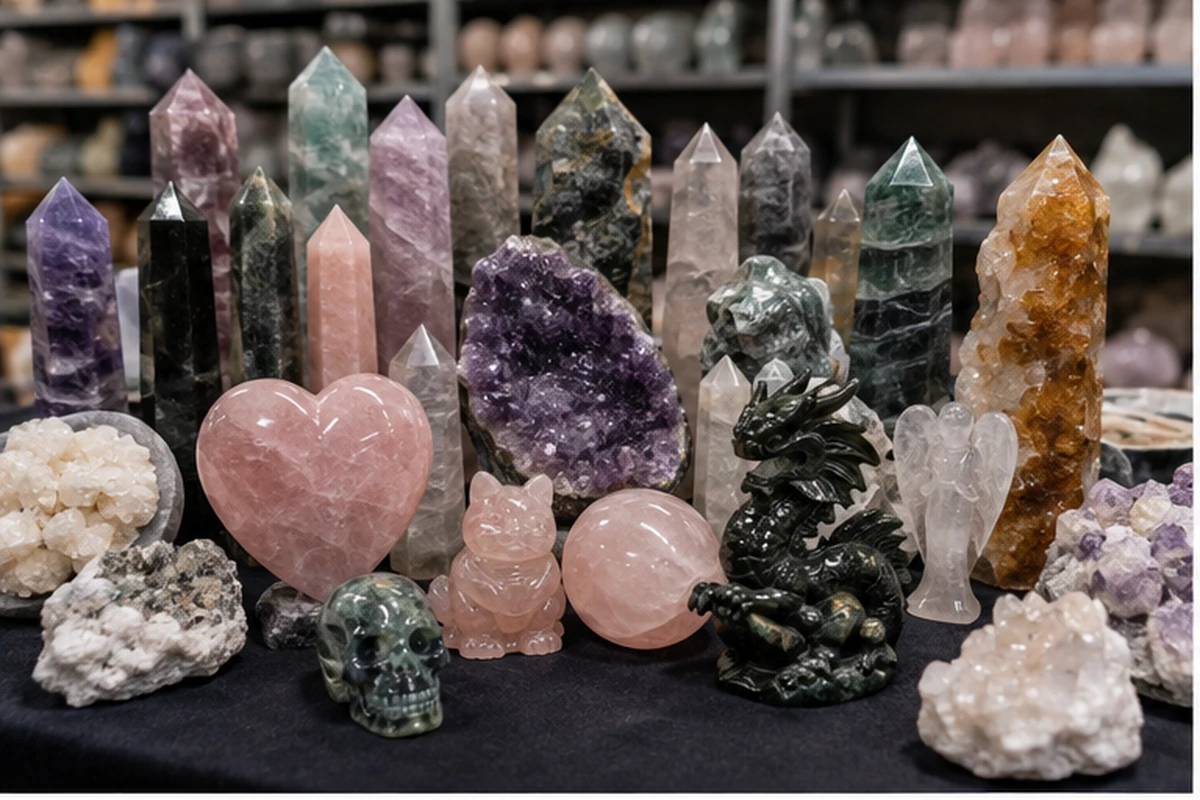
Knowing what to look for is half the battle. This simple framework will help you cut through the noise and identify suppliers who are genuinely invested in your success. Let's dive into the four critical steps you can take to secure a partnership that builds your business, not breaks it.
How can I verify a supplier is a real factory and not a middleman?
You’ve found a supplier with a stunning website and perfect product photos, but something feels off. Are they a real manufacturer or just a trading company reselling items from other factories? This is a critical distinction, as working with a middleman often means higher costs, less control, and zero technical expertise.
The most effective way to pierce this veil is to demand a real-time video call and a virtual factory tour. A trading company can't fake a busy, noisy, and dusty manufacturing environment.3
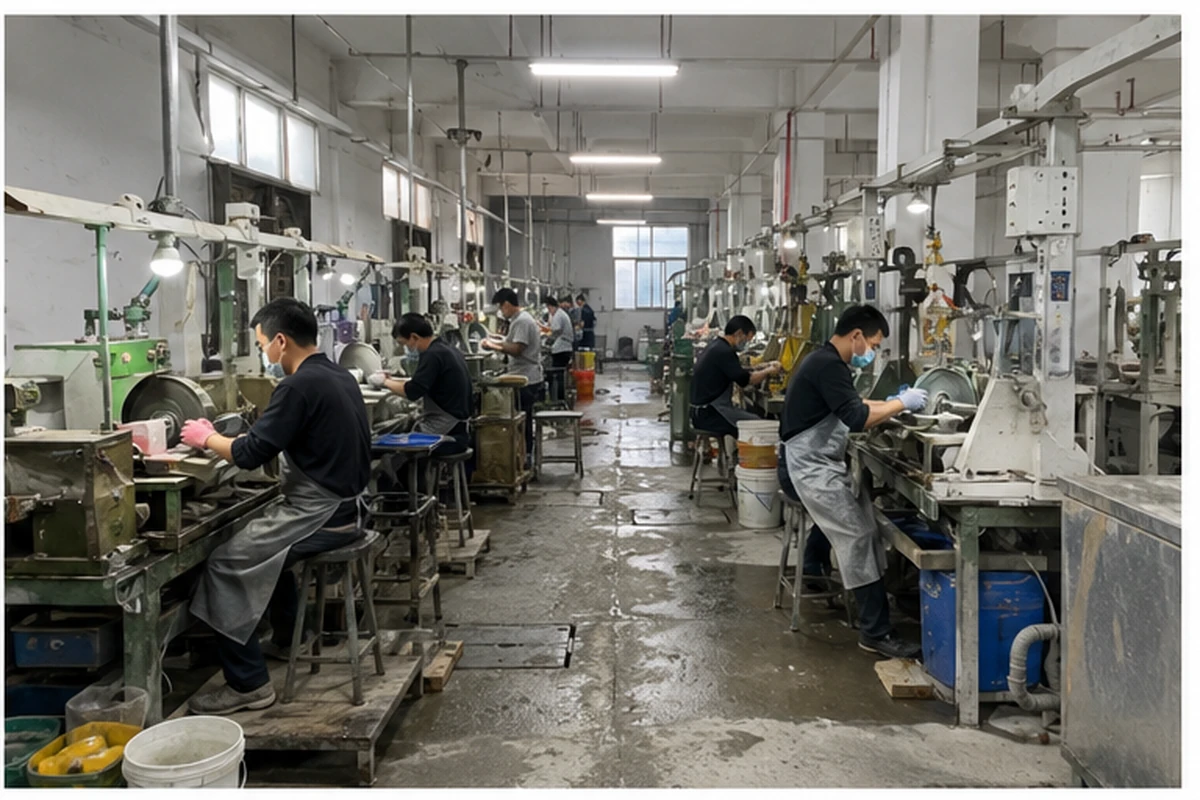
Dive Deeper: The "Workshop Inspection" Method
Many trading companies invest heavily in beautiful English websites but have never cut a single stone. Their business model is simple: buy low, sell high. A true factory, on the other hand, lives and breathes the manufacturing process. The sights, sounds, and even the mess of production are their moat—something a middleman in a clean office can never replicate.
When you get them on a video call, don't settle for a tour of their showroom. Ask to see the engine room. Specifically request to view these three key areas:
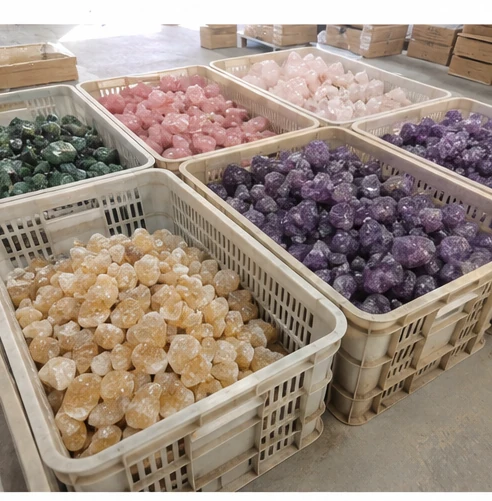
- The Raw Material Storage Area (原石毛料堆放区): A real factory will have a yard or a large room piled with raw, uncut stones and mineral specimens. This is their inventory of potential. A trading company might have a few polished samples but won't have tons of raw rock waiting for production.
- The Cutting and Shaping Workshop (开料车间): Ask to see the saws and equipment used for cutting large blocks into smaller slabs or shapes. Look for evidence of active work: water spray (used to cool blades and control dust), machine noise, and workers operating the equipment.
- The Tumbling and Polishing Area (抛光震桶): This is where rough-cut stones are smoothed and polished. These are large, vibrating barrels filled with media and stones. The constant, loud noise is unmistakable and a clear sign of an active polishing operation.
Look for the tell-tale signs of a genuine production facility: background noise, water, dust, and shelves of semi-finished products in various stages of completion. If your contact is hesitant or makes excuses, it's a major red flag. A proud manufacturer will be eager to show you their capabilities. In my early days of sourcing, this single test helped me disqualify dozens of suppliers who were just brokers.
What questions can test a wholesale crystal supplier's expertise?
Once you've confirmed they have a factory, you need to test their knowledge. A supplier who blindly agrees to every custom request you make is not a reliable partner; they are a salesperson. They might promise the impossible just to secure a deposit, leaving you with a failed project and wasted funds down the line.
The best way to gauge their expertise is to test them with a deliberately difficult request. Ask them to produce a complex 3D carving using a material that is notoriously soft, brittle, or has strong cleavage planes.
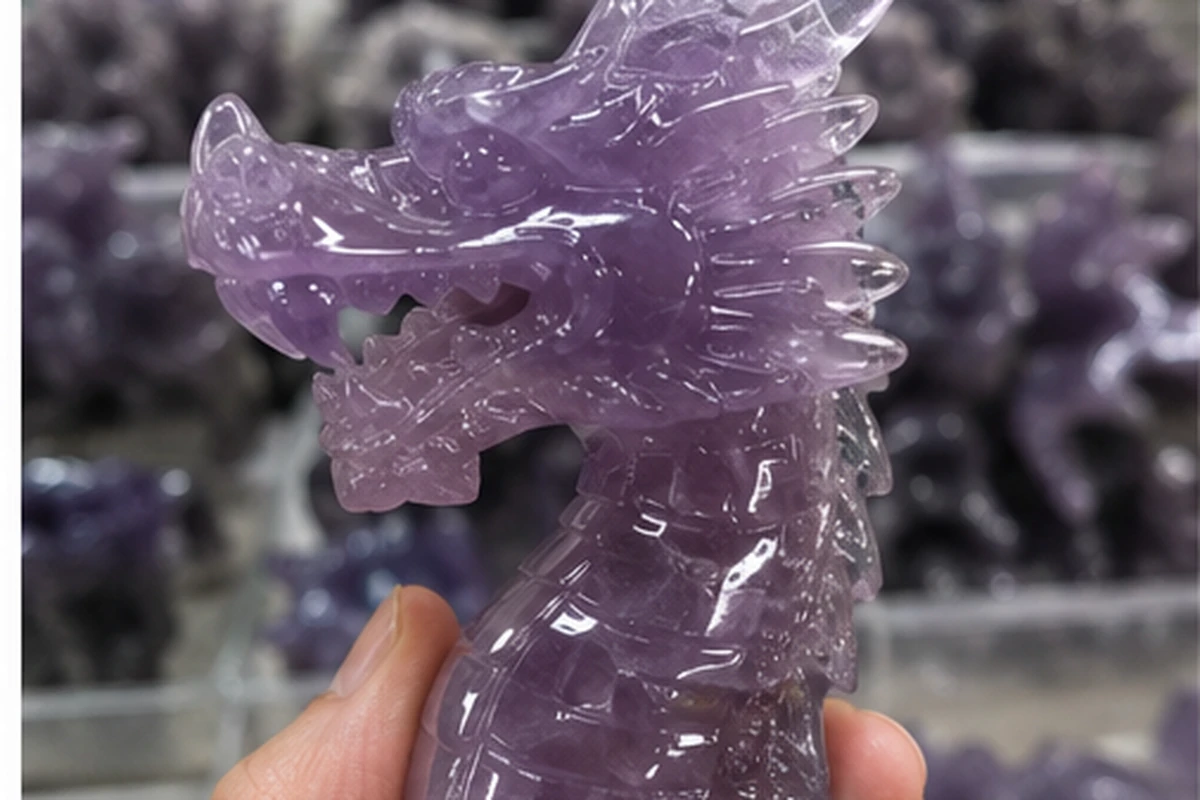
Dive Deeper: Probing for "Fundamental Mineral Knowledge"
A trustworthy supplier has a deep, "ground-level" understanding of the stones they work with. They know the physical limits of each mineral and are not afraid to tell you "no" if a request is impractical or risky. This isn't poor customer service; it's a sign of a responsible partner who protects your investment.
Here’s a practical test you can run:
- The Challenge: Propose a custom order for an intricate 3D carving—like a detailed animal figure or a complex geometric shape—using a challenging material such as Fluorite or Selenite.
- Why it Works: Fluorite is relatively soft (Mohs hardness of 4) and has perfect octahedral cleavage, meaning it splits easily along four different planes.%%%FOOTNOTE_REF4%%% [Selenite is even softer (Mohs hardness of 2) and can be scratched with a fingernail.](https://en.wikipedia.org/wiki/Selenite(gypsum))5
A knowledgeable, factory-direct supplier will immediately raise concerns. Their response should include points like:
- Physical Limitations: They will explain that the stone is too soft or brittle to hold the fine detail required for the complex 3D design.
- Low Yield Rate (出成率): They'll warn you that a high percentage of the pieces will likely break during the carving process, leading to significant material waste and a higher cost per finished piece.
- Polishing Risks: They should mention the high risk of breakage during the machine tumbling and polishing phase (震桶抛光时), as the vibrations can easily fracture such delicate materials.
A supplier who, based on geological common sense, tells you "that's not feasible" or "we strongly recommend switching to a harder material like quartz or jasper" is the partner you want. They are thinking about the success of your bulk production run, not just making a quick sale. This honesty is the foundation of a long-term, reliable wholesale crystal supplier relationship.
How important is packaging for finding a reliable wholesale crystal supplier?
Imagine your beautiful samples arrived perfectly, you placed a large order, and a month later a pallet shows up with half the contents shattered. The ultimate test of a supplier isn't the beauty of their samples, but the integrity of their packaging for bulk international logistics. Poor packaging is a fatal flaw in this business.
Packaging is not an afterthought; it is a core competency.6 You must eliminate any supplier who attempts to ship heavy, dense minerals in thin, single-layer cardboard boxes with newspaper for padding. This approach is a recipe for disaster.
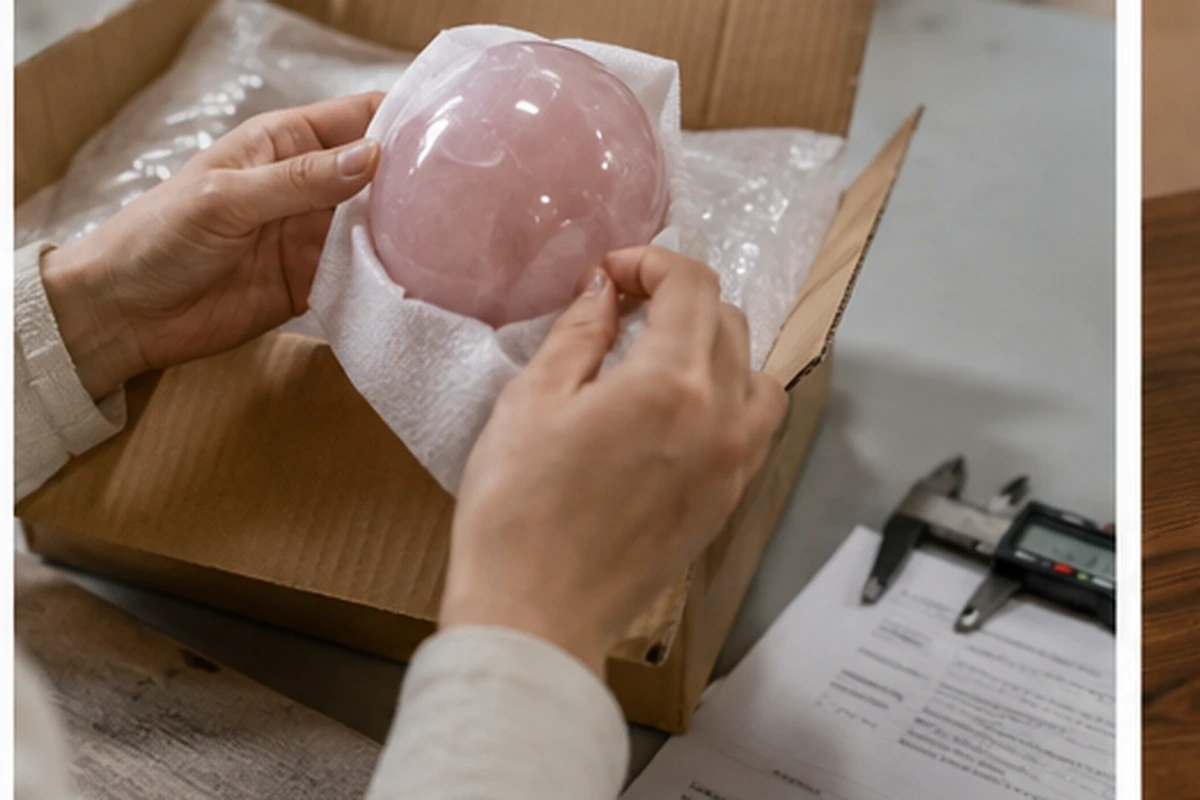
Dive Deeper: The Bottom Line on QC and Packaging
Before you commit to a bulk order, you must get explicit confirmation of their quality control (QC) and packaging standards. Don't be afraid to make your requirements mandatory.
Here’s what to look for and demand as your baseline standard:
1. Pre-Shipment QC Videos7: Before the final payment is made and the boxes are sealed, require your supplier to provide a pre-shipment QC video. They should pull a random sample of items from your finished order and show them to you on camera in natural light. This simple step prevents "bait and switch" scenarios where the bulk order doesn't match the approved samples.
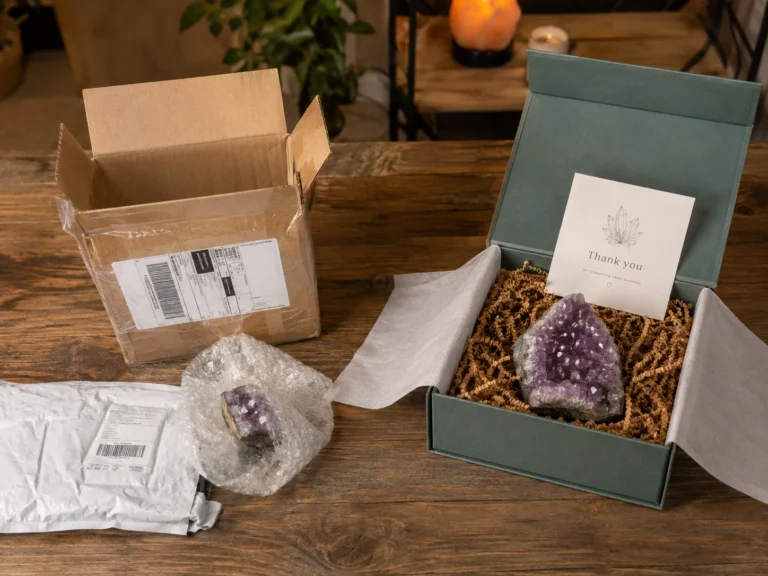
2. The Packaging "Gold Standard": A professional supplier who regularly exports to North America and Europe will already have a robust system in place. Confirm they use the following:
| Packaging Component | Description | Why It's Critical |
|---|---|---|
| Individual Wrapping | Each item is wrapped in soft, shock-absorbent material like pearl cotton foam (分件珍珠棉). | Prevents items from scratching or hitting each other during transit. |
| Export-Grade Boxes | Heavy-duty, 5-ply (or 7-ply) corrugated cardboard boxes (出口级超硬瓦楞箱). | Resists crushing and puncture, providing a rigid outer shell for your products. |
| Secure Inner Packing | Voids within the box are tightly filled to prevent contents from shifting. | Movement inside the box is a primary cause of breakage. |
| Wooden Pallets8 | For large or heavy shipments, boxes are stacked on a fumigation-free wooden pallet (免熏蒸木托盘) and shrink-wrapped. | Makes handling by forklift easy and safe, protecting boxes from being thrown or dropped. |
Any supplier who balks at these standards or tries to cut corners on packaging is not a reliable wholesale crystal supplier. They are gambling with your money. The small extra cost for proper packaging is an insurance policy that pays for itself many times over.
Why should I start with a small, mixed trial order?
The fastest way to build trust with a new overseas supplier is not by signing a large contract based on promises. It's through a real-world "combat test." Committing to a full container on your first order is a massive gamble that can tie up your capital and leave you with unsellable inventory.
Prioritize finding a factory that is willing to support a Low MOQ Mixed Lot9. This trial order is your opportunity to evaluate their entire fulfillment process, from communication to quality consistency, with minimal financial risk.
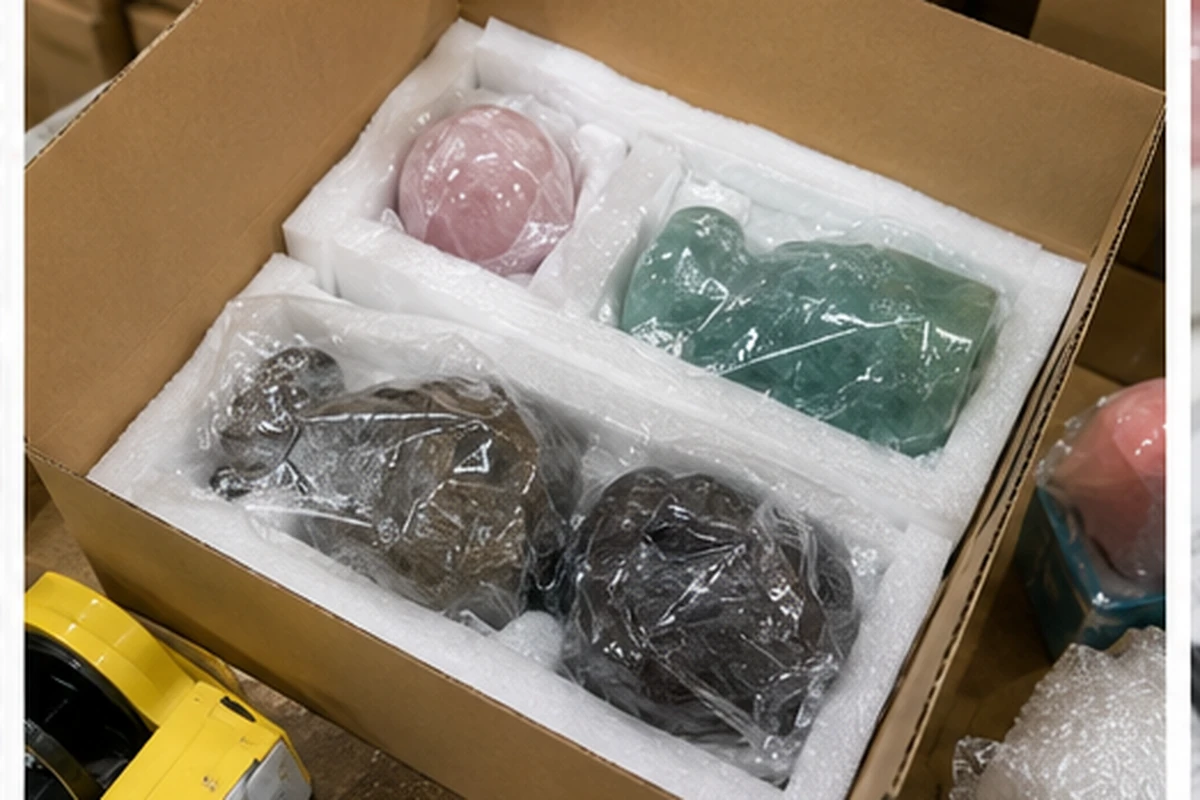
Dive Deeper: Testing Fulfillment with a Trial Order
A trial order of a few thousand dollars is an incredibly valuable diagnostic tool. It’s not just about getting product; it’s about collecting data on your potential partner. An excellent supply chain partner will often use their vast in-stock warehouse to support these smaller orders, helping you test the market without bearing all the inventory pressure yourself.
Here’s what a small trial order allows you to comprehensively assess:
- Quality Consistency10: Does the quality of the 50th or 100th piece match the initial sample you approved? Look for consistency in color, clarity, size, and finish across the batch.
- Responsiveness & Communication11: How do they respond when you have questions about the order? Are they quick, clear, and helpful? What happens when a minor issue arises?
- Problem Resolution12: This is crucial. Inevitably, even with the best packaging, a piece might occasionally arrive damaged. How do they handle it? A good partner will have clear terms for replacement or credit (破损赔付条款) and will resolve the issue without fuss.
- Adherence to Instructions: Did they follow your specific requests for labeling, packaging, or documentation? Their attention to detail on a small order is a strong indicator of how they'll perform on a large one.
Think of your first small order as an investment in intelligence. Every dollar you spend is generating real-world data and, if you choose wisely, bringing in retail profits while you vet your supplier. This practical test is the final and most important step in finding a truly reliable wholesale crystal supplier.
Frequently Asked Questions
What's the difference between a crystal manufacturer and a trading company?
A manufacturer owns and operates the factory where crystals are cut, carved, and polished. They have deep technical knowledge and control the entire production process. A trading company is a middleman that buys from factories and resells to you, often with little product expertise and at a higher price.
How do I handle quality disputes with an overseas supplier?
The best approach is proactive. Insist on pre-shipment QC videos to approve quality before final payment. If issues are found upon arrival, immediately document them with clear photos and videos. A reliable supplier will have a clear policy for handling breakage or discrepancies, typically offering a credit or replacement on your next order.
Is it better to source from one large supplier or multiple small ones?
For beginners, starting with one large, reliable supplier who offers mixed lots and low MOQs is often best. It simplifies logistics and communication. As your business grows, diversifying with 2-3 trusted suppliers can reduce risk and provide access to a wider range of specialized products.
What are typical MOQs for wholesale crystal orders?
MOQs (Minimum Order Quantities) vary widely. Some large factories may require hundreds of kilograms per material. However, many flexible suppliers like us offer low-MOQ trial orders, sometimes as low as $500–$1,000 total, with the ability to mix many different products and materials to help you get started.
Conclusion
Finding a reliable wholesale crystal supplier is not a matter of luck; it's a matter of process. By moving beyond slick websites and actively vetting your potential partners, you can build a resilient and profitable supply chain. Remember the four key pillars: verify the factory with a live video tour, test their expertise with challenging questions, demand uncompromising standards for QC and packaging, and always start with a small trial order. This diligent approach protects your investment and ensures you partner with a supplier who is equipped to help you grow.
If you're looking for a long-term partner who welcomes this level of scrutiny and offers the flexibility of low-MOQ mixed orders, I invite you to reach out. At Crystal Carvings Wholesale, we are a factory-direct supplier committed to transparency and quality. Contact us today on WhatsApp at +86 150 7540 9178 or email sales@crystalcarvingswholesale.com to discuss your needs and start building your next best-selling crystal collection.
<!--[googlesitekit-end-of-content]-->
"The Structure of Chains of Intermediation", https://kingcenter.stanford.edu/sites/g/files/sbiybj16611/files/media/file/GrantStartz_Middlemen_Nov2021.pdf. A study on supply chain dynamics in the gemstone and crystal industry highlights the role of trading companies as intermediaries, often leading to increased costs and reduced transparency for buyers. Evidence role: general_support; source type: research. Supports: The claim that middlemen are common in the wholesale crystal market and can lead to higher costs for buyers.. Scope note: The study may focus on broader gemstone markets rather than crystals specifically. ↩
"How to Find a Reliable Wholesale Crystal Manufacturer in China ...", https://crystalcarvingswholesale.com/how-to-find-a-reliable-wholesale-crystal-manufacturer-in-china/. Educational resources on international trade and supplier vetting recommend live factory tours, testing product knowledge, and trial orders as key methods for evaluating supplier reliability. Evidence role: general_support; source type: education. Supports: The effectiveness of these steps in verifying the reliability of wholesale suppliers.. Scope note: The recommendations may apply broadly to international trade rather than being specific to the crystal industry. ↩
"What factors determine the wholesale price of a crystal carving?", https://crystalcarvingswholesale.com/what-factors-determine-the-wholesale-price-of-a-crystal-carving/. Institutional guidelines on factory inspections note that active production environments often feature noise, dust, and visible machinery operations, distinguishing them from trading offices. Evidence role: mechanism; source type: institution. Supports: The physical characteristics of a genuine factory environment, such as noise and dust, are indicators of active production.. Scope note: The guidelines may not specifically address crystal manufacturing factories. ↩
"Fluorite | Common Minerals - University of Minnesota Twin Cities", https://commonminerals.esci.umn.edu/minerals-f/fluorite. According to mineralogical references, Fluorite has a Mohs hardness of 4 and perfect octahedral cleavage, making it prone to splitting under stress. Evidence role: definition; source type: encyclopedia. Supports: Fluorite's softness and cleavage properties make it difficult to carve intricate designs.. ↩
"Selenite (gypsum)", https://en.wikipedia.org/wiki/Selenite_(gypsum). Mineralogical sources confirm that Selenite has a Mohs hardness of 2, making it one of the softest minerals and prone to damage during carving. Evidence role: definition; source type: encyclopedia. Supports: Selenite's softness makes it unsuitable for intricate carvings.. ↩
"How to Find a Reliable Wholesale Crystal Manufacturer in China ...", https://crystalcarvingswholesale.com/how-to-find-a-reliable-wholesale-crystal-manufacturer-in-china/. Educational materials on logistics emphasize that robust packaging is critical for protecting fragile items during international transit. Evidence role: general_support; source type: education. Supports: The importance of packaging in ensuring safe international shipment of fragile items like crystals.. Scope note: The materials may focus on general logistics rather than crystal-specific packaging. ↩
"Pre-shipment inspection", https://en.wikipedia.org/wiki/Pre-shipment_inspection. Trade education resources recommend pre-shipment QC videos as a reliable method for verifying product quality before finalizing payments. Evidence role: mechanism; source type: education. Supports: Pre-shipment QC videos are a practical method for verifying product quality.. Scope note: The recommendation may apply broadly to international trade rather than being specific to crystals. ↩
"Benefits of Wood Pallets: Sustainable and Cost-Effective", https://www.upfp.com/benefits-of-wood-pallets/. Logistics guidelines highlight that wooden pallets provide stability and protection for heavy or fragile shipments during transit. Evidence role: mechanism; source type: education. Supports: Wooden pallets help protect shipments during handling and transit.. Scope note: The guidelines may not specifically address crystal shipments. ↩
"Understanding MOQ in Crystal Wholesale: How to Start with Mixed ...", https://crystalcarvingswholesale.com/understanding-moq-in-crystal-wholesale-how-to-start-with-mixed-lots/. Trade education resources suggest that low MOQ mixed orders are a cost-effective way to evaluate supplier performance and product consistency. Evidence role: general_support; source type: education. Supports: Low MOQ mixed lots are effective for testing supplier reliability and product quality.. Scope note: The suggestion may apply broadly to international trade rather than being specific to crystals. ↩
"A Strategy to Assess Quality Consistency of Drug Products", https://pmc.ncbi.nlm.nih.gov/articles/PMC6448014/. Educational resources on supplier management emphasize that consistent quality across batches is a critical indicator of supplier reliability. Evidence role: general_support; source type: education. Supports: Quality consistency is a key factor in assessing supplier reliability.. Scope note: The resources may not specifically address the crystal industry. ↩
"Managing Relationships with Suppliers and Vendors You Use", https://www.apu.apus.edu/area-of-study/business-and-management/resources/managing-relationships-with-suppliers-and-vendors-you-use/. Trade education materials highlight that clear and timely communication is a critical factor in evaluating supplier reliability. Evidence role: general_support; source type: education. Supports: Responsiveness and communication are important indicators of supplier reliability.. Scope note: The materials may focus on general supplier relationships rather than crystal-specific suppliers. ↩
"Managing Relationships with Suppliers and Vendors You Use", https://www.apu.apus.edu/area-of-study/business-and-management/resources/managing-relationships-with-suppliers-and-vendors-you-use/. Educational resources on supplier management emphasize that effective problem resolution is a critical indicator of a reliable supplier. Evidence role: general_support; source type: education. Supports: Problem resolution is a key factor in assessing supplier reliability.. Scope note: The resources may not specifically address the crystal industry. ↩
Keep Reading