Struggling to make sense of supplier quotes for crystal carvings? You may notice that two seemingly similar pieces have vastly different costs, making it difficult to budget for inventory, set retail prices, and trust your sourcing partners. This pricing puzzle can leave you wondering if you're getting a fair deal. The key is understanding that the wholesale price of a crystal carving is a complex calculation based on a handful of critical value drivers, from the raw stone to the final polish.
The wholesale price of a crystal carving is primarily determined by four key factors: the intrinsic value of the raw material (type, grade, rarity), the complexity of the craftsmanship and labor involved, the material loss from the yield rate, and the scale of the order. For B2B buyers, understanding these variables is essential for accurately evaluating factory quotations and justifying premium price points to end customers.
Now that you have the high-level answer, let's dive deeper. Each of these factors contains its own set of variables that can dramatically shift the final cost. By breaking them down, you'll be equipped to source more effectively and build a more profitable collection.
How do raw material qualities affect the wholesale price of a crystal carving?
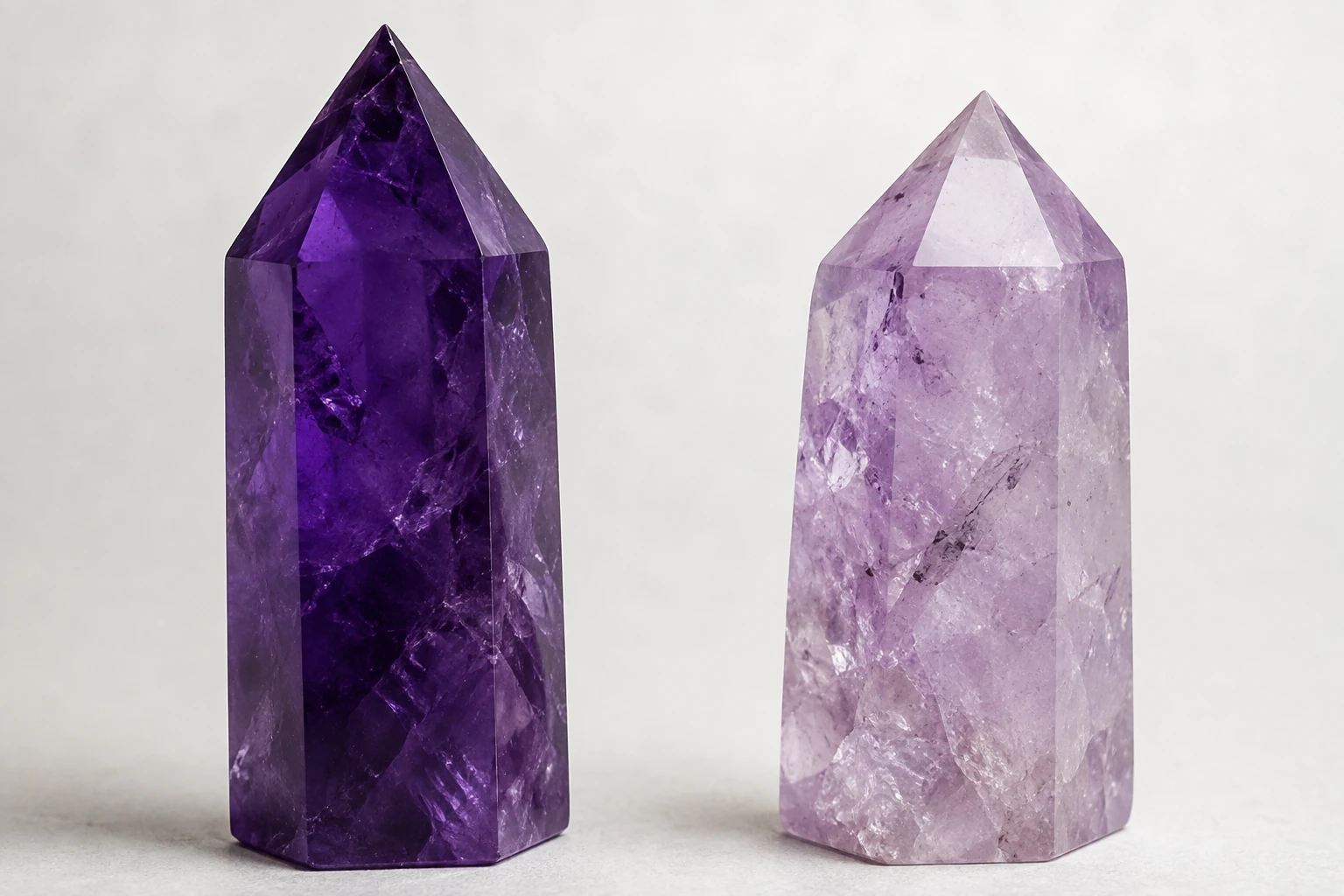
Have you ever seen two amethyst towers of the exact same size, where one costs three times as much as the other? You might assume it's a mistake, but the real reason is hidden within the stone itself. The cost of the raw, uncut crystal is the largest foundational expense in the entire production process.
The wholesale price is directly driven by the mineral type's rarity, its specific grade (color, clarity, texture), and whether it possesses any special optical effects. These characteristics determine the base cost of the raw stone before a single tool ever touches it.
Dive Deeper: The Stone's Intrinsic Value
The journey of a crystal carving begins at the mine, and its initial value is set long before it reaches a workshop. Here is a breakdown of the material factors that have the biggest impact on cost.
H3: Mineral Type and Rarity
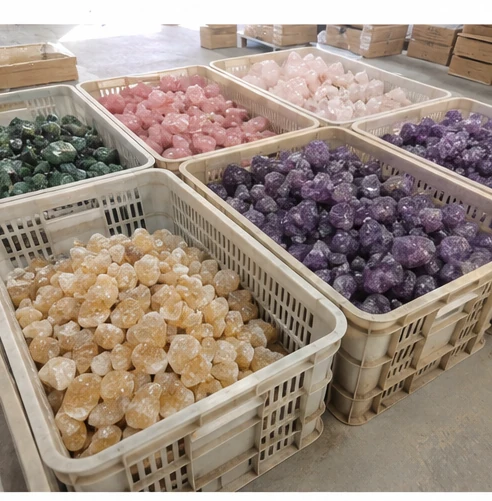
The most basic factor is the type of mineral. Common minerals with large, accessible deposits like Clear Quartz, Rose Quartz, or Black Obsidian have a relatively low cost per kilogram for the raw material.
In contrast, materials from more limited or difficult-to-access mines are significantly more expensive1. Stones like high-quality Malachite, Charoite, Labradorite, or Lapis Lazuli have a much higher base cost, which is passed on to the final carved piece. As a buyer, choosing a more common material is a direct way to manage your cost per unit.
H3: Grade (Color, Clarity, and Texture)
Two pieces of the same mineral can have vastly different values based on their grade.
- Color Saturation: A deep, vibrant purple Amethyst will always command a premium over a pale, washed-out lilac variety2. The same is true for the deep green of Malachite or the rich blue of Lapis Lazuli. Saturation equals value.
- Clarity and Inclusions: A piece of Clear Quartz that is "water clear" or optical grade, with no internal fractures or cotton-like inclusions, is exponentially rarer and more valuable than a heavily included piece. These internal features can sometimes be beautiful, but in terms of grading, clarity is king.
- Unique Textures and Patterns: For some stones, the price is dictated by the beauty of their internal patterns. For example, the value of Sakura Agate (Cherry Blossom Agate) is determined by the density and shape of its "flower" plumes. Similarly, the price of Ocean Jasper depends on the presence of its signature colorful "orbs."
H3: Special Optical Effects
Certain crystals display phenomenal optical effects that dramatically increase their value3.
- Chatoyancy (Cat's Eye Effect): Seen in Tiger Eye, this silky shimmer requires the artisan to precisely orient the stone to capture the moving band of light.
- Labradorescence (Schiller Effect): The iconic flash of color in Labradorite is only visible from certain angles. A carver must find this "flash" in the raw block and shape the piece around it, which often increases the waste material.
- Asterism (Star Effect): A star-like pattern that appears in some stones like Star Rose Quartz or Sapphire when cut into a cabochon or sphere.
Maximizing these effects requires more skill and often results in a lower yield from the raw stone, adding to the overall cost of the finished carving.
Does the carving method change the wholesale price of a crystal carving?
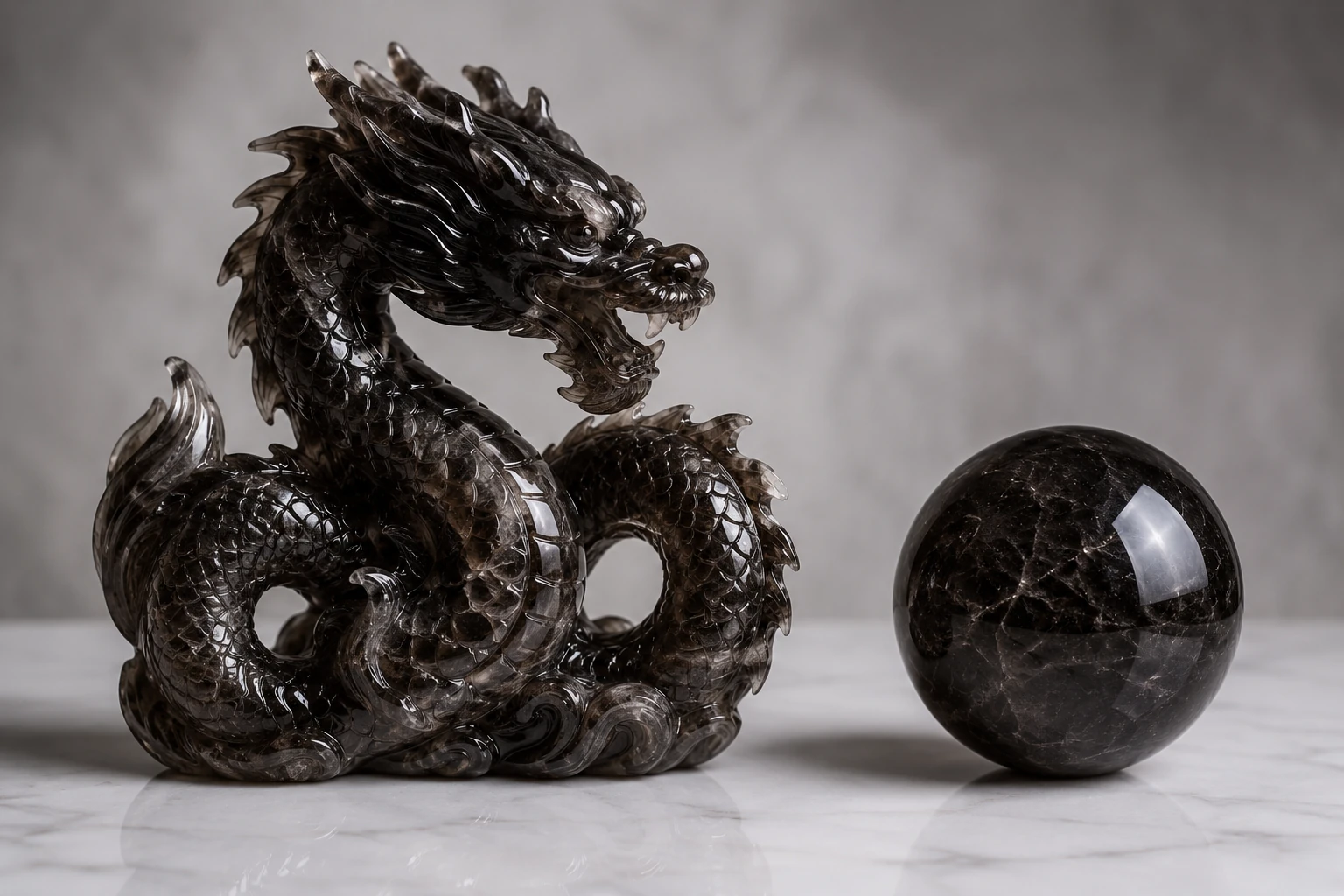
Why is a small, intricately detailed crystal skull so much more expensive than a large, heavy crystal sphere made from the same material? The sphere might weigh five times as much, yet its price is a fraction of the skull's. The answer is found in the time, skill, and complexity of the human touch.
Yes, the carving method and complexity have a massive impact on the price. Labor-intensive, purely hand-carved sculptures require highly skilled artisans and days of focused work4. This makes labor a primary cost driver, far exceeding the costs associated with simpler, machine-assisted geometric shapes.
Dive Deeper: Labor Costs and Craftsmanship
Crystal carving is a labor-intensive industry, and the cost of labor is directly tied to the processing time and the technical difficulty of the design.
H3: Processing Methods and Efficiency
There are two main approaches to carving, each with a different cost structure:
- Machine Rough-Carving + Manual Polishing: This method is ideal for simple, geometric shapes like spheres, points, towers, and basic hearts. A machine can quickly shape the rough form, after which it is finished and polished by hand. This process is highly efficient and results in a lower cost per piece, making it perfect for popular, high-volume items.
- Purely Hand-Carved: This method is reserved for complex and artistic pieces like realistic animals, mythological figures, or anatomical skulls. An artisan uses a variety of handheld tools to meticulously shape, detail, and refine the piece from start to finish. This process is slow, requires immense skill, and therefore carries a much higher labor cost.
H3: The Cost of Intricacy and Detail
The level of detail is a major price multiplier. A carving with hollowed-out structures, such as a dragon wrapped around a crystal ball, requires the artisan to carefully work both the exterior and interior surfaces. Fine details like the feathers on an angel's wing or the subtle expression on a goddess's face cannot be rushed.
These intricate designs can take a single master artisan several days or even weeks to complete. In these cases, the cost of the artisan's time can easily become the most significant portion of the final wholesale price of a crystal carving.
H3: The Value of Master Artisans and "Clever Carving"
Not all carvers are equal. A senior master artisan possesses skills that go far beyond basic shaping. One such technique is known as "巧雕" (qiǎo diāo), or "clever carving."
- Avoiding Flaws: A master can orient the design to carve away or hide natural internal fractures.
- Using Inclusions: They can incorporate the stone's natural color bands or mineral inclusions into the design itself (e.g., using a red streak in agate to represent a dragon's fire). This is called "俏色" (qiào sè) and turns potential flaws into artistic features.
Creations from a master artisan who uses these techniques have an artistic and collectible value that far surpasses standard, mass-produced items made by apprentices.
Why are larger carvings disproportionately more expensive?
You might logically assume that a 1kg carving should cost about twice as much as a 500g carving of the same material and design. However, when you get a quote, you find it's often three or four times the price. This isn't a pricing error; it's a fundamental reality of sourcing natural materials.
The wholesale price of a carving increases exponentially with size5. This is due to two compounding factors: the extreme scarcity of large, flawless blocks of raw crystal and the high percentage of material that is permanently lost (the yield rate) during the 3D carving process.
Dive Deeper: The Economics of Size and Waste
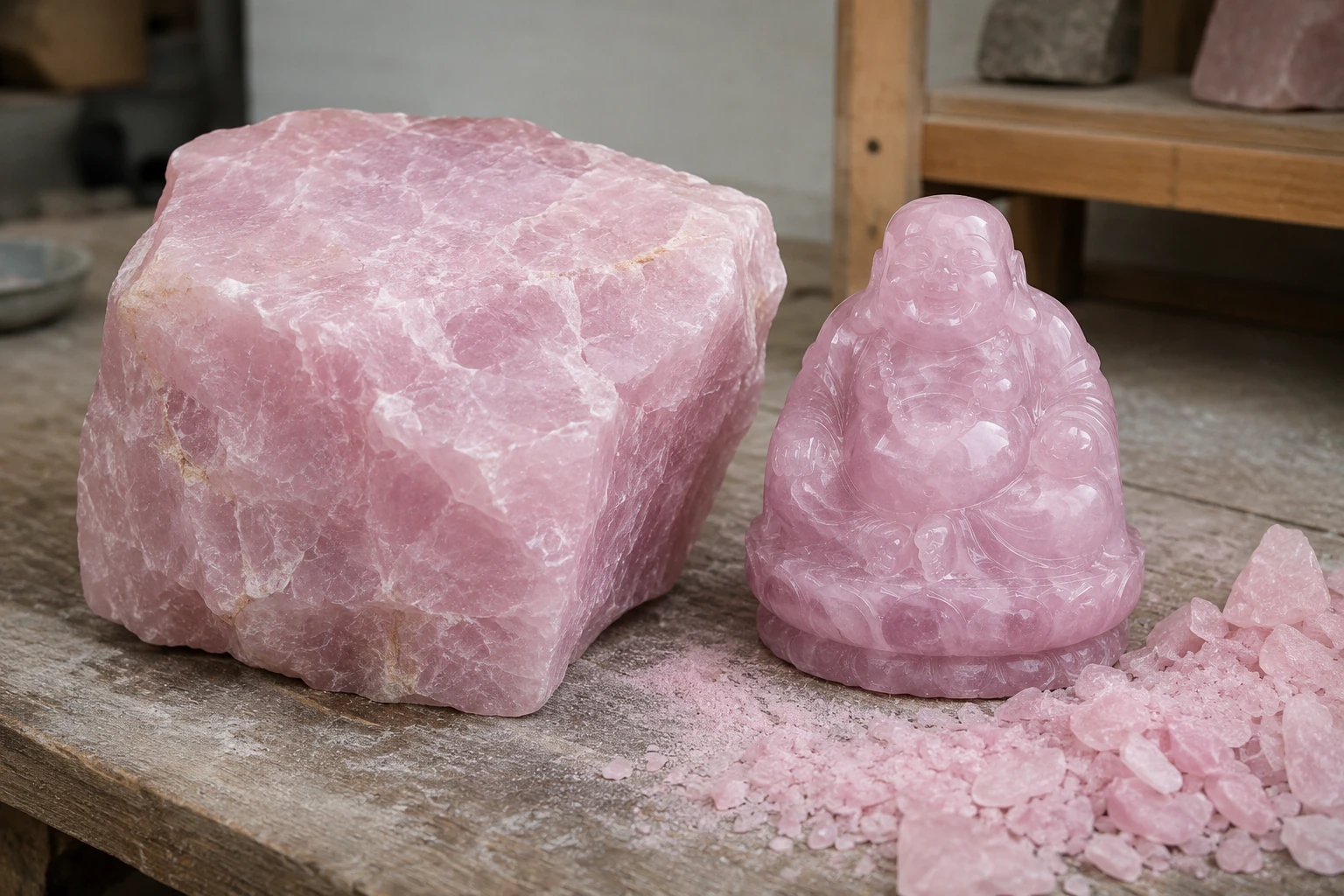
Unlike tumbled stones, which have very little waste, 3D carving is a subtractive process where a large portion of the expensive raw material is ground away into dust.
H3: Understanding Yield Rate
The yield rate is the percentage of the original raw block that remains as the final, finished product. For a complex 3D sculpture like a dragon, a wolf, or a detailed skull, the yield rate can be shockingly low. It is common to lose 40% to 70% of the raw stone's weight during carving.
This means that to produce a 1kg finished carving, the factory might have to start with a 2.5kg block of raw material. The cost of the 1.5kg of material that was ground into powder must be absorbed by the final price of the single finished piece.
H3: The Scarcity of Large, Flawless Material
The second major factor is the availability of suitable raw material. To create a large carving (for instance, anything over 1kg or 15cm tall), the factory needs to source a single, solid block of raw crystal that is free of major, deep cracks (known as "through-cracks").
At the mine, small, flawless pieces are common. However, large blocks that are both sizable and structurally sound are exponentially rarer. A 10kg flawless block of Rose Quartz is not ten times rarer than a 1kg block; it might be a hundred times rarer. This geological scarcity creates a premium market for large-sized raw material, causing the price-per-gram to increase dramatically as the weight goes up.
How does the final polish affect crystal pricing?
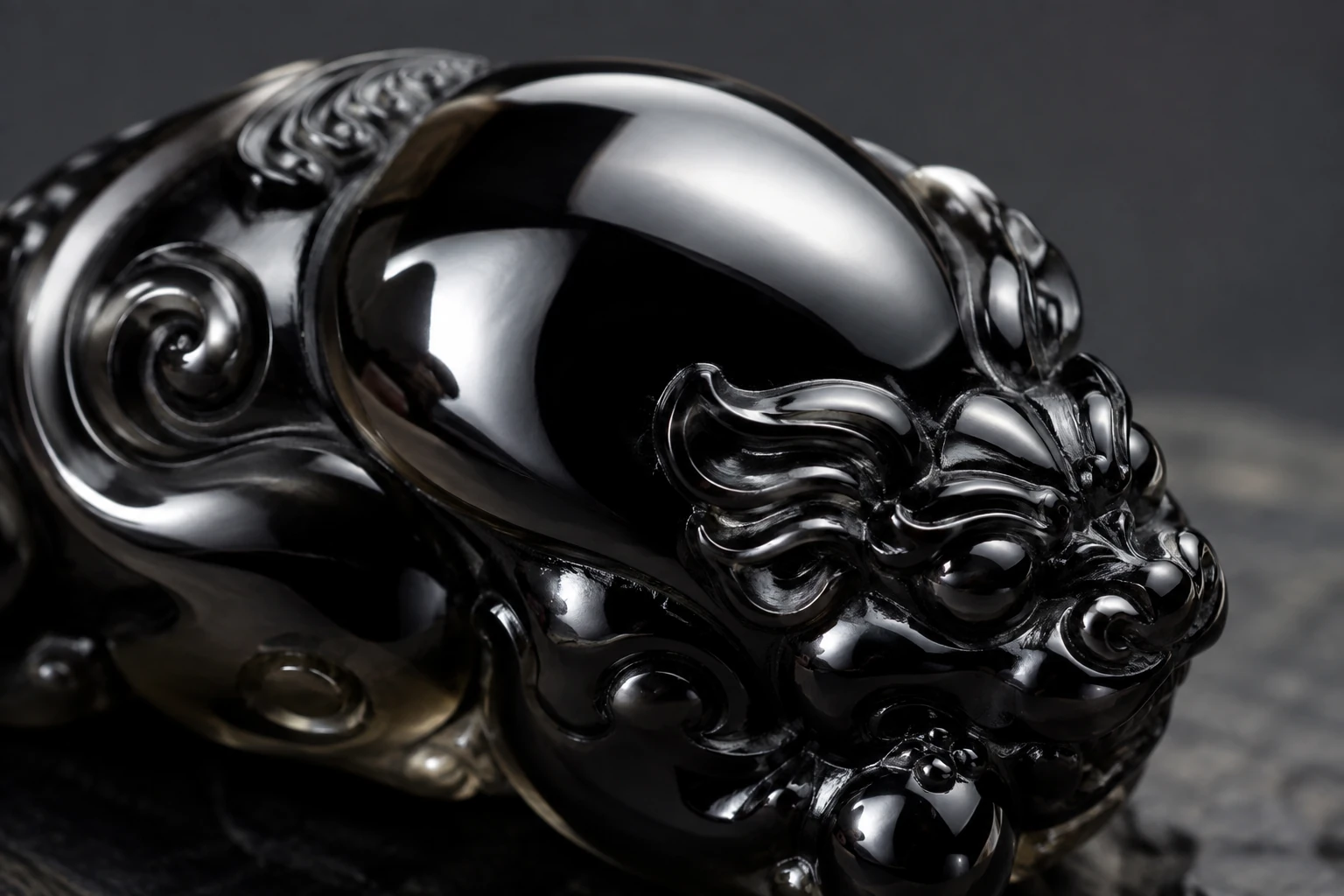
You've just received a batch of samples. Some of the carvings are brilliantly reflective, with a deep, glossy shine, while others from a different supplier look a bit dull, hazy, or uneven. This difference in the final finish is not just aesthetic; it's a direct reflection of labor costs and impacts the final price.
A high-gloss, "mirror-like" polish requires a multi-stage, manual sanding and buffing process, especially in the hard-to-reach nooks and crannies of a complex carving. This adds significant labor time and cost. In contrast, lower-quality, mass-produced pieces with a hazy or matte finish are cheaper because this final, crucial step is rushed or simplified.
Dive Deeper: The Importance of Finishing
The final polish can make or break the perceived value of a crystal carving. A perfect polish makes the colors appear deeper and allows light to interact beautifully with the stone's internal features.
H3: The Polishing Process
Achieving a true "mirror polish" is a craft in itself. After the carving is shaped, it goes through several stages of polishing:
- Coarse Grinding: Removes the deep tool marks from the initial carving.
- Multi-Stage Sanding: The piece is then sanded by hand with progressively finer grits of diamond abrasive cloths or pads. An artisan may go through 5-10 different grits to smooth the surface perfectly.
- Final Buffing: The piece is buffed with a fine polishing compound on a felt wheel to bring out the final, high-gloss luster.
This process is particularly challenging on complex carvings with many small details and concave areas. Every single surface must be treated with the same care. Skipping steps or using fewer grits results in a "foggy" or scratched surface and a lower-cost, lower-quality product.
H3: Enhancements and Treatments
It's also critical for buyers to know if a stone is natural or has been treated.
- Natural Stones: High-quality, untreated stones are the benchmark. Their value is based entirely on their natural beauty.
- Treated Stones: Some lower-grade materials are enhanced to improve their appearance. This creates a different pricing structure based on the cost of the treatment. Common examples include:
- Heat-Treated Citrine: Much of the Citrine on the market is Amethyst that has been heated to turn it yellow/orange.
- Dyed Agate: Agate is porous and often dyed vibrant colors like pink, blue, or purple.
- Aura Quartz: Clear Quartz or other crystals are bonded with metals in a vacuum chamber to create an iridescent, rainbow-colored surface.
While these treatments can create beautiful products, their pricing is based on a different logic than that of natural stones. As a supplier, we believe in transparency and always recommend that buyers ask about any potential treatments when getting a quote.
How does my order quantity influence the wholesale price of a crystal carving?
Are you wondering if you can get a better deal by ordering more? The answer is almost always yes, but the structure of your order—whether it's a bulk order of one item or a mixed batch of many—plays a huge role in determining your final unit price.
Higher volumes of a single, identical item will always yield the lowest wholesale price of a crystal carving due to economies of scale. Conversely, mixed-lot or small trial orders carry a slightly higher per-unit price to cover the additional factory labor required for sorting, handling, and separate packing.
Dive Deeper: Economies of Scale in Manufacturing
A factory's overhead costs, machine setup time, and administrative fees must be distributed across the total number of items produced. This is where order volume becomes a key pricing lever for B2B buyers.
| Order Type | Impact on Wholesale Unit Price |
|---|---|
| High MOQ Bulk Order | Lowest unit price. The factory can buy a specific raw material in bulk at a discount, set up an efficient production line, and reuse 3D molds or machine settings. |
| Mixed Lots & Trial Orders | Slightly higher unit price. We are happy to support mixed orders, but they require extra labor to pick, sort, and pack many different materials and styles, which adds a small premium. |
| OEM / ODM Customization | Involves one-time fees. Custom designs require initial 3D modeling or physical sampling fees6. These setup costs are then amortized over a minimum order quantity (MOQ) for mass production. |
H3: High MOQ Bulk Orders
When you place a large order for a single SKU (e.g., 500 rose quartz hearts), the factory's efficiency is maximized. We can purchase a large quantity of the exact grade of rose quartz needed, often securing a better price on the raw material. The carving and polishing process can be standardized into an assembly line, reducing the labor time per piece. This efficiency is passed on to you as a lower unit cost.
H3: Mixed Lots and Trial Orders
For many of our customers, especially online sellers and boutique owners, ordering a wide variety of products in smaller quantities is essential for testing the market and offering a diverse collection. We fully support this model with mixed material and mixed style orders. However, fulfilling these orders requires our team to spend more time individually picking, checking, and packing each unique item. This additional handling labor results in a slightly higher per-unit cost compared to a bulk order.
H3: OEM/ODM Customization
For brands looking to create a unique product, we offer full OEM (Original Equipment Manufacturer) and ODM (Original Design Manufacturer) services. This process typically involves a one-time setup fee to cover 3D digital modeling, creating a mold, or producing the initial master sample. Once the design is approved, we establish an MOQ that allows the setup costs to be spread out, making the per-unit price viable for mass production.
Are packaging and quality control factored into the price?
Receiving a quote that seems too good to be true can be tempting, but it can quickly become an expensive mistake if your products arrive damaged or fail to meet your customers' quality expectations. So, what hidden costs related to finishing and logistics should you be looking for in a quote?
Yes, absolutely. Professional export packaging, your specified quality control (QC) standards, and any private labeling services are all real marginal costs that are factored into the final wholesale price of a crystal carving. A reliable supplier will include these in the quote to protect your investment.
Dive Deeper: The Final Mile Costs
The price of the carving itself is only part of the story. Getting it from the workshop to your warehouse safely and ready for sale involves several other cost centers.
H3: Export-Grade Protective Packaging
Crystal carvings, especially those with fine points or delicate details, are fragile. Simply wrapping them in a bit of bubble wrap is not enough for international transit. Proper export packaging involves:
- Custom-fit, high-density pearl cotton foam: This holds the carving securely and prevents movement.
- Multiple layers of bubble wrap: Provides additional cushioning.
- 5-ply corrugated export cartons: These thick, sturdy boxes resist crushing and impacts during shipping.
These professional packing materials are a necessary expense that protects your products from damage. A supplier who cuts corners on packaging is putting your entire order at risk.
H3: Quality Control (QC) and Tolerance
Natural crystals are not perfect7. They often have minor pits, internal fractures, or inclusions from other minerals. The AQL (Acceptable Quality Limit) is the standard you and your supplier agree upon. If you require a 0% defect rate—meaning you will not accept a single piece with any visible natural imperfection—the factory's rejection rate during sorting will be extremely high. The cost of all the pieces that are "rejected" (but are still perfectly good, natural specimens) must be absorbed by increasing the price of the small number of "flawless" pieces that meet your strict criteria. We work with our clients to establish realistic and reasonable quality standards that balance perfection with cost-effectiveness.
H3: Private Labeling and Retail-Ready Services
Many of our clients are e-commerce sellers or brands who need products ready for immediate sale. These value-added services add a small cost per unit but save you significant time and labor. Common requests include:
- Laser engraving a custom logo onto the carving.
- Custom-printed gift boxes or jewelry pouches.
- Applying barcode labels for Amazon FBA fulfillment.
- Creating product information cards to include in the packaging.
These services transform a wholesale product into a retail-ready item, and their costs are included in the final, transparent quote.
At the factory level, the core pricing logic can be summarized with this formula:
Wholesale Unit Price ≈ (Raw Material Cost / Yield Rate) + Carving Labor Cost + Polishing & Consumables + Export Packaging Cost + Reasonable Profit Margin
Frequently Asked Questions
Why is a large crystal sphere more expensive per gram than a small one?
The price per gram increases with size due to the scarcity of materials. Large, flawless blocks of raw crystal are exponentially rarer to find at the mine than smaller pieces. This rarity commands a premium price for the raw material, which is reflected in the final cost of the large sphere.
What is "clever carving" and why does it cost more?
"Clever carving" (巧雕) is an advanced technique used by master artisans to incorporate a stone's natural flaws, color bands, or mineral inclusions into the design. This skill turns potential defects into unique artistic features, requires immense creativity and time, and thus adds significant artistic value and cost.
Does a mixed-material order cost more per unit than a single-material bulk order?
Yes, typically the per-unit price for a mixed order is slightly higher. This is because it requires more factory labor to individually pick, sort, check, and pack a wide variety of different items, a less efficient process than handling a large volume of a single product.
How can I lower my wholesale cost per crystal carving?
The most effective ways to lower your cost are to place larger, single-item bulk orders to benefit from economies of scale, choose carvings made from more common and abundant materials like Clear Quartz, and work with your supplier to define a reasonable quality tolerance that accepts minor natural imperfections.
Conclusion
Understanding the factors that influence the wholesale price of a crystal carving empowers you to be a smarter, more confident B2B buyer. The final quote you receive is not an arbitrary number; it is a careful calculation based on the raw material's value, the artisan's labor, the significant material lost during carving, your order volume, and the final packaging and quality requirements. By appreciating the roles of mineral rarity, craftsmanship, yield rates, and economies of scale, you can better evaluate supplier offers, negotiate effectively, and build a crystal collection that is both beautiful and profitable.
If you are looking to source a collection of high-quality crystal carvings and want a transparent quote that balances quality and cost, we are here to help. Contact us today to discuss your needs, and let us help you navigate these factors to build a successful product line.
Website: https://crystalcarvingswholesale.com/
WhatsApp: +86 150 7540 9178
Email: sales@crystalcarvingswholesale.com
"The Color of Responsibility: Ethical Issues and Solutions in ...", https://www.gia.edu/gems-gemology/summer-2016-color-responsibility-ethical-issues-solutions-colored-gemstones. Educational resources on mineral economics explain how limited mine accessibility and geological rarity increase the cost of raw materials. Evidence role: general_support; source type: education. Supports: Rare materials from limited or hard-to-access mines are more expensive due to mining challenges.. Scope note: The resource may focus on mining economics broadly rather than specific crystal carving materials. ↩
"Amethyst Quality Factors", https://www.gia.edu/amethyst-quality-factor. Gemological encyclopedias note that color saturation is a key factor in determining the value of amethyst and other gemstones. Evidence role: general_support; source type: encyclopedia. Supports: Amethyst with deeper color saturation is more valuable than lighter varieties.. Scope note: The encyclopedia may not provide specific pricing data for amethyst. ↩
"A Review of Optical Effects in Phenomenal Gemstones and ...", https://www.gia.edu/gems-gemology/summer-2025-phenomenal-gemstones. Research on gemstone optical properties highlights how phenomena like chatoyancy and labradorescence enhance aesthetic appeal and market value. Evidence role: general_support; source type: research. Supports: Optical effects such as chatoyancy and labradorescence increase the value of certain crystals.. Scope note: The research may focus on gemstones broadly rather than specific crystal carvings. ↩
"How Are Crystal Carvings Made? A Complete Production Process ...", https://crystalcarvingswholesale.com/how-are-crystal-carvings-made-a-complete-production-process-guide/. Institutional reports on artisanal gemstone carving detail the labor intensity and skill required for hand-carved sculptures. Evidence role: general_support; source type: institution. Supports: Hand-carved sculptures require skilled artisans and significant time investment, increasing their cost.. Scope note: The report may focus on artisanal crafts broadly rather than crystal carvings specifically. ↩
"Gem Virtuosos: The Drehers and Their Extraordinary Carvings - GIA", https://www.gia.edu/gems-gemology/winter-2017-gem-virtuosos. Research on gemstone carving economics explains how material scarcity and yield rate losses increase costs for larger carvings. Evidence role: general_support; source type: research. Supports: Larger crystal carvings are disproportionately more expensive due to material scarcity and yield rate losses.. Scope note: The research may focus on gemstones broadly rather than crystal carvings specifically. ↩
"Colored Gemstone Value Factors - GIA", https://www.gia.edu/gia-news-research/value-factors-design-cut-quality-colored-gemstone-value-factors. Research on custom manufacturing explains how setup fees for 3D modeling and sampling are distributed across order quantities. Evidence role: general_support; source type: research. Supports: OEM/ODM customization involves setup fees for 3D modeling or sampling, which are amortized over the order quantity.. Scope note: The research may focus on manufacturing broadly rather than crystal carvings specifically. ↩
"Inclusions in Gemstones", https://www.gia.edu/gems-gemology/summer-2022-colored-stones-unearthed. Gemological encyclopedias explain how natural imperfections like inclusions and fractures are common in crystals and influence grading standards. Evidence role: general_support; source type: encyclopedia. Supports: Natural crystals often have imperfections like pits, fractures, or inclusions, which affect quality control standards.. Scope note: The encyclopedia may not provide specific quality control practices for crystal carvings. ↩
Keep Reading