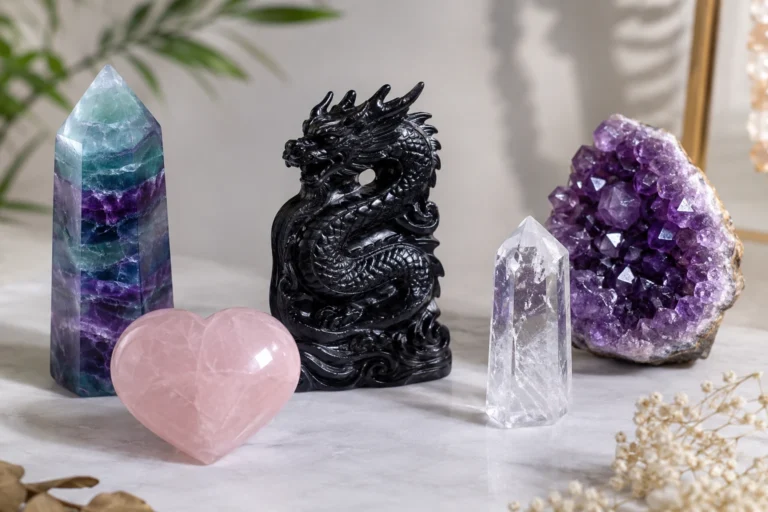
Struggling with the question of how much inventory a new crystal shop should buy1? It’s a paralyzing thought. Invest too little, and your shop looks empty and unprofessional; invest too much, and you risk tying up all your capital in slow-moving stock. This initial purchasing decision feels like it could make or break your new venture before it even begins. The solution is not to guess, but to build a strategic, test-level inventory that minimizes risk and maximizes market feedback.
For a new crystal shop, the ideal starting inventory budget is between $1,000 and $3,0002. Instead of buying a large weight of a single product, this budget should be used to purchase a wide variety of 15-20 different products through a supplier's mixed-lot program3. This approach allows you to test the market, identify bestsellers, and build a balanced collection without over-investing in any one item.
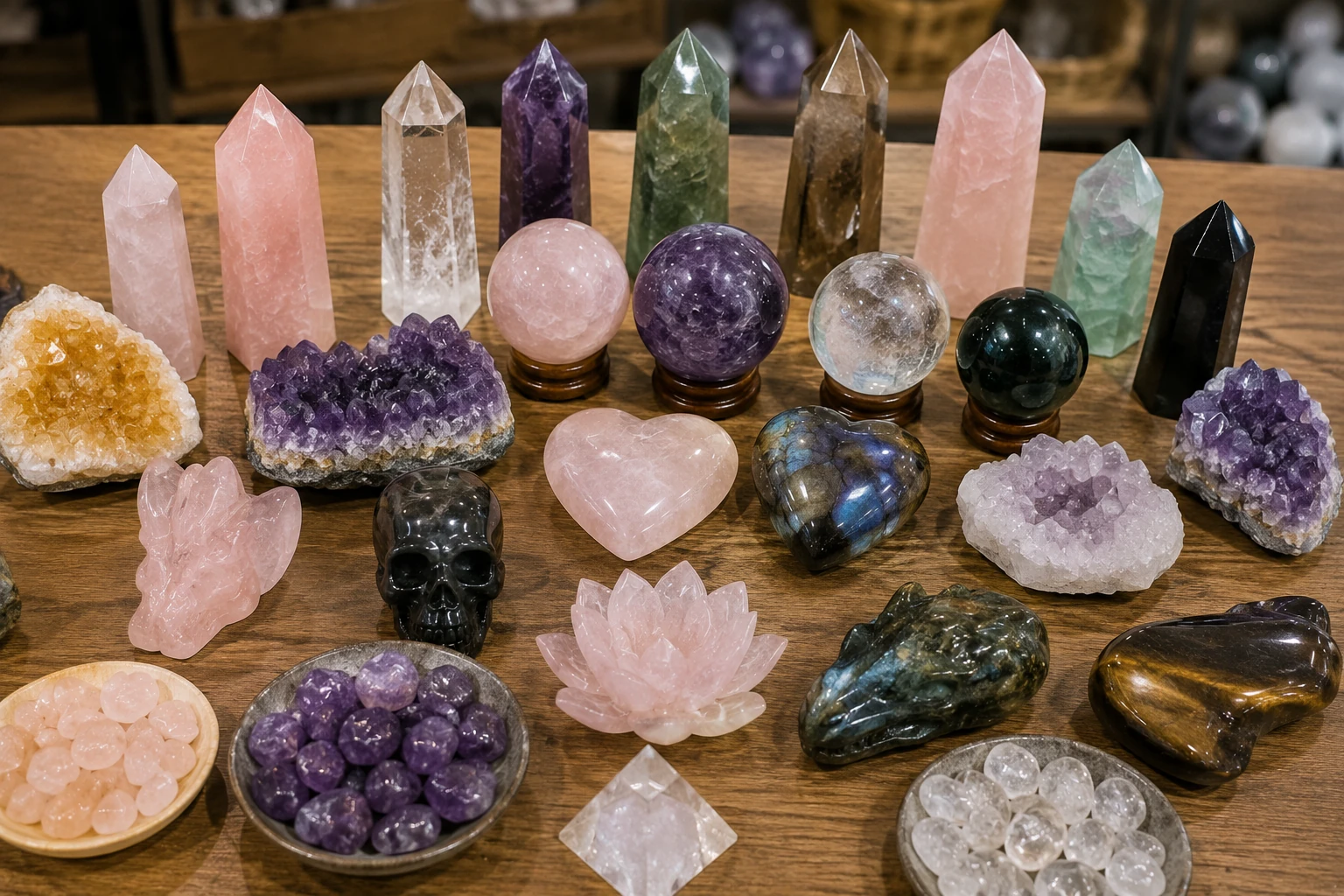
This initial purchase is your most important market research tool. It’s not about stocking your dream store on day one; it's about gathering real-world data on what your specific customers actually want to buy. Let's dive into the strategies that turn that starting budget into a foundation for long-term success.
How Do You Build a Test-Level Crystal Inventory?
The biggest temptation for new owners is to go all-in on products they personally love. But what you love might not be what sells. This can lead to the classic beginner's mistake: sinking your entire budget into hundreds of kilos of a single stone, only to find it collecting dust while your cash flow grinds to a halt. A smarter approach is to think like a scientist and create a test batch.
Your first order should prioritize variety over volume4. The goal is to get a wide range of different materials, shapes, and price points in front of your audience. This is the most cost-effective way to discover your unique bestsellers before placing a larger, more committed bulk order.
Ditch "By-the-Kilo" Thinking
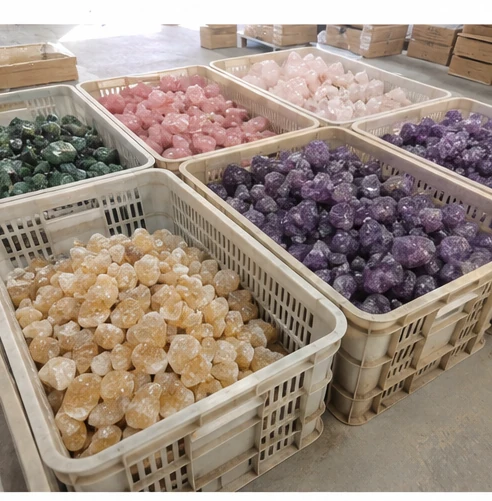
When I first started sourcing, the idea of buying 100 kilograms of beautiful rose quartz for a low per-kilo price seemed like a great deal. I've since seen many new shop owners fall into this same trap. The problem is that it locks up your capital and limits your ability to respond to your market. That massive pile of a single item might take over a year to sell, preventing you from investing in new, trending products.
Instead of focusing on weight, focus on Stock Keeping Units (SKUs). An SKU is a distinct product. For example:
- Rose Quartz Tower, 8-10cm
- Amethyst Sphere, 50mm
- Labradorite Palm Stone
Your goal for a first order is to maximize the number of SKUs, not the total weight.
The Power of Mixed Material & Style Orders
The most effective way to maximize your SKUs is by working with a supplier who offers mixed lot ordering with a low Minimum Order Quantity (MOQ)5. This is a core part of our service at Crystal Carvings Wholesale precisely because it's so critical for new businesses.
Imagine you have a $1,500 budget. Here are two ways to spend it:
- Approach A (The Trap): Buy 100kg of medium-grade amethyst clusters. You now have one SKU. You have to hope that your local market has a huge appetite for exactly that product.
- Approach B (The Strategy): You work with us to create a mixed order. For the same $1,500, you could get:
- 10 small towers each of Rose Quartz, Clear Quartz, and Fluorite (3 SKUs)
- 20 palm stones each in Labradorite and Tiger Eye (2 SKUs)
- 5 unique, high-margin mushroom carvings (1 SKU)
- 10 amethyst geodes in various small sizes (1 SKU)
- 15 mixed crystal bracelets (1 SKU)
With Approach B, you have 8+ different SKUs to test. Within a few weeks of launching, you'll have invaluable data. You might discover that Labradorite Palm Stones sell out instantly, while the Fluorite Towers move slowly. Now you know where to focus your next, larger inventory investment. This strategy transforms your first purchase from a gamble into an education.
What is the Best Product Mix for a New Crystal Shop's Inventory?
Once you've embraced the mixed-lot strategy, how do you decide what goes into that mix? A random assortment can lead to an unfocused brand and unpredictable sales. To build a resilient and profitable business, you need a structured approach to your new crystal shop inventory.
The most effective model I've seen is the "5-3-2" Inventory Rule. This framework ensures your collection is balanced, with products designed to drive traffic, generate profit, and build your brand's prestige simultaneously. It allocates your budget across three distinct product categories.
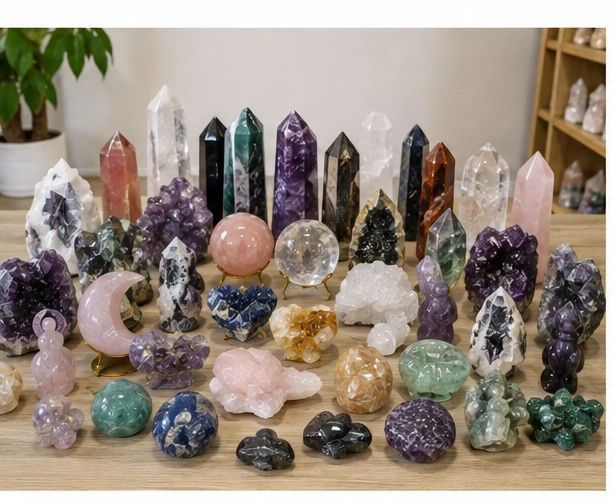
H3: 50% Staple & Traffic-Driving Products6
These are the "bread and butter" items of the crystal world. They are highly recognized, consistently in demand, and have high search volume online. Think of products like:
- Amethyst clusters
- Rose quartz towers and hearts
- Clear quartz points
- Selenite wands
- Black tourmaline rough pieces
Role in Your Shop: These products are your workhorses. They are responsible for generating steady, reliable cash flow and attracting customers to your store (whether online or physical). Because they are common, pricing is often transparent and competitive, meaning your profit margins will likely be lower on these items. That's okay. Their job isn't to make you rich on a single sale, but to keep the lights on and build a customer base. Allocate 50% of your starting inventory budget here.
H3: 30% Trendy & High-Profit Products7
This is where your shop's personality—and your highest profit margins—will come from. These are the unique, often social-media-driven items that customers can't easily price-compare. Examples include:
- Unique carvings (e.g., mushrooms, moons, stars, animals)
- Stones that are currently trending (e.g., Flower Agate, Caribbean Calcite, Pink Amethyst)
- Uncommon forms, like flame-shaped freeforms or statement generator points
Role in Your Shop: These products are your profit engines. A customer might find your shop searching for a rose quartz tower, but they'll add a $40 flower agate mushroom carving to their cart on impulse. Since these items are less common, you have much greater control over pricing. A unique carving that costs you $8 might easily sell for $30-$40, yielding a much healthier margin than your staple products. Devote 30% of your budget to these exciting finds.
H3: 20% "Showstopper" & Anchor Products
This category is all about perception and brand building. These are the large, high-quality, visually stunning pieces that make customers stop and stare.
- Large amethyst geodes or cathedrals
- Statement-sized, high-flash labradorite freeforms
- Extra-large, high-clarity spheres or towers
- Rare or exceptionally high-grade mineral specimens
Role in Your Shop: These "showstoppers" may not sell every day, but they serve two critical functions. First, they create visual impact, making your shop look more professional and established. They are perfect for grabbing attention at a market or as the hero image on your website's homepage. Second, they act as a price anchor. When a customer sees a magnificent $800 amethyst geode, the $60 crystal tower next to it suddenly seems much more reasonable. These pieces elevate the perceived value of your entire collection. Allocate the final 20% of your budget to a few carefully chosen statement items.
How Can You Manage Shipping Costs for Your New Crystal Shop Inventory?
You've calculated your budget and planned your 5-3-2 product mix. But many new owners forget one of the biggest hidden expenses: shipping. Crystals are heavy and dense. An unplanned logistics bill can instantly erase your profits and turn a great wholesale deal into a financial loss.
The key to protecting your margins is to stop thinking of shipping as an afterthought. You must build a smart logistics plan from the start, using a hybrid approach that balances speed and cost. For a typical starting order, this means splitting your shipment between air and sea.
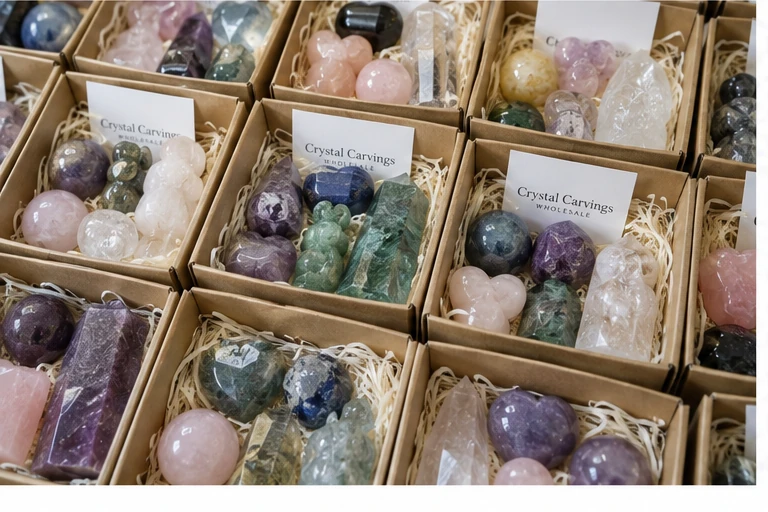
The Hidden Profit Killer: Unplanned Logistics
Let's be clear: shipping heavy goods internationally is expensive8. I have seen new buyers get a quote for a $1,500 order and be shocked by a $700 air freight bill. If they hadn't accounted for that, their ability to price products competitively and make a profit would be severely compromised. Air freight is fast, but it is priced based on either actual weight or dimensional weight (whichever is greater), and costs can add up quickly. Relying solely on air freight for all your inventory is one of the fastest ways to go out of business.
The 20/80 Split Shipping Strategy9
A much more sustainable method is to divide your order based on urgency and weight.
Air Freight for the 20% (The Trend-Testers): This portion of your shipment should be reserved for your lightweight, high-margin, trendy products. These are the unique carvings and hot new materials from your "30% profit" category. You want these items in your shop fast (typically 7-15 days via air) so you can capitalize on social media trends and get quick feedback from your first customers. The higher shipping cost is justified here because the speed-to-market and high potential profit margin can absorb it.
DDP Sea Freight for the 80% (The Heavy Staples): This is for the bulk of your order—the heavy towers, spheres, raw stones, and clusters that make up your "50% staple" category. Sea freight is dramatically cheaper than air freight, but it is much slower (typically 30-60 days). By planning ahead for these core products, you can use time to your advantage. Opting for DDP (Delivered Duty Paid) sea freight is crucial for budget certainty. DDP means the quoted price includes all costs to get the goods to your door: shipping, insurance, customs clearance, and import taxes. There are no surprise bills. This method allows you to drastically lower the per-item landed cost for your heaviest products, protecting your long-term profitability.
| Feature | Air Freight | DDP Sea Freight |
|---|---|---|
| Speed | Fast (7-15 days) | Slow (30-60 days) |
| Cost | High | Low |
| Best For | Lightweight, trendy, high-margin items | Heavy, staple, lower-margin items |
| Use Case | Quick market testing, capitalizing on trends | Bulk restocking, planned inventory |
By adopting this split strategy, you get the best of both worlds: you can react quickly to market trends while keeping the landed cost of your core inventory as low as possible.
Frequently Asked Questions
What is a good starting budget for a new crystal shop?
A safe and effective starting budget is between $1,000 and $3,000. This amount is large enough to build a diverse test inventory of 15-20 different products but small enough to minimize financial risk while you learn what sells in your specific market.
What's the difference between wholesale and dropshipping crystals?
When you buy wholesale, you purchase inventory upfront and manage the stock and shipping yourself. This gives you control over quality and branding. With dropshipping, a third party ships directly to your customer, so you don't hold inventory. Wholesale generally offers higher profit margins but requires more initial capital.
What does MOQ mean in wholesale?
MOQ stands for Minimum Order Quantity. It's the smallest quantity of a product a supplier is willing to sell. As a new shop, it's vital to find suppliers like us who offer low or flexible MOQs and mixed-style orders, allowing you to build a diverse inventory without a huge investment.
How do I find reliable wholesale crystal suppliers?
Look for suppliers with a proven track record, clear communication, and business-friendly policies. A reliable partner will offer services like mixed lots, support for custom orders, and transparent shipping options like DDP sea freight. They should act as a partner invested in helping you build your collection.
Should I buy raw stones or polished crystals first?
A healthy mix is best for a new shop. Polished items like towers, spheres, and carvings have a broad appeal for home decor and gifting. Raw stones and mineral specimens appeal to collectors and those interested in the metaphysical properties of crystals in their natural state. The 5-3-2 model helps balance this mix.
Conclusion
Determining how much inventory a new crystal shop should buy is less about a magic number and more about a smart, risk-managed strategy. By abandoning "by-the-kilo" thinking and embracing a test-level approach, you can gather crucial market data with minimal financial exposure. Start with a modest budget of $1,000-$3,000 and partner with a supplier who supports mixed-lot orders. Structure your purchase using the 5-3-2 rule to ensure a balanced collection of traffic-driving staples, high-profit trend items, and brand-building showstoppers. Finally, protect your margins with a strategic 20/80 split shipping plan. This thoughtful approach will set your new business on a path to sustainable growth.
Ready to build your first test inventory? At Crystal Carvings Wholesale, we specialize in helping new crystal shops source a diverse, high-quality collection with flexible MOQs. Contact us today for a custom quote on a mixed lot order designed for your success.
Email: sales@crystalcarvingswholesale.com WhatsApp: +86 150 7540 9178
"When Buying More Crystal Inventory Stops Making Business Sense ...", https://crystalcarvingswholesale.com/when-buying-more-crystal-inventory-stops-making-business-sense/. Business education resources emphasize that flexible, data-driven inventory strategies reduce financial risk and improve market responsiveness. Evidence role: expert_consensus; source type: education. Supports: The importance of risk-managed strategies over fixed inventory amounts for new businesses.. Scope note: The effectiveness of such strategies depends on the availability of market data and customer feedback. ↩
"Typical Cost of a Small Business", https://www.sbdc.duq.edu/Blog-Item-Typical-Cost-of-a-Small-Business. Small Business Administration guidelines suggest that initial inventory budgets for new retail businesses typically range from $1,000 to $5,000, depending on the industry and market size. Evidence role: general_support; source type: education. Supports: The recommended budget range for starting inventory in small retail businesses.. Scope note: This range may vary significantly based on the specific niche and geographic location. ↩
"The future of physical retail: 5 actions to elevate customer ...", https://mitsloan.mit.edu/ideas-made-to-matter/future-physical-retail-5-actions-to-elevate-customer-experience. Research on retail inventory strategies highlights that starting with 15-20 diverse products allows businesses to test market preferences effectively while minimizing financial risk. Evidence role: general_support; source type: research. Supports: The importance of starting with a diverse product range in new retail businesses.. Scope note: The optimal number of products may depend on the specific industry and customer demographics. ↩
"The Effect of Product Variety and Inventory Levels on Retail Sales", https://www.hbs.edu/faculty/Pages/item.aspx?num=37388. Retail experts agree that offering a variety of products helps new businesses attract a broader customer base and gather market insights. Evidence role: expert_consensus; source type: research. Supports: The benefits of prioritizing product variety over volume in initial inventory for new retail businesses.. Scope note: This strategy may not apply to industries where bulk purchasing is essential for cost efficiency. ↩
"New way to rearrange store products could boost impulse buying", https://research.wsu.edu/news/new-way-to-rearrange-store-products-could-boost-impulse-buying. Trade organizations emphasize that mixed lot ordering allows small businesses to test multiple products without committing to large quantities, reducing financial risk. Evidence role: mechanism; source type: institution. Supports: How mixed lot ordering with low MOQ helps new businesses diversify inventory.. Scope note: The availability of such suppliers may vary by region and industry. ↩
"Food Prices and Spending | Economic Research Service", http://www.ers.usda.gov/data-products/ag-and-food-statistics-charting-the-essentials/food-prices-and-spending. Studies on retail inventory management suggest that allocating 40-60% of the budget to staple products ensures steady cash flow and customer attraction. Evidence role: statistic; source type: research. Supports: The recommended percentage of inventory budget for staple products in retail.. Scope note: The exact percentage may vary based on the industry and market conditions. ↩
"How to Plan Your Crystal Inventory for the Holiday Shopping ...", https://crystalcarvingswholesale.com/how-to-plan-your-crystal-inventory-for-the-holiday-shopping-season/. Retail inventory studies suggest that allocating 20-30% of the budget to trendy products can maximize profit margins and attract impulse buyers. Evidence role: statistic; source type: research. Supports: The recommended percentage of inventory budget for trendy and high-profit products in retail.. Scope note: Trendy products may have fluctuating demand, requiring careful market analysis. ↩
"The Complete Guide to Importing Crystals from China", https://crystalcarvingswholesale.com/the-complete-guide-to-importing-crystals-from-china-shipping-customs/. Logistics industry reports confirm that international shipping costs for dense goods are significantly higher due to weight-based pricing models. Evidence role: statistic; source type: institution. Supports: The high cost of shipping heavy goods internationally.. Scope note: Costs vary widely based on shipping method, distance, and carrier. ↩
"FAQs: Split Shipment in Retail - Fluent Commerce", https://fluentcommerce.com/resources/blog/7-questions-retailers-should-ask-about-split-shipments/. Logistics studies suggest that splitting shipments between air and sea freight can optimize costs and delivery times for heavy goods. Evidence role: mechanism; source type: research. Supports: The effectiveness of the 20/80 split shipping strategy for managing costs and urgency.. Scope note: The strategy's success depends on accurate forecasting and inventory planning. ↩
Keep Reading