Struggling to decide which products to stock for your new crystal shop? Many new retailers believe a massive, diverse crystal inventory is the secret to attracting customers, but they soon find their cash is completely tied up in products that aren't selling. The solution isn't just buying more; it's buying smarter by focusing on cash flow and proven sellers.
Buying more crystal inventory stops making business sense when it compromises your cash flow1, increases your financial risk with unvalidated products, and prevents you from reinvesting in proven best-sellers. For a small retail business, profitability comes from the velocity of sales2—selling through inventory quickly—not from the sheer volume of stock accumulated on your shelves.
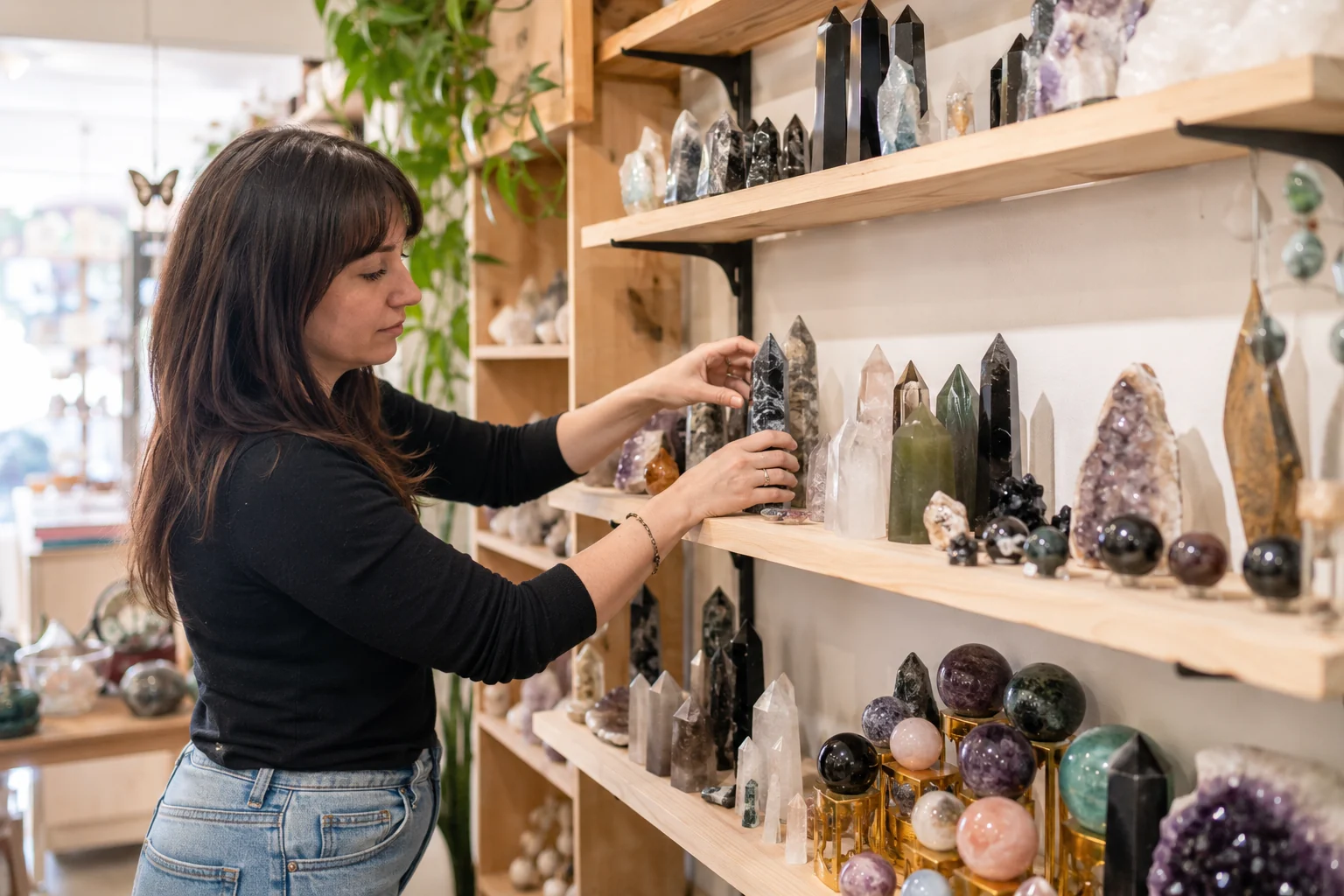
This shift in perspective from building a large collection to building a profitable one is a critical turning point for any new crystal seller. It's a common lesson learned in the early days of business, but understanding it from the start can save you from costly mistakes. Let's explore how you can build a sustainable and strategic approach to your inventory.
Is Your Crystal Inventory an Asset or a Liability?
You've finally launched your shop, and your shelves are filled with a beautiful assortment of crystals you've carefully selected. It feels like a major accomplishment, but if sales are slow, you might start to wonder: is that stock a valuable asset or a weight holding my business down?
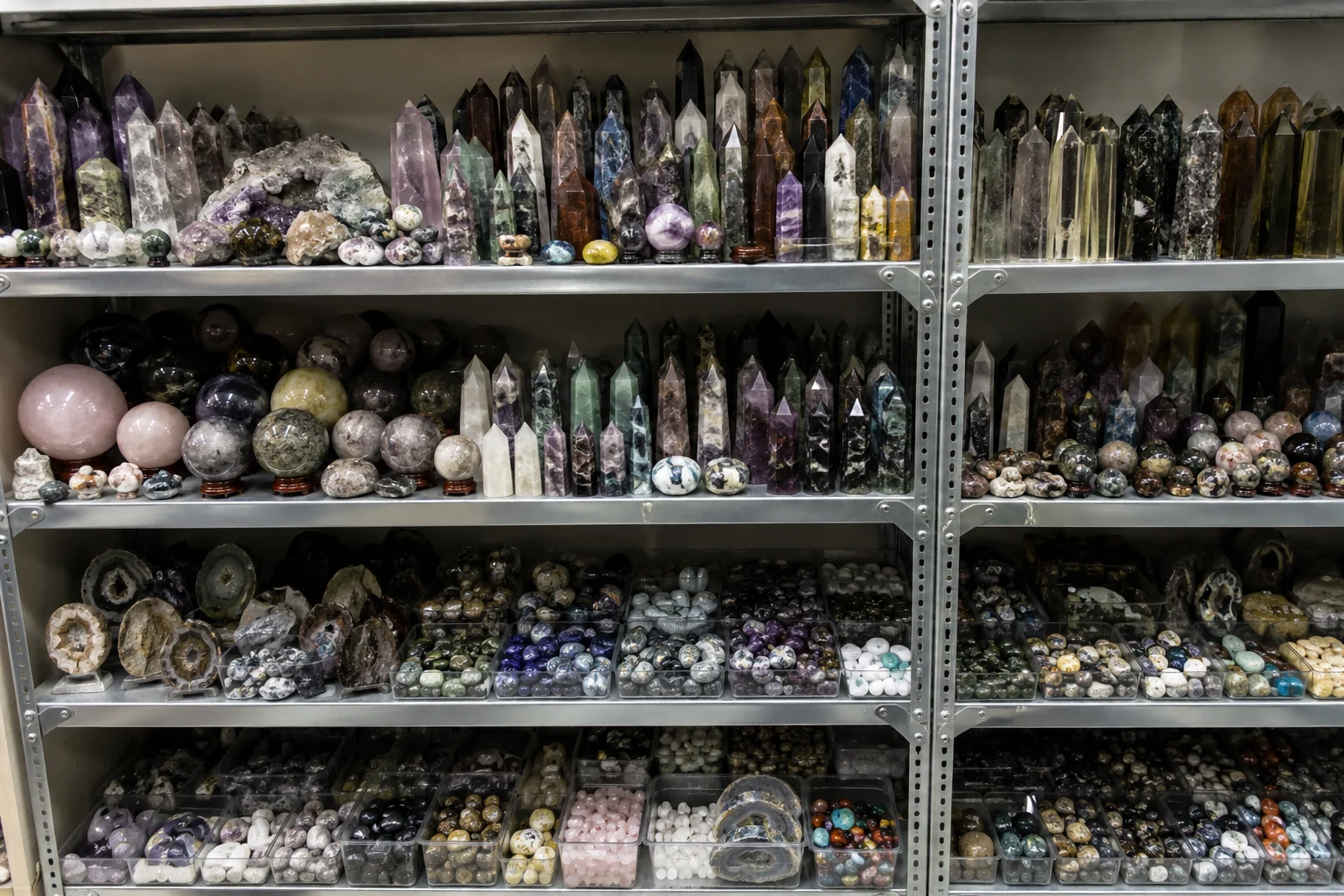
Unsold crystal inventory is a liability, not an asset, until the moment it sells. Every piece sitting on your shelf represents trapped capital—money that can't be used for marketing, website improvements, or restocking the items that are actually selling.
Dive Deeper: The True Cost of Unsold Stock
A common piece of feedback I hear from new Etsy and Shopify sellers is how proud they are of their extensive opening collection. They see a full shelf as a sign of a legitimate, well-stocked business. While the intention is good, this mindset confuses the appearance of success with the mechanics of it. In business, cash is oxygen3.
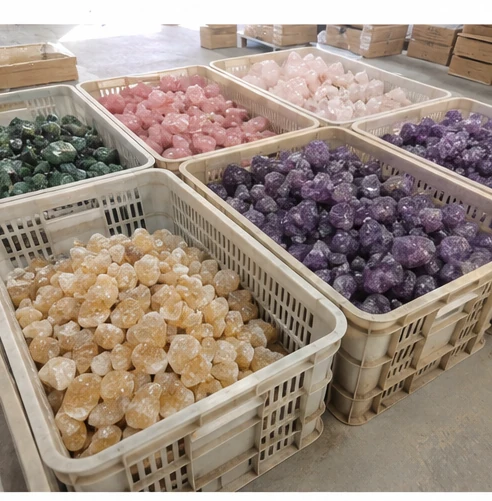
Inventory is a liability until it's converted back into cash. Think of it this way: if you have $2,000 in your business bank account, that money is liquid. You can use it to run a targeted ad campaign, pay for better product photography, or order more of a product that sold out in a day. If you spend that same $2,000 on 100 different types of crystals and only 10 of them sell, you now have less than $200 in cash and over $1,800 of your capital frozen on a shelf.
This leads to several hidden costs and risks:
- Opportunity Cost4: The money tied up in slow-moving stock could have been used to double down on a winning product. Imagine identifying a best-seller but not having the funds to restock it before the trend fades.
- Storage and Damage: More inventory requires more space. It also increases the risk of items getting chipped, broken, or lost, especially for delicate items like selenite wands or fluorite carvings.
- Market irrelevance: Crystal trends can shift5. A stone that's popular today due to a social media trend might be old news in six months. Holding onto that stock for too long means you may eventually have to sell it at a steep discount, eroding your profit margins.
For a new business operating on a tight budget, managing cash flow is more important than managing a large catalog. The goal isn't to have inventory; the goal is to sell inventory.
Why is Chasing Low Unit Prices a Trap for Your Crystal Inventory Strategy?
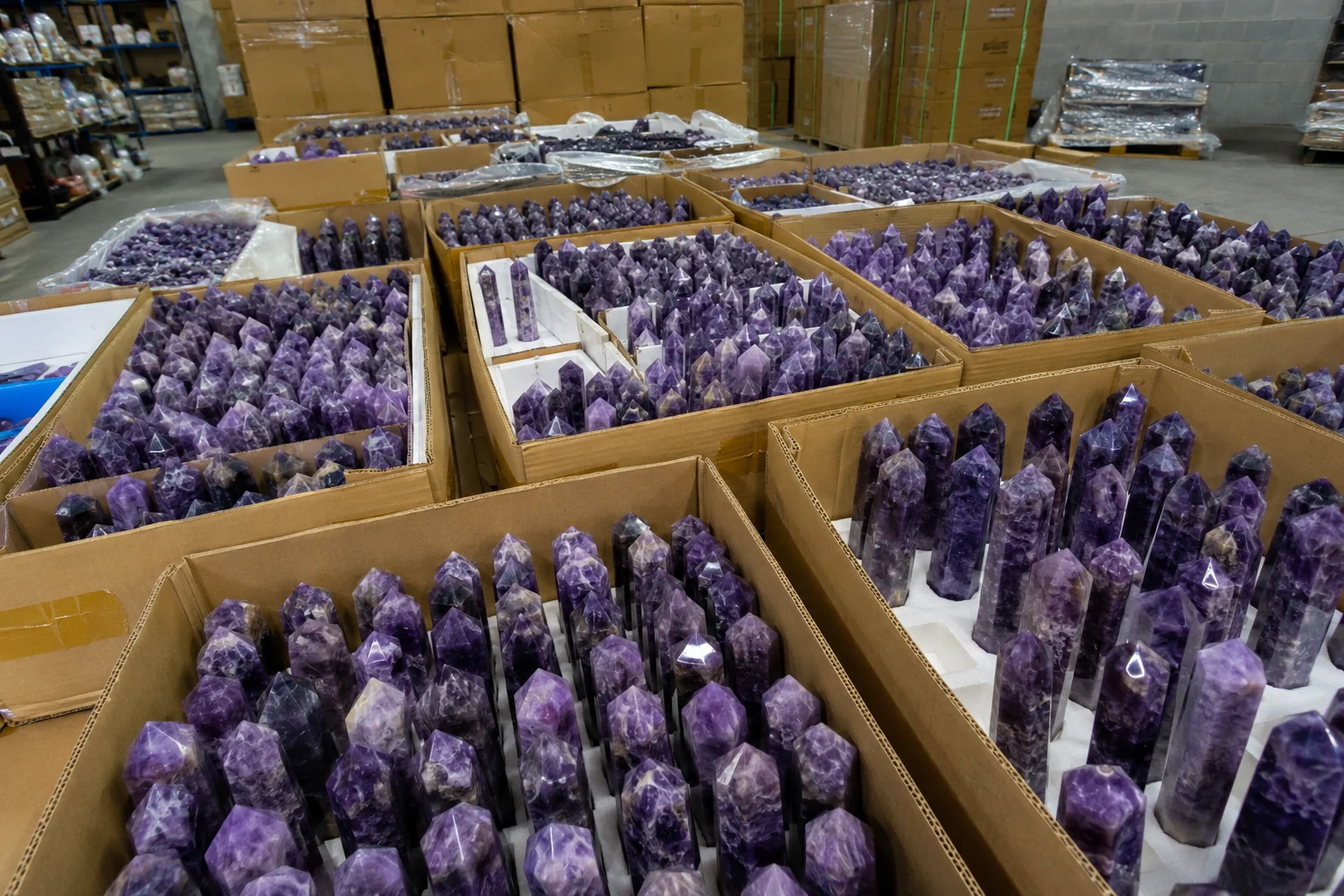
You receive a quote from a supplier: amethyst towers are $5 each if you buy 50, but only $3 each if you buy 500. It seems like a no-brainer to go for the bulk deal to maximize your profit margin, right? But for a new business, this "great deal" could be a cash flow trap that sinks you.
Chasing the lowest possible unit price6 by placing large bulk orders on unproven products is one of the riskiest moves a new retailer can make. It's far more strategic to accept a slightly higher unit cost on a smaller test order to validate demand before committing significant capital.
Dive Deeper: De-Risking Your Purchases
From our perspective as a supplier, we structure pricing to reward larger orders—that's standard in wholesale. However, I often advise new buyers to ignore the temptation of the lowest price-per-unit on their first few orders. Your primary goal is not to maximize the potential profit on a single item; it's to minimize the risk across your entire crystal inventory.
Let's break down the math with a simple example. You have a $1,500 budget for your first inventory purchase.
-
Scenario A: Chasing the Low Unit Price
- You find a great deal on rose quartz palm stones: $2 per piece if you order 500 units.
- You spend $1,000 of your budget on this one product.
- You use the remaining $500 to buy a few other items.
- The Risk: If the rose quartz palm stones don't sell as quickly as you hoped, 67% of your entire starting capital is now stuck. You can't restock other items or test new ones.
-
Scenario B: Prioritizing Validation
- The same supplier offers 50 rose quartz palm stones for $3 per piece.
- You spend $150 on a test batch.
- The Outcome: You now have $1,350 remaining to build a more diverse, risk-managed collection. If the palm stones sell out instantly, you've proven they are a winner. You can now confidently place a larger order with the profits you've made. If they sell slowly, you've only risked $150, not $1,000.
The second scenario is infinitely more sustainable. The extra dollar you paid per unit in the small batch wasn't a lost profit; it was an insurance policy against a bad investment. A cheap product that sits on your shelf for a year is a 100% loss of its purchase price and the opportunity that cash represented. A slightly more expensive product that sells through quickly generates immediate cash flow you can use to grow.
How Do You Build a "Minimum Viable Collection7" for Your Crystal Inventory?
You're ready to start sourcing, but staring at a supplier's vast catalog is overwhelming. With a limited budget, you can't possibly stock everything. How do you choose products that create an appealing collection without tying up all your cash?
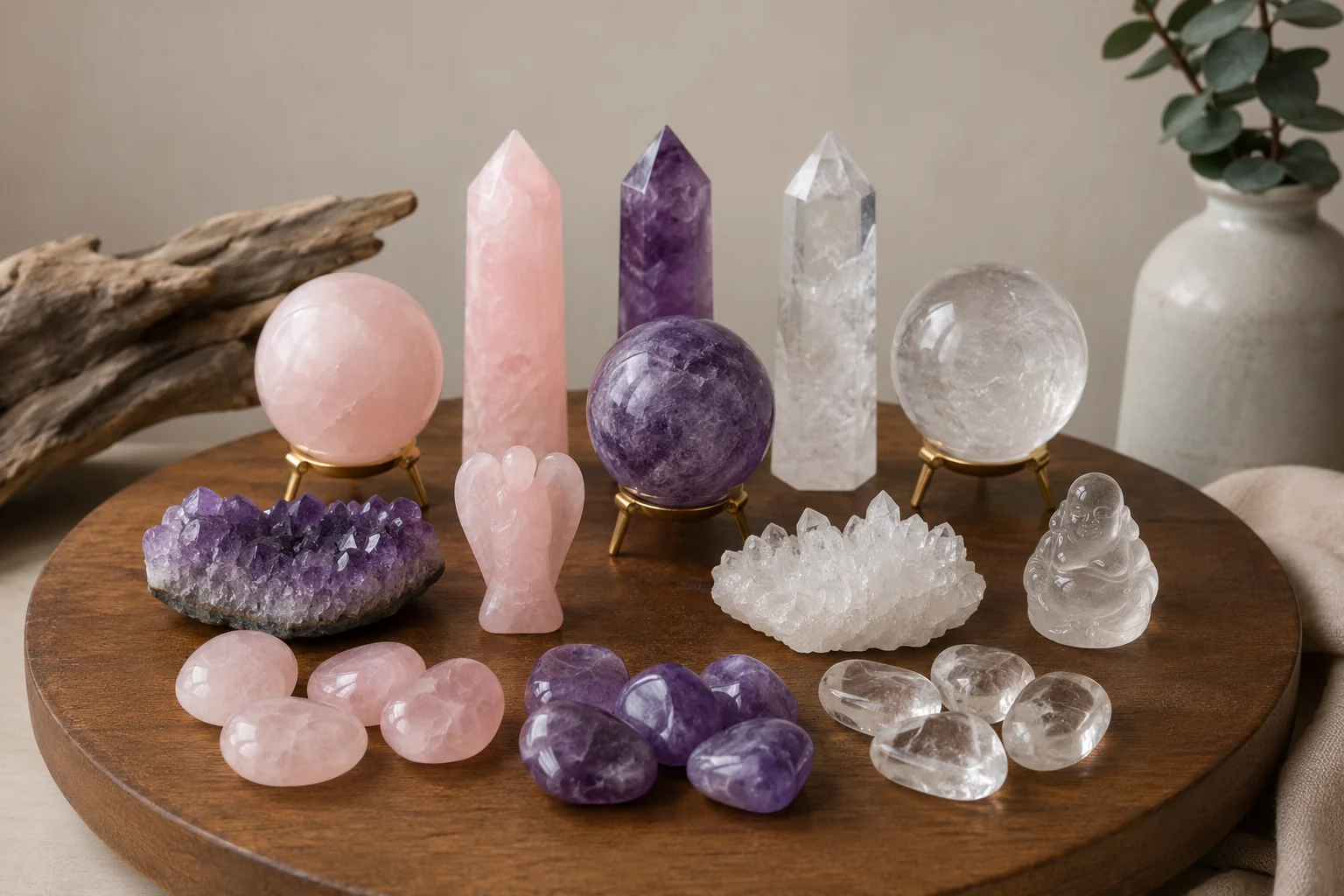
The answer is to build a "Minimum Viable Collection" (MVC). Instead of trying to be a one-stop-shop from day one, focus on a curated selection of 5-10 proven, high-demand products. This allows you to test your specific market, identify your actual best-sellers, and reinvest your profits intelligently.
Dive Deeper: A Repeatable Process for Growth
The MVC concept, borrowed from the tech startup world, is about launching with just enough features to attract early customers and validate a product idea. For a crystal retailer, this means launching with just enough crystal inventory to make sales and gather data.
Your goal is not to guess what will sell. It is to spend the least amount of money possible to learn what will sell.
H3: Identifying Your Core Products
Start with the classics. These are the crystals that have broad, enduring appeal and are often the entry point for new crystal buyers. A great starting MVC includes a mix of popular materials and forms.
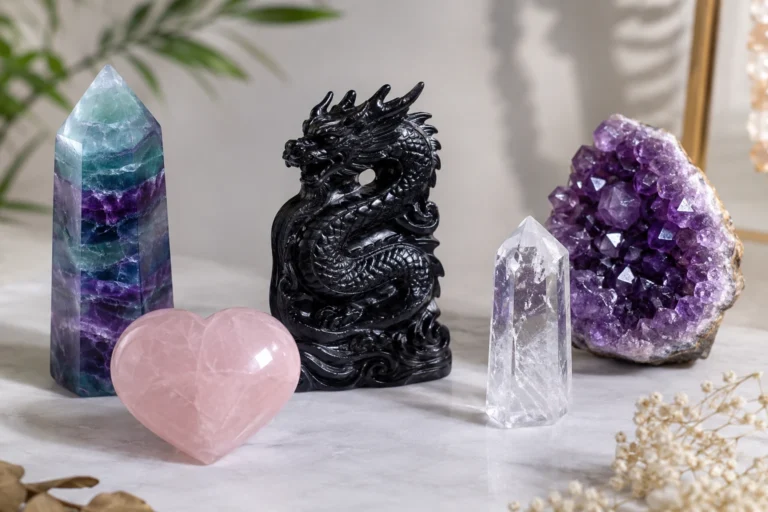
- Evergreen Materials8: Rose Quartz (love, compassion), Amethyst (calm, spirituality), Clear Quartz (clarity, amplification), Black Obsidian or Black Tourmaline (protection), and Selenite (cleansing).
- Popular Forms: Include a variety of shapes and price points to appeal to different buyers. Good starters are palm stones, hearts, small towers/points, raw chunks, and tumbled stones.
Here is a sample MVC structure you could use as a starting point. By sourcing with a supplier who offers mixed styles and low MOQs, you can build this collection without a massive upfront investment.
| Product Category | Example 1 | Example 2 | Example 3 |
|---|---|---|---|
| Towers/Points | Amethyst Point | Clear Quartz Tower | Selenite Tower |
| Hand-held | Rose Quartz Heart | Fluorite Palm Stone | Black Obsidian Worry Stone |
| Raw/Natural | Raw Amethyst Cluster | Raw Black Tourmaline | Rose Quartz Chunk |
| Jewelry | Chip Stone Bracelet |
H3: The Growth Loop
Once you launch your MVC, the real work begins.
- Launch & Promote: Announce your new collection.
- Track Sales Data: After 30-60 days, analyze what sold best. Was it the amethyst towers? The rose quartz hearts? Don't trust your gut; trust the data.
- Identify Winners: Pinpoint your top 2-3 best-selling products. These are your validated winners.
- Reinvest & Expand: Use the profits to place a larger restocking order for your winners. Then, with the remaining profit, add one new, experimental product to your collection.
- Repeat: This cycle of selling, analyzing, and reinvesting creates a sustainable, data-driven growth loop that protects your cash flow and builds a collection your customers have proven they want.
How Can Your Supplier Help You Manage Your Crystal Inventory Risk?
You're trying to decide whether to stock a trendy, new-find crystal or a timeless classic like clear quartz. One feels exciting and unique, while the other feels safe and reliable. How do you make an informed sourcing decision that balances trends with stability?
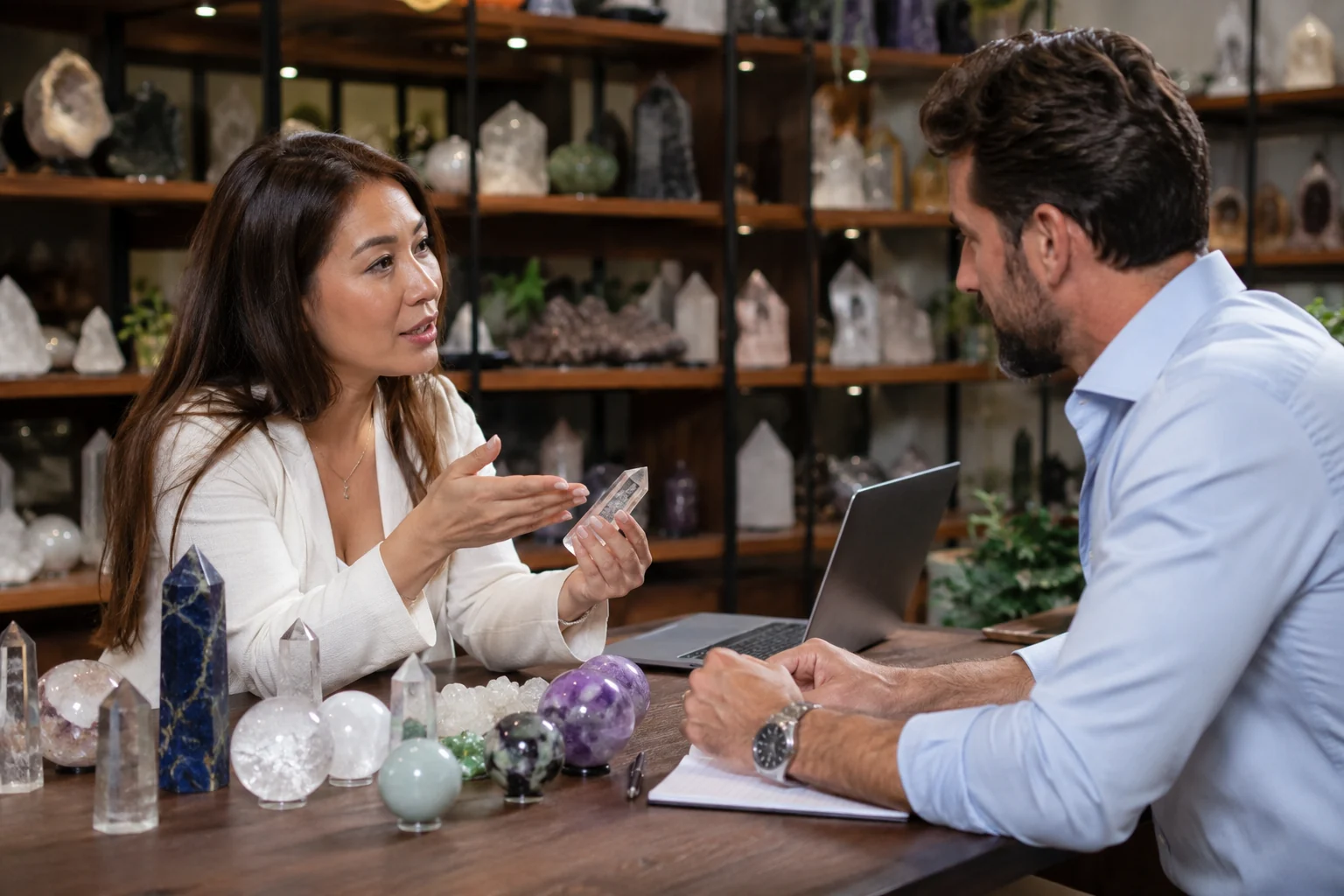
Your supplier should be more than just a vendor; they should be a strategic partner. By asking the right questions about material stability, production cycles, and market data, you can leverage their expertise to build a more resilient crystal inventory.
Dive Deeper: Using Supplier Knowledge as a Strategic Tool
As suppliers, we have a unique vantage point. We see what materials are being mined consistently, which ones are becoming scarce, and what thousands of retailers around the world are successfully selling. This information is invaluable for your own inventory planning.
H3: Stable Supply vs. Volatile Trends
Not all crystals are created equal from a supply chain perspective. Understanding the difference can help you categorize products in your inventory strategy.
- Stable Core Inventory9: These are products made from materials with consistent, large-scale mining operations. Think of rose quartz, clear quartz, amethyst, tiger eye, and various jaspers. The supply is reliable and prices are relatively stable. These are the safest bets for your "always in stock" core collection.
- Experimental/Limited-Edition Inventory10: These products are often made from materials with limited or unpredictable supply. This could be high-grade Caribbean Calcite, gemmy Fluorite from a specific mine, or rare formation like Grape Agate. Their prices can be volatile, and restocking might be difficult or impossible. These are perfect for small-batch, limited-edition drops that create excitement and urgency, but they are too risky to be part of your core crystal inventory.
H3: Key Questions to Ask Your Supplier11
When you are in a sourcing conversation, go beyond just asking for the price. Treat it as an intelligence-gathering mission. A good supplier will be happy to share their insights.
- "Of the items I'm interested in, which materials have the most stable supply and pricing right now?"
- "What is your typical production and restocking lead time for this specific carving?"
- "Are you aware of any upcoming shortages or price increases for materials like Fluorite or Labradorite?"
- "What are other new online sellers having the most success with right now?"
- "Which products have the best reorder rate among your customers?"
Asking these questions transforms your supplier relationship from a simple transaction into a strategic partnership. Their answers will help you build a smarter, more profitable crystal inventory that balances safe bets with exciting trends.
Frequently Asked Questions12
How many different types of crystals should a beginner start with?
A beginner should start with a "Minimum Viable Collection" of 5 to 10 proven products. This core selection should include evergreen materials like amethyst and rose quartz in popular forms like towers and palm stones. This approach minimizes risk and allows you to use sales data to guide future inventory expansion.
Is it better to have more variety or more depth in my crystal inventory?
For a new business, it's better to start with more depth in a few proven best-sellers. Once you identify which products sell consistently, ensure they are well-stocked. Add new variety slowly and methodically, using profits from your top performers to fund these new experiments one at a time.
What are some 'safe' crystals to build a core inventory around?
Some of the safest crystals for a core inventory are those with broad appeal and stable supply chains. These include Amethyst, Rose Quartz, Clear Quartz, Black Obsidian, Black Tourmaline, Selenite, and Tiger Eye. They are consistently in demand for their well-known properties and aesthetic beauty.
How do I calculate how much crystal inventory I need?
For a new business with no sales history, it's impossible to calculate needs accurately. Therefore, start with a small test quantity (e.g., 10-20 units) of each product in your Minimum Viable Collection. Use the initial sales velocity from your first 30-60 days to forecast future demand and guide your restocking orders.
Conclusion
Rethinking your approach to crystal inventory is one of the most powerful changes you can make as a new retailer. The path to a profitable business is not paved with shelves overflowing with unsold stock. Instead, it’s built on swift cash flow, data-driven decisions, and a lean, strategic collection that delights customers and protects your capital. By moving away from the mindset of "more is better" and embracing a "Minimum Viable Collection," you stop gambling and start building a resilient, scalable business. Focus on validating demand, reinvesting in your winners, and using your supplier as a strategic partner. This measured approach will ensure your crystal inventory serves as a true asset that fuels your growth for years to come.
If you're ready to build your first collection or refine your sourcing strategy with a partner who understands these challenges, we're here to help. Our flexible, low-MOQ ordering is designed to support the MVC model.
Contact us today to discuss your vision, and let's build a profitable crystal collection together.
- Website: https://crystalcarvingswholesale.com/
- WhatsApp: +86 150 7540 9178
- Email: sales@crystalcarvingswholesale.com
<!--[googlesitekit-end-of-content]-->
"8 Ways to Reduce Excess Inventory to Free Up Space and Cash", https://www.pnc.com/insights/small-business/manage-business-finances/ways-to-reduce-excess-inventory-free-up-space-and-cash.html. Excessive inventory ties up capital that could be used for other business operations, increasing financial risk and reducing liquidity for small businesses. See: Small Business Administration guidelines on inventory management. Evidence role: general_support; source type: education. Supports: Excessive inventory can negatively affect cash flow and increase financial risk for small businesses.. ↩
"Inventory Turnover Ratio: What It Is, How It Works, and ...", https://www.investopedia.com/terms/i/inventoryturnover.asp. Research indicates that higher inventory turnover rates are associated with improved profitability in retail businesses. See: Journal of Retailing and Consumer Services, inventory turnover studies. Evidence role: general_support; source type: research. Supports: Profitability in small retail businesses is closely tied to inventory turnover rates.. ↩
"Why is Cash Flow Management Important for Small ...", https://www.esker.com/en-gb/blog/order-cash-partner/why-cash-flow-management-important-small-businesses/. Small businesses rely on consistent cash flow to cover operational expenses and reinvest in growth opportunities. See: Small Business Administration cash flow management resources. Evidence role: general_support; source type: education. Supports: Cash flow is a critical factor for the survival and growth of small businesses.. ↩
"Opportunity cost", https://en.wikipedia.org/wiki/Opportunity_cost. Opportunity cost in inventory management arises when capital is tied up in unsold stock, limiting reinvestment options. See: Harvard Business Review articles on inventory and opportunity cost. Evidence role: general_support; source type: education. Supports: Unsold inventory represents an opportunity cost, as it prevents reinvestment in faster-selling products or other business needs.. ↩
"Understanding people's obsession with crystals | Stanford Report", https://news.stanford.edu/stories/2018/08/understanding-peoples-obsession-crystals. Market trends in crystals often shift due to cultural influences and social media trends. See: Studies on consumer behavior in niche markets. Evidence role: historical_context; source type: research. Supports: Crystal trends are influenced by cultural and social factors, leading to shifts in market demand.. ↩
"The effects of quantity discounts on supply chain performance - PMC", https://pmc.ncbi.nlm.nih.gov/articles/PMC7578567/. Bulk purchasing without demand validation can lead to cash flow issues and unsold inventory. See: Journal of Business Research studies on retail purchasing strategies. Evidence role: general_support; source type: research. Supports: Bulk purchasing at low unit prices can increase financial risk for small businesses if demand is unproven.. ↩
"Minimum viable product", https://en.wikipedia.org/wiki/Minimum_viable_product. The Minimum Viable Collection concept, adapted from tech startups, allows retailers to validate demand with minimal investment. See: Entrepreneur.com articles on lean startup principles. Evidence role: definition; source type: education. Supports: The Minimum Viable Collection approach helps retailers test market demand with a small, curated inventory.. ↩
"Rose Quartz History and Lore", https://www.gia.edu/rose-quartz-history-lore. Rose quartz and amethyst have maintained broad appeal due to their aesthetic and metaphysical properties. See: Market research reports on crystal retail trends. Evidence role: general_support; source type: research. Supports: Rose quartz and amethyst are consistently popular materials in the crystal market.. ↩
"Quartz", https://en.wikipedia.org/wiki/Quartz. Rose quartz and clear quartz are sourced from large-scale mining operations, ensuring consistent supply. See: Geological surveys on mineral production. Evidence role: general_support; source type: institution. Supports: Rose quartz and clear quartz have stable supply chains, making them reliable for inventory planning.. ↩
"Distinguishing between Caribbean Calcite, Amazonite, and Sky Blue ...", https://www.facebook.com/groups/beautyforthebeholder/posts/1447316672890778/. Rare crystals often face supply chain challenges due to limited mining operations. See: Studies on niche mineral markets. Evidence role: general_support; source type: research. Supports: Rare crystals like Caribbean Calcite and Grape Agate are subject to supply volatility, making them suitable for limited-edition inventory.. ↩
"Inventory Management Questions Every Business Should Be Asking", https://www.trilinkftz.com/inventory-warehouse-management/inventory-questions-guide/. Collaborating with suppliers provides valuable insights into material availability and market trends. See: Small Business Administration supplier relationship resources. Evidence role: expert_consensus; source type: education. Supports: Supplier insights on material stability and market trends can guide inventory decisions.. ↩
"The Big Benefits of Small Orders: Why Flexibility Matters for ...", https://ellisonyoung.com/blogs/news/the-big-benefits-of-small-orders-why-flexibility-matters-for-retailers?srsltid=AfmBOoq2D54kpEv2fmDej6tRzKhYyYUdW4vK4Ht42WC3SK6bKpPl-NG0. Launching with a small, curated inventory allows new retailers to test demand and reduce financial risk. See: Entrepreneur.com articles on lean retail strategies. Evidence role: general_support; source type: education. Supports: Starting with a small inventory of proven products minimizes risk for new retailers.. ↩
Keep Reading