As a wholesale supplier, I've seen firsthand the problems that arise when retailers aren't sure how to manage crystal carvings in sunlight. You might get a customer complaint about a faded amethyst point or notice the rose quartz hearts in your window display look paler than your backstock. This inconsistency can erode customer trust and devalue your inventory. The solution is to think about sunlight not as a mineralogist, but as a business owner protecting your assets.
The short answer is no; as a general rule, you should not leave crystal carvings in prolonged direct sunlight. Sunlight can cause irreversible color fading in popular crystals like amethyst and rose quartz1, degrade coatings and adhesives on finished products, and, in the case of clear spheres, even create a serious fire hazard2. Protecting your inventory's value and consistency means keeping it out of direct sun.
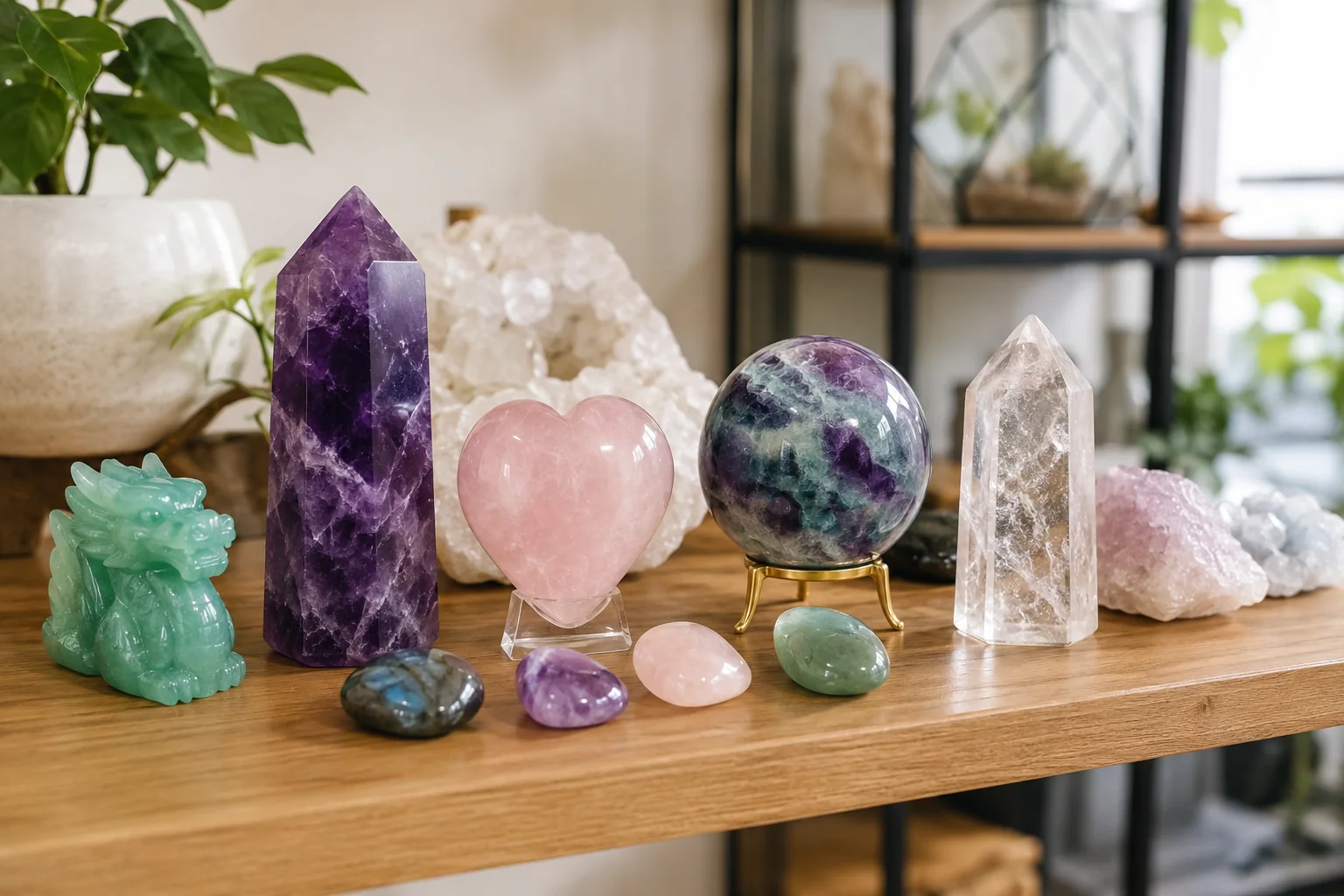
This guide goes beyond a simple "yes" or "no." We'll explore sunlight exposure as a commercial risk, looking at how it affects not just the mineral itself but the entire finished product you sell. Let's reframe the question from "Is this crystal safe?" to "What is the business risk of this display practice?"
Which Common Crystals Fade in Sunlight?
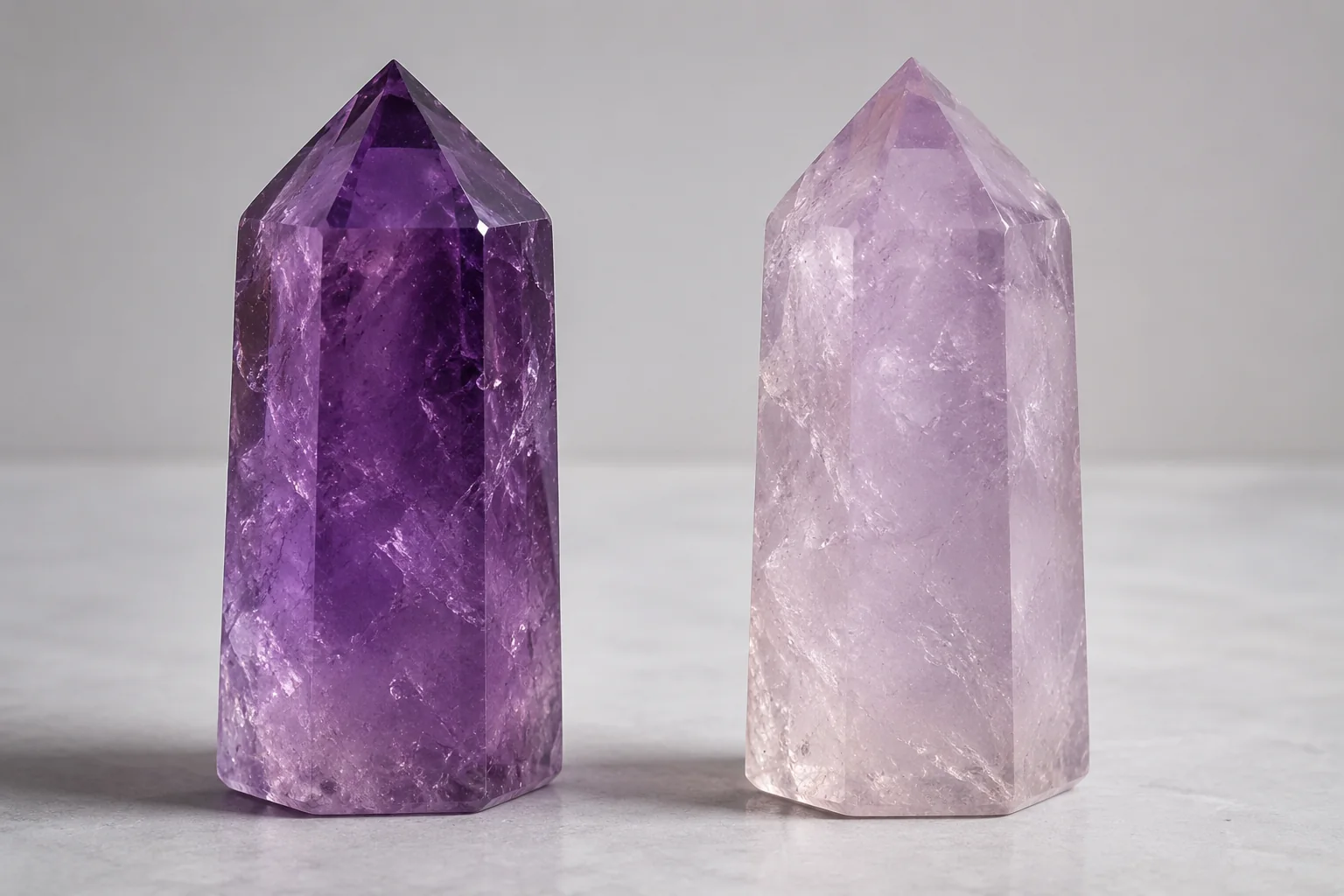
Are you worried that the beautiful purple amethyst towers you just stocked will turn into a less valuable, pale lavender? This is a common and valid concern for any crystal retailer. The color in many popular crystals is sensitive to ultraviolet (UV) radiation from the sun3.
The question isn't just about one piece fading; it's about maintaining consistency across your entire inventory. A customer who buys a vibrant amethyst online and receives a washed-out version is a customer you might lose4. Protecting your stock from the sun is about protecting your brand's reputation for quality.
Dive Deeper: The Business Impact of Fading
From my experience working with hundreds of shop owners, fading is one of the most preventable sources of lost revenue and customer dissatisfaction. It’s not a dramatic, sudden event. It's a slow creep that devalues your most visible products—the ones in your window display.
The "color centers" in many quartz varieties are, simply put, microscopic imperfections or elemental impurities in the crystal lattice that react to light. When exposed to UV rays, these centers can be "bleached," causing the color to fade. For some stones, like amethyst, this fading is permanent.
Here is a practical breakdown for some of the most common materials we handle for our wholesale clients:
| Crystal Material | Sunlight Risk & Fading Potential | Commercial Impact & Retailer Advice |
|---|---|---|
| Amethyst | High Risk. Fades to pale lilac or even grayish-white with prolonged exposure. The effect is irreversible. | Your most popular purple crystal is also one of the most vulnerable. Never use it in a long-term window display. Rotate stock frequently if it's near a bright window. |
| Rose Quartz | High Risk. Fades to a very pale, milky pink or off-white. The change is permanent and significantly reduces its appeal. | The soft pink color is its main selling point. Fading destroys its value. Keep all rose quartz, from carvings to palm stones, out of direct sun. |
| Citrine (Natural) | High Risk. Natural, un-treated citrine is rare and will fade5. Its delicate yellow or smoky-yellow color can disappear. | If you stock true, natural citrine, treat it like a precious asset. Fading erases the very quality that makes it valuable. |
| Citrine (Heat-Treated) | Moderate Risk. Most commercial "citrine" is heat-treated amethyst. It is more stable but can still fade over a long period. | While more robust than natural citrine, consistency is still key. A display piece that looks different from your bin stock creates a mismatch. It's better to be safe. |
| Fluorite | High Risk. Especially green and purple varieties. The vibrant color banding that makes fluorite so popular can wash out completely. | The value of fluorite is in its color zones. Fading makes a premium piece look like a low-grade one. This is a definite "no sun" crystal. |
| Smoky Quartz | Moderate to High Risk. The smoky color can lighten significantly over time, reducing its dramatic appearance. | While it may take longer than amethyst, the risk is still substantial for your inventory's consistency. Keep it in indirect light. |
| Clear Quartz | Very Low Risk (for Fading). Color-stable. | Fading is not the concern here. However, as we will discuss later, clear quartz spheres and points pose a severe fire risk in direct sun and must be avoided. |
Key Takeaway for Retailers: Your goal is to sell a product that matches your customer's expectations. By keeping these sensitive crystal carvings out of direct sunlight, you ensure that the piece they see in your shop or online is the same quality as the one they take home.
Is Fading the Only Risk for Crystal Carvings in Sunlight?
You've moved your amethyst towers away from the window, but what about that beautiful aura quartz cluster or the obsidian point glued to a wooden base? Many retailers believe that if a crystal doesn't fade, it's "sun-safe." This is a critical misunderstanding that can lead to damaged goods.
The problem is that many crystal carvings are not just a single piece of stone. They are finished products that may include coatings, adhesives, or resin fillers. Heat and UV light from the sun can wreak havoc on these components, even if the mineral itself is perfectly stable.
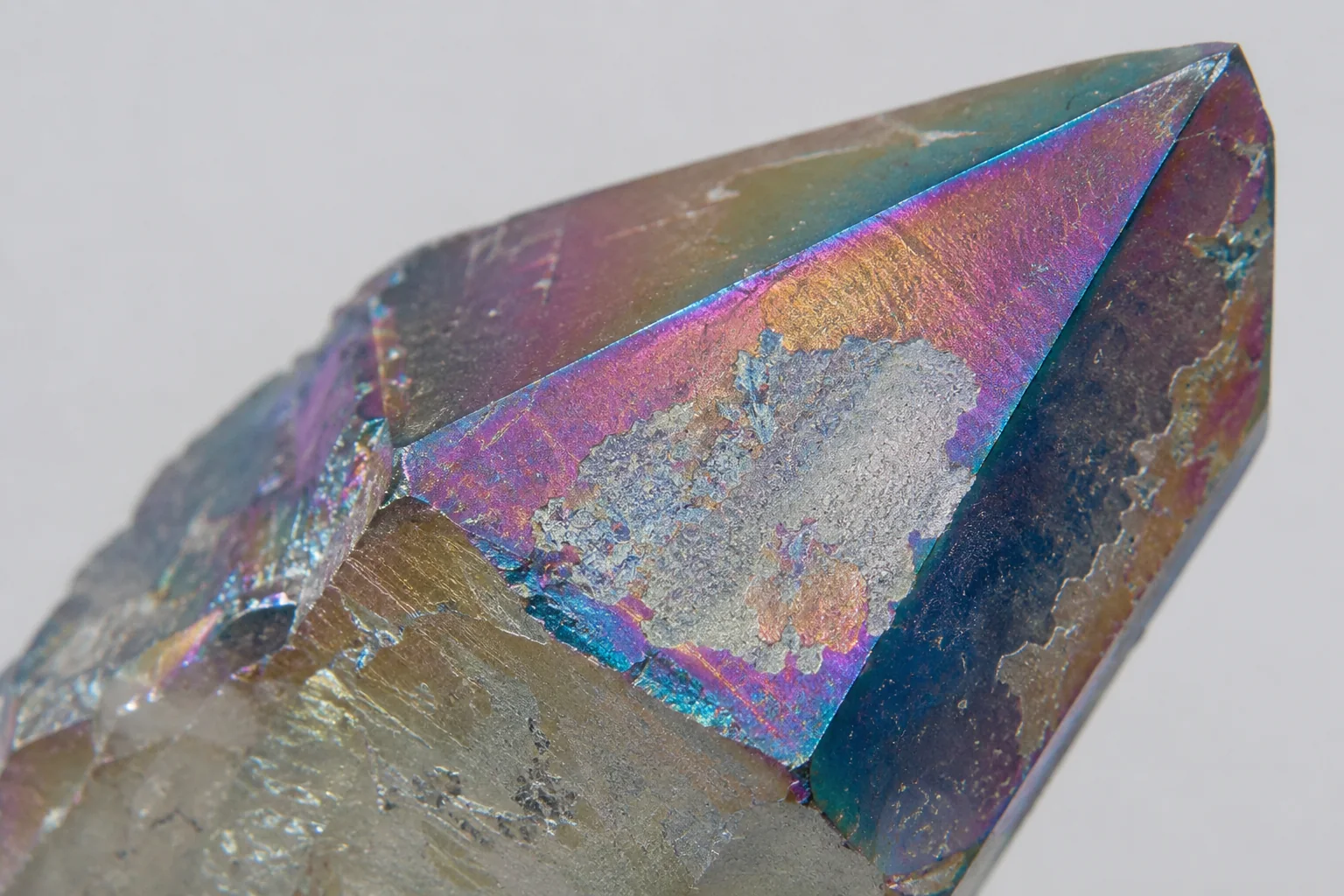
This is a lesson I learned directly from a client. They had a display of gorgeous "angel aura" quartz points that began to look dull and flaky. The quartz itself was fine, but the sun's heat and UV rays were causing the metallic coating to delaminate and peel. The products were ruined, not because the quartz was damaged, but because the finish was.
Dive Deeper: Beyond Color—Heat and Material Degradation
When evaluating crystal carvings in sunlight, you must assess the entire product, not just the base mineral. Heat is just as dangerous as UV light for many of the finished goods you stock.
H3: Heat Damage to Adhesives
Many popular products, like crystal towers or spheres mounted on bases, are assembled using industrial adhesives. While strong, these glues are not designed to withstand the constant cycle of heating and cooling that occurs in a sunny window.
- The Problem: Direct sunlight can generate significant heat, easily reaching temperatures that soften the glue6. I've heard from buyers whose crystal points have simply detached from their wooden bases after a few weeks in a display. The bond weakens, the product falls apart, and it becomes unsellable.
- Commercial Risk: You are left with damaged inventory that is difficult to repair cleanly. Selling a product with a visible, messy glue repair is unprofessional and erodes trust. It's far cheaper to prevent the damage by controlling the display environment.
H3: Degradation of Coatings and Treatments
The market for treated crystals, like aura quartz (coated with metal vapors) or dyed agate, is huge. These treatments provide stunning colors and finishes that customers love, but they are often the product's weakest link when it comes to sunlight.
- Aura Coatings: As mentioned in my client's story, the beautiful iridescent sheen on aura quartz is a micro-thin layer of bonded metal. Heat can cause the crystal and the metal to expand at different rates, breaking the bond and causing it to flake7. UV light can also degrade the finish over time.
- Dyed Crystals: Many brightly colored agate slices, geodes, and carvings are dyed. The organic and synthetic dyes used are often far less UV-stable than the crystal's natural color. A vibrant blue agate slice can fade to a sad, pale gray in a matter of months8, leading to inevitable customer disappointment.
H3: Yellowing of Resins and Fillers
Some carvings, especially larger or more complex pieces, may use a clear resin to fill natural fractures, stabilize the stone, or create composite designs (like orgonite).
- The Problem: Most epoxy resins will yellow and become brittle over time with UV exposure9. What was once a clear, invisible fill can turn into an ugly, yellow-brown stain within the crystal, permanently ruining its appearance.
- Commercial Risk: This kind of damage is irreversible. You cannot remove the yellowed resin. This risk is why, as a supplier, we are very particular about the stabilization methods used. For you as a retailer, it's another powerful reason to keep finished pieces out of direct sun.
What About Cleansing Crystals in Sunlight?
A customer comes to your counter and mentions they plan to "cleanse" their new rose quartz heart by leaving it in the sun. You know this will cause it to fade, but you don't want to dismiss their spiritual practice. This is a delicate situation many retailers face.
The key is to validate their intention while guiding them toward a safer method. Directly telling a customer their belief is "wrong" is a quick way to lose a sale and create a negative experience. Instead, you can affirm their desire to care for their crystal and offer expert advice that also protects the product.
I often advise my retail partners to frame it as offering a "gentler" or "more protective" method for a cherished item. This positions you as a caring expert, not a debunker. It shows respect for their beliefs while simultaneously educating them on proper product care.
Dive Deeper: Guiding Customers to Safer Practices
Your goal is to be a helpful guide. When customers ask about cleansing crystal carvings in sunlight, they are demonstrating a desire to engage deeply with their purchase. You can support that enthusiasm while steering them away from damaging practices.
Here are some effective strategies and talking points you can use in your shop:
-
Acknowledge and Affirm:
- Start by agreeing with the core idea. "That's a wonderful intention! Taking time to energetically cleanse your crystals is a beautiful practice." This builds immediate rapport.
-
Introduce the "Fading" Concern Gently:
- Frame it as a characteristic of the specific stone. "For a beautiful piece of Rose Quartz like this one, direct sunlight can be a bit too strong. Over time, it can cause its lovely pink color to fade, and we'd hate for that to happen to your new piece."
-
Offer Safer Alternatives:
- Provide a list of methods that are just as effective from a spiritual perspective but are physically safe for the crystal.
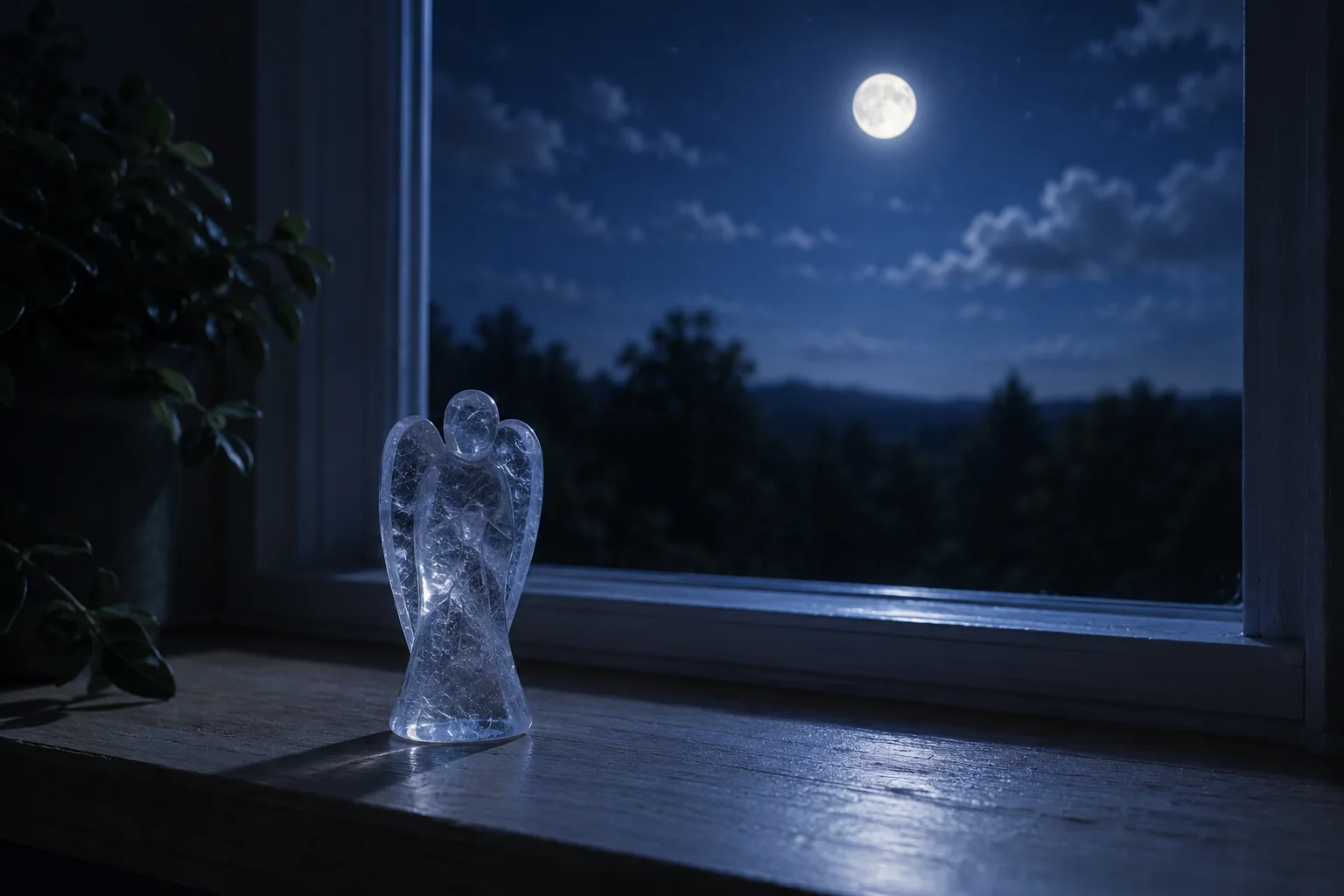
- Moonlight: "A very popular and gentle alternative is to place it on a windowsill overnight during a full moon. It gets all the cleansing energy without any risk of fading."
- Sound Cleansing: "Have you ever tried sound cleansing? Using a singing bowl, tingshas, or even a simple bell can be a quick and powerful way to clear the energy."
- Selenite/Satin Spar: "Another wonderful method is to place your crystal on a selenite charging plate. Selenite is known for its ability to cleanse other stones."
- Bright, Indirect Light: "If you love the idea of light, simply placing it in a bright room, but out of the direct sunbeam, gives it that light energy without the harsh UV rays."
-
Create Educational Content:
- Consider a small sign near your checkout or by sensitive crystals (like amethyst and fluorite) that says: "To preserve my beautiful color, please cleanse me with moonlight or sound, not direct sunlight."
- Include a small care card with purchases of sun-sensitive crystals. This adds value and prevents future issues.
By using this approach, you transform a potential problem into a trust-building moment. You become a source of valuable information, enhancing your reputation and ensuring your customers enjoy their purchases for years to come.
Can Clear Crystal Carvings in Sunlight Create a Fire Hazard?
We've established that some crystals fade and others are damaged by heat. But there is one risk that is non-negotiable and applies to even the most color-stable stones: the risk of fire. This is especially true for clear, transparent spheres and, to a lesser extent, smoothly polished points.
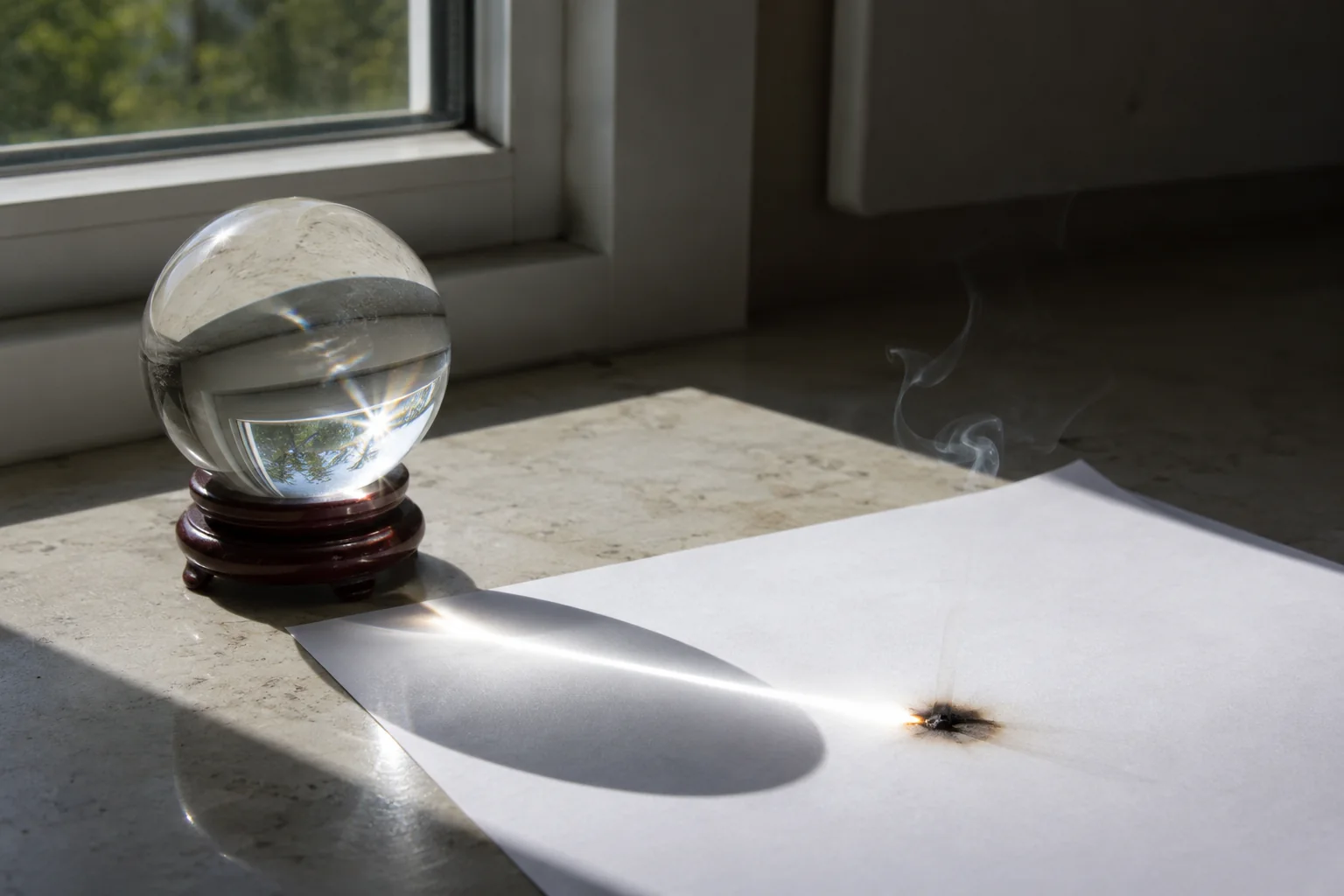
Are you using crystal spheres as part of your decor or display? A clear quartz, glass, or selenite sphere placed in a direct sunbeam acts exactly like a magnifying glass. It can concentrate the sun's energy onto a single point, easily igniting nearby flammable materials.
This is not a theoretical mineralogical debate; it is a fundamental principle of physics. I cannot stress this enough: never leave a clear, lens-like crystal sphere or carving in direct sunlight. The potential for starting a fire is real and has been documented many times. It's a risk to your inventory, your property, and your safety.
Dive Deeper: The Physics of Focal Points and Fire Safety
As a business owner, your first priority is safety. While a fading amethyst is a financial loss, a fire is a catastrophe. Understanding this risk is not optional.
H3: How Does It Happen?
The phenomenon is called lenticular focusing.
- Sphere Shape: A transparent sphere has a perfect geometric shape to bend (refract) parallel light rays from the sun.
- Focal Point: It bends these rays inward, causing them to converge at a single, intensely hot point on the other side of the sphere.
- Ignition: If this focal point lands on a flammable surface—such as a wooden shelf, a velvet display cloth, a curtain, or even a piece of paper—it can quickly heat that material past its ignition temperature, causing it to smolder and catch fire.
This is the exact same principle used to start a fire with a magnifying glass. A 6-inch clear quartz sphere in a sunny window can become a powerful fire-starting tool.
H3: Which Crystals Pose This Risk?
While clear quartz is the most common culprit, this danger applies to any transparent, polished, and roughly spherical or lens-shaped object. This includes:
- Clear Quartz spheres, eggs, and smooth, wide-based points.
- Selenite/Satin Spar spheres (which are often more translucent than transparent, but can still focus light).
- Fluorite spheres, if they have large, clear sections.
- Rose Quartz spheres, if they are of a high, gem-grade transparency.
- Glass spheres or scrying balls.
Your Action Plan for Fire Safety:
- Audit Your Displays Immediately: Walk through your shop and identify any spherical or lens-like objects located in areas that receive direct sunlight at any point during the day.
- Relocate Immediately: Move these items to a location that only receives indirect light. There are no exceptions to this rule.
- Educate Your Staff: Ensure every member of your team understands this specific fire risk and can explain it to customers.
- Warn Your Customers: When selling a crystal sphere, make it a point to include a verbal and written warning. A simple sticker on the box or a line on the care card that says "Warning: Fire Hazard. Do not place in direct sunlight." can prevent a disaster.
Managing crystal carvings in sunlight is about more than aesthetics; it's about safety. This particular risk is the most severe and requires your immediate attention.
Frequently Asked Questions
How long does it take for crystals to fade in the sun?
There's no single answer, as it depends on the crystal's type, quality, and the intensity of the UV exposure. Some, like vibrant amethyst, can show noticeable fading in a few months of consistent sun. The best business practice is to avoid the risk entirely to ensure your inventory remains consistent and valuable.
Can I use a UV-protective film on my shop window?
UV-protective films are a great idea for any retail storefront10. They can significantly reduce the speed of fading for sensitive crystals. However, they do not eliminate the heat that can damage adhesives and coatings, nor do they remove the fire risk from spheres focusing a sunbeam. It's a helpful step, but not a complete solution.
Are dyed crystals more likely to fade?
Yes, absolutely. The dyes used to color agate, quartz, and other minerals are often far less stable than a crystal's natural color centers. A brightly dyed pink or blue carving can fade very quickly, sometimes in just a few weeks of direct sun, leading to a high likelihood of customer complaints.
What's the difference between direct and indirect sunlight?
Direct sunlight is when the sun's rays are hitting an object in a focused beam—you can see a sharp shadow11. Indirect sunlight is the ambient light that brightens a room, even away from the window. Indirect light is much safer for displaying all types of crystal products.
Conclusion
Successfully managing your crystal inventory requires thinking beyond the mineral itself. The question of placing crystal carvings in sunlight is a commercial risk assessment. You are not just protecting a stone; you are protecting the finished product's integrity, your inventory's value, and your brand's reputation. The key takeaways are clear: fading from UV light devalues popular stones like amethyst, heat from the sun can destroy adhesives and coatings on finished goods, and clear spheres pose a serious fire hazard. By prioritizing safe display practices—favoring bright, indirect light over direct sunbeams—you safeguard your assets and build trust with your customers.
If you are looking for a reliable wholesale partner who understands these challenges and can help you build a marketable, high-quality collection, we are here to help. Contact Crystal Carvings Wholesale for sourcing support, product recommendations, and expert advice tailored to your retail needs.
Website: https://crystalcarvingswholesale.com/ WhatsApp: +86 150 7540 9178 Email: sales@crystalcarvingswholesale.com
<!--[googlesitekit-end-of-content]-->
"How does sunlight affect amethyst globe color over time?", https://www.facebook.com/groups/1261459718349994/posts/1726957248466903/. Studies on the photochemical effects of UV radiation on quartz varieties indicate that prolonged exposure can alter the color centers responsible for their vibrant hues, leading to permanent fading. Evidence role: mechanism; source type: research. Supports: Sunlight exposure can cause irreversible fading in crystals like amethyst and rose quartz.. Scope note: The findings may vary depending on the specific mineral composition and environmental conditions. ↩
"Sun", https://en.wikipedia.org/wiki/Sun. Physics principles of lenticular focusing explain how transparent spheres can concentrate sunlight to ignite flammable materials, a phenomenon documented in fire safety studies. Evidence role: mechanism; source type: education. Supports: Clear crystal spheres can focus sunlight to a point, creating a fire hazard.. Scope note: Specific cases may depend on the sphere's size, material, and environmental conditions. ↩
"Effects of UV radiation on natural and synthetic materials - PMC - NIH", https://pmc.ncbi.nlm.nih.gov/articles/PMC10088630/. Research on UV-induced photochemical reactions in minerals shows that prolonged exposure can degrade color centers, particularly in quartz varieties. Evidence role: mechanism; source type: research. Supports: UV radiation can alter the color centers in crystals, leading to fading.. Scope note: The degree of fading may vary based on crystal type and UV intensity. ↩
"Shopping for others: how does inconsistency in online reviews ...", https://pmc.ncbi.nlm.nih.gov/articles/PMC12231527/. Retail case studies highlight that inconsistent product quality, including visible fading, negatively impacts customer trust and retention. Evidence role: case_reference; source type: institution. Supports: Product inconsistency, such as faded crystals, can lead to customer dissatisfaction and loss.. Scope note: Specific examples may vary by industry and product type. ↩
"Citrine Gemstone | Natural Citrine Stone", https://www.gia.edu/citrine. Geological references confirm the rarity of natural citrine and its vulnerability to UV-induced fading due to its delicate color centers. Evidence role: general_support; source type: encyclopedia. Supports: Natural citrine is rare and susceptible to fading under UV exposure.. Scope note: The fading process may depend on the specific mineral composition. ↩
"Effect of Ultraviolet Light on the Shear Bond Strength of Commercial ...", https://pmc.ncbi.nlm.nih.gov/articles/PMC12387562/. Material science studies show that prolonged exposure to sunlight can raise temperatures sufficient to weaken industrial adhesives. Evidence role: mechanism; source type: research. Supports: Sunlight exposure can degrade adhesives by softening them due to heat.. Scope note: The effect may vary based on adhesive type and environmental conditions. ↩
"Extraordinary anisotropic thermal expansion in photosalient crystals", https://pmc.ncbi.nlm.nih.gov/articles/PMC6949593/. Studies on thermal expansion properties indicate that mismatched rates between crystals and metal coatings can weaken bonds under heat. Evidence role: mechanism; source type: research. Supports: Heat can cause differential expansion between crystals and metal coatings, leading to delamination.. Scope note: The degree of delamination may depend on coating thickness and material properties. ↩
"An evaluation of UV protection imparted by cotton fabrics dyed with ...", https://pmc.ncbi.nlm.nih.gov/articles/PMC526772/. Research on synthetic dyes used in minerals shows that many are less UV-stable than natural colors, leading to rapid fading. Evidence role: mechanism; source type: research. Supports: Dyed agate slices are prone to fading under UV exposure.. Scope note: The fading rate may depend on dye type and exposure conditions. ↩
"The Effects of UV Light on the Chemical and Mechanical ... - PMC", https://pmc.ncbi.nlm.nih.gov/articles/PMC5459211/. Material science research confirms that UV radiation degrades epoxy resins, leading to discoloration and brittleness over time. Evidence role: mechanism; source type: research. Supports: UV exposure can cause epoxy resins to yellow and become brittle.. Scope note: The rate of degradation may vary based on resin formulation and UV intensity. ↩
"Retail Window Films", https://www.decorativefilm.com/window-film-for-retail?srsltid=AfmBOoo32cN67FtWsG0CjfRKqEfePaSUzp7epBVm4d_sSsI_hYMdLwmr. Institutional studies on UV-protective films show they can significantly reduce UV radiation, slowing the fading process in sensitive materials. Evidence role: general_support; source type: institution. Supports: UV-protective films can reduce fading in sensitive crystals by blocking UV radiation.. Scope note: Films may not address heat-related damage or fire risks. ↩
"Sunlight", https://en.wikipedia.org/wiki/Sunlight. Educational resources define direct sunlight as focused rays that produce distinct shadows, contrasting with diffuse ambient light. Evidence role: definition; source type: education. Supports: Direct sunlight refers to focused beams that create sharp shadows.. ↩