Choosing the best stone for a custom carving can feel overwhelming, especially when your design is intricate and your brand's reputation is on the line. You have a brilliant idea, but you worry that the final product might not match your vision, or worse, break during production. The solution lies in understanding a few key geological properties that determine whether a stone is a perfect match for your design or a recipe for disaster.
The best stone for a custom carving depends on three factors: the stone's physical properties (hardness and cleavage) to handle design details, its internal structure (inclusions and clarity) to determine cost and yield, and its optical properties (transparency or opacity) to ensure the finished details are visible. Hard, dense stones like obsidian and agate are ideal for intricate designs1, while opaque stones like jasper are better for large-scale pieces to manage costs2.
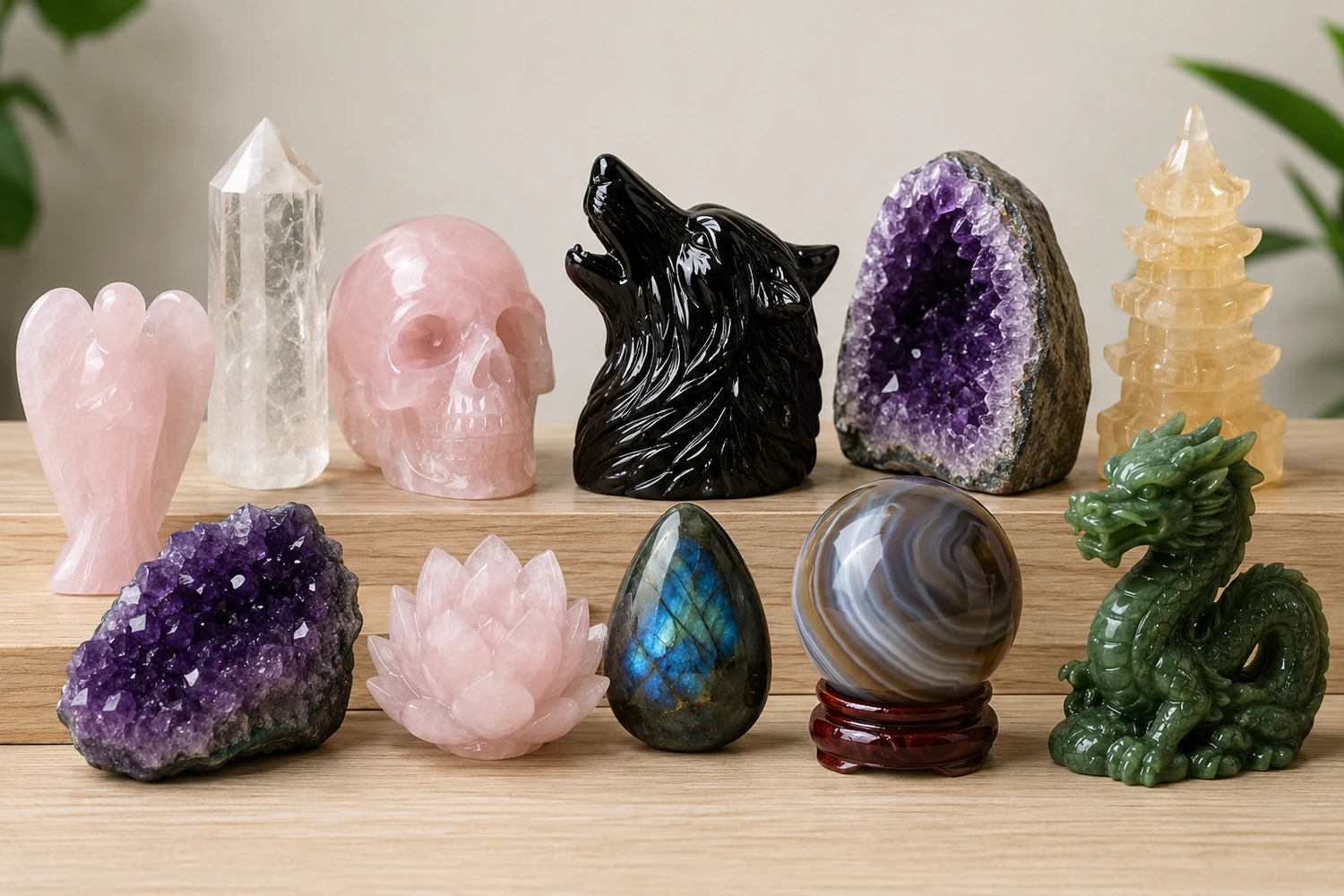
These factors are not just minor details; they are the fundamental principles that our carving workshop uses every day. Understanding them will empower you to make smarter sourcing decisions, reduce costs, and ensure your custom crystal products are both beautiful and durable. Let's explore each of these critical areas.
What physical properties determine a stone's suitability for carving?
You've spent hours perfecting a 3D model with fine lines and sharp angles, like the intricate fur on a fox or a dragon's scales. But you're concerned that a natural stone might be too fragile, causing these details to chip away. This is a valid concern that can make or break your project.
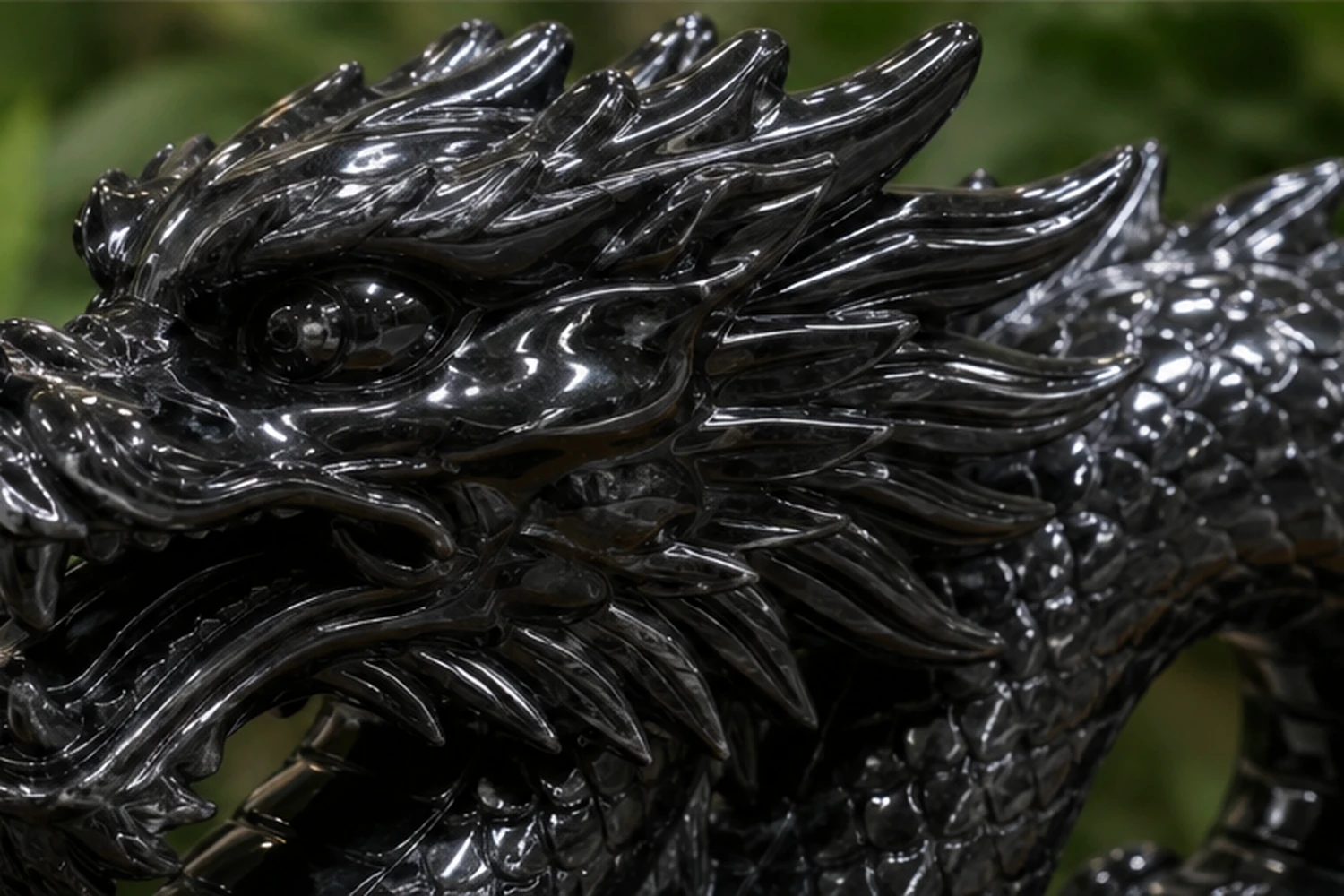
The answer lies in Mohs hardness and cleavage3. For designs with sharp edges or fine details, you must select a mineral with high Mohs hardness and a dense internal crystal structure that lacks strong cleavage planes. This ensures the material can withstand the pressure of high-speed carving tools without fracturing.
Dive Deeper: The Physics of Carvability
When we talk about creating custom carvings, we're essentially having a conversation between a designer's vision and geological reality. Two concepts are non-negotiable: Mohs hardness and cleavage.
H3: Mohs Hardness: The Capacity for Detail The Mohs scale ranks mineral hardness from 1 (Talc) to 10 (Diamond). This isn't just an academic number; it directly predicts how well a stone can "hold" a sharp edge.
- High Hardness (6.5+): Materials like Agate, Jasper, Clear Quartz, and Obsidian (technically a volcanic glass with a hardness around 5.5 but very brittle and excellent for sharpness) are fantastic for detailed work. Their dense structure allows our CNC machines and hand-carving tools to create crisp, sharp lines without the edges crumbling. If your design includes a company logo, fine textures, or sharp points, these should be your top choices.
- Low Hardness (Below 5): Stones like Fluorite (4), Malachite (3.5-4), and Selenite (2) are much softer. Trying to carve a sharp, thin wing on a piece of Fluorite is like trying to carve a sculpture out of a block of hard cheese—it's prone to crumbling and cannot support fine details.
H3: Cleavage: The Stone's Natural Breaking Point Cleavage refers to a mineral's tendency to split along specific planes of structural weakness. Think of it like splitting a log of wood—it splits easily along the grain but is very difficult to break across it.
- Stones with Strong Cleavage: Fluorite has perfect cleavage in four directions4, meaning it wants to break into octahedron shapes. Selenite has perfect cleavage in one direction, causing it to flake into thin sheets. If a design requires carving a thin, extended part (like an arm or a horn) against these cleavage planes, it is almost guaranteed to snap off during the polishing phase, which involves tumbling the pieces in a vibrating machine.
- Stones without Cleavage: Obsidian, Agate, and Jasper have what is called a "conchoidal fracture," meaning they break in curved, shell-like patterns, not along flat planes. This makes them predictable and stable for complex shapes, as they don't have inherent "fault lines" waiting to split.
For these reasons, I often have to tell clients that their dream of a lacy, intricate Fluorite angel is physically impossible. We guide them toward a more suitable material or suggest simplifying the design into a rounded, robust shape that respects the stone's natural limitations.
| Feature | Best For Intricate Details | Poor For Intricate Details |
|---|---|---|
| Examples | Obsidian, Agate, Jasper, Clear Quartz | Fluorite, Selenite, Malachite, Calcite |
| Mohs Hardness | Typically 6.5–7 | Typically 2–4 |
| Cleavage | Little to no cleavage | Strong, perfect cleavage planes |
| Suitable Designs | Sharp lines, fine textures, logos | Rounded spheres, hearts, thick sculptures |
How do internal inclusions affect the cost of a custom carving?
You've requested a quote for a large, 15cm-tall carving in "flawless" rose quartz, and the price comes back much higher than you expected. You're left wondering why, especially when the raw material seems abundant. The hidden cost is often tied directly to the stone's natural imperfections.
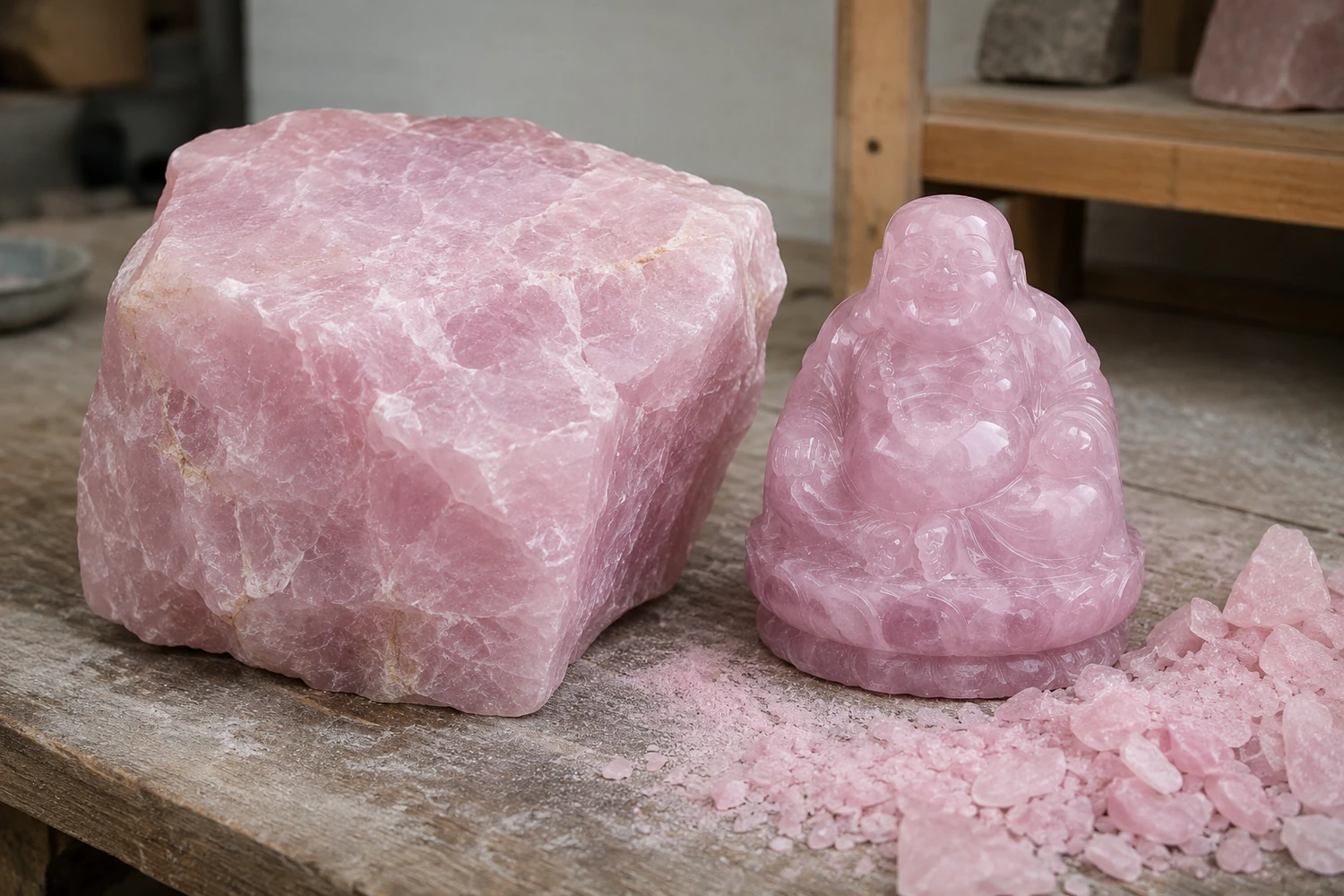
The high price is due to a low "yield rate." To get a single, large piece free of internal cracks and cloudy inclusions from a raw boulder, our technicians may have to cut away and discard a significant amount of material. This wasted raw stone, sometimes kilograms of it, is factored into the final unit price.
Dive Deeper: The Economics of Yield Rate
When you place a wholesale order, especially for large custom pieces, you're not just paying for the final product's weight. You are paying for the total amount of high-quality raw material that was consumed to produce it. This is where "yield rate"—the percentage of the raw block that becomes a sellable product—becomes the dominant cost factor.
H3: The Enemy of Large Carvings: Cracks and Inclusions Many popular transparent or translucent crystals, like Rose Quartz, Amethyst, and Clear Quartz5, naturally form with internal imperfections.
- Inclusions: These are other minerals or gas bubbles trapped inside the crystal as it grew. "Cotton" or "cloudy" spots are dense fields of tiny inclusions.
- Internal Fissures: These are natural cracks deep within the stone. While a small piece might be carved from a clear section, a large carving (e.g., 15cm+) has a high probability of intersecting a major fissure. These cracks compromise the structural integrity of the carving and can cause it to break apart during production.
Imagine we start with a 20kg boulder of A-grade rose quartz. To produce a single 15cm, 1kg flawless statue, our technicians must carefully inspect the boulder, identify the large "clean" sections, and cut away all the parts with major cracks or dense cotton-like inclusions. In this process, it's common to discard 10-15kg of the raw material. That massive loss is pure cost, and it must be absorbed into the price of the final, successful piece. This is why a large, flawless amethyst geode carving can cost exponentially more than a smaller one.
H3: The Smart Alternative: High-Yield Materials As an experienced supplier, we often guide clients toward more cost-effective options for large-scale projects. If flawless clarity isn't the primary goal, choosing a stone with a different internal structure can dramatically increase the yield rate and lower your costs.
Consider materials like Labradorite, Picture Jasper, or most types of Agate. These are opaque or are composed of microcrystalline structures. They don't have the large, transparent crystal formations prone to major internal fissures. Their beauty comes from patterns, color bands, or labradorescence, not from flawless clarity.
Because these materials are structurally consistent throughout, the yield rate is extremely high. We can use almost the entire raw block, reducing material waste significantly. By switching a large carving design from Rose Quartz to Picture Jasper, a buyer could potentially reduce their raw material cost by 40% or more6, making the project far more commercially viable. This is a key part of choosing the best stone for a custom carving on a budget.
Why do some stones make carvings look better than others?
You've approved a beautifully executed carving, but when you see the final product, the details seem to vanish. The design you paid for is technically there, but it's hard to see, making the piece look flat and indistinct. This frustrating outcome is often caused by a mismatch between the carving style and the stone's optical properties.
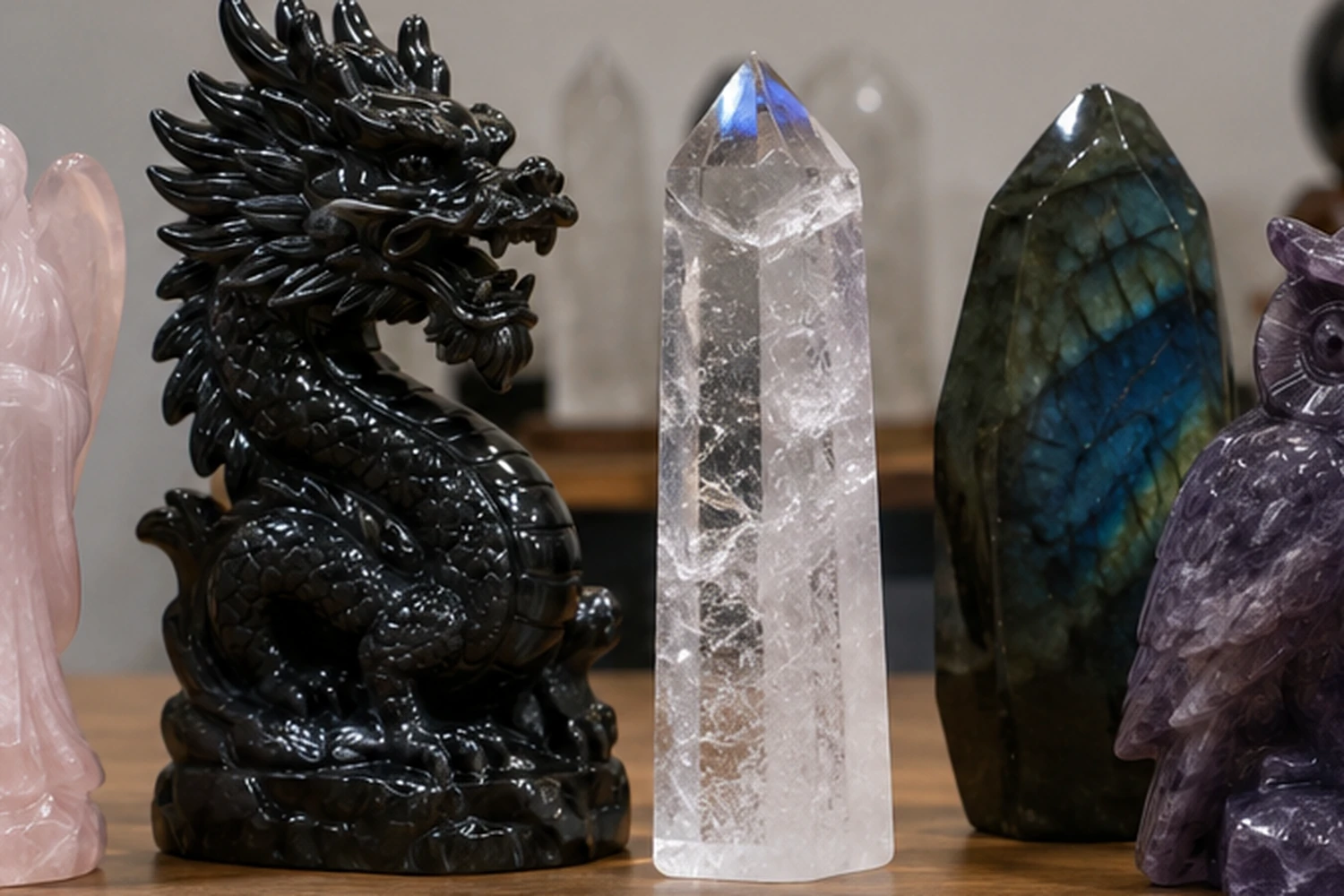
A stone's transparency can "swallow" the details of a shallow carving. Light passes through a transparent material like clear quartz and refracts internally, creating confusing shadows that obscure surface details. In contrast, opaque stones provide a solid background7, creating strong visual contrast that makes every carved line pop.
Dive Deeper: Managing Light for Visual Impact
The final aesthetic appeal of a carving is a play of light and shadow. The material you choose dictates how that play unfolds. Selecting the wrong stone can effectively camouflage your expensive design.
H3: The "Light Bleed" of Transparent Materials Transparent and highly translucent stones like Clear Quartz, Smoky Quartz, and high-grade Amethyst present a unique challenge for certain types of designs. Light doesn't just reflect off their surface; it enters the stone, bounces around inside, and exits from multiple points.
This phenomenon is particularly problematic for:
- Bas-Relief (Shallow Surface Carving): When you carve shallow lines on a clear surface, the light passing through the stone from behind can completely wash them out. From the front, the internal refractions and any minor inclusions create more visual "noise" than the carving itself. I once had a client insist on engraving their logo onto clear quartz palm stones. The result was disappointing; the logo was nearly invisible unless held at a very specific angle to the light.
- Frosted vs. Polished Finishes: Sometimes a frosted (unpolished) finish is used to create contrast on a transparent stone. While this helps, the effect can still be subtle and may not deliver the high-impact look a brand wants.
H3: The High-Contrast Beauty of Opaque Materials For designs that rely on clear, visible lines, opacity is your best friend. Opaque stones do not allow light to pass through them. All the visual action happens right on the surface.
This makes them the best stone for a custom carving when your design involves:
- Engraving and Etching: Whether it's a logo, a symbol, or text, an opaque background ensures maximum readability. The carved lines, once polished, create a shadow and highlight that stands out dramatically against the solid-colored surface.
- Shallow Reliefs and Textures: Fine textures, like the patterns on a mandala or the scales on a fish, appear incredibly sharp and three-dimensional on opaque stones.
Excellent choices for this include:
- Black Obsidian: The ultimate high-contrast material. Its jet-black, glassy surface makes any polished or frosted carving look incredibly premium.
- Lapis Lazuli: The deep blue background provides a rich, luxurious canvas for carving.
- Patterned Agates and Jaspers: The natural bands and colors can be cleverly incorporated into the design itself, but the overall opacity still ensures the carved lines remain distinct.
What does a professional OEM process for choosing a stone look like?
You've sent your 3D design file to several suppliers. One promises they can make it in any material you want, no questions asked. This might sound like great customer service, but it's often a major red flag. Accepting a project blindly without assessing its technical feasibility can lead to delays, poor quality, and failed orders.
A true OEM factory partner engages in a technical dialogue with you before production begins. Upon receiving your design file, their engineers conduct a "material feasibility assessment8." They will confirm if your chosen stone is appropriate or proactively suggest modifications to either the design or the material to guarantee a successful outcome.
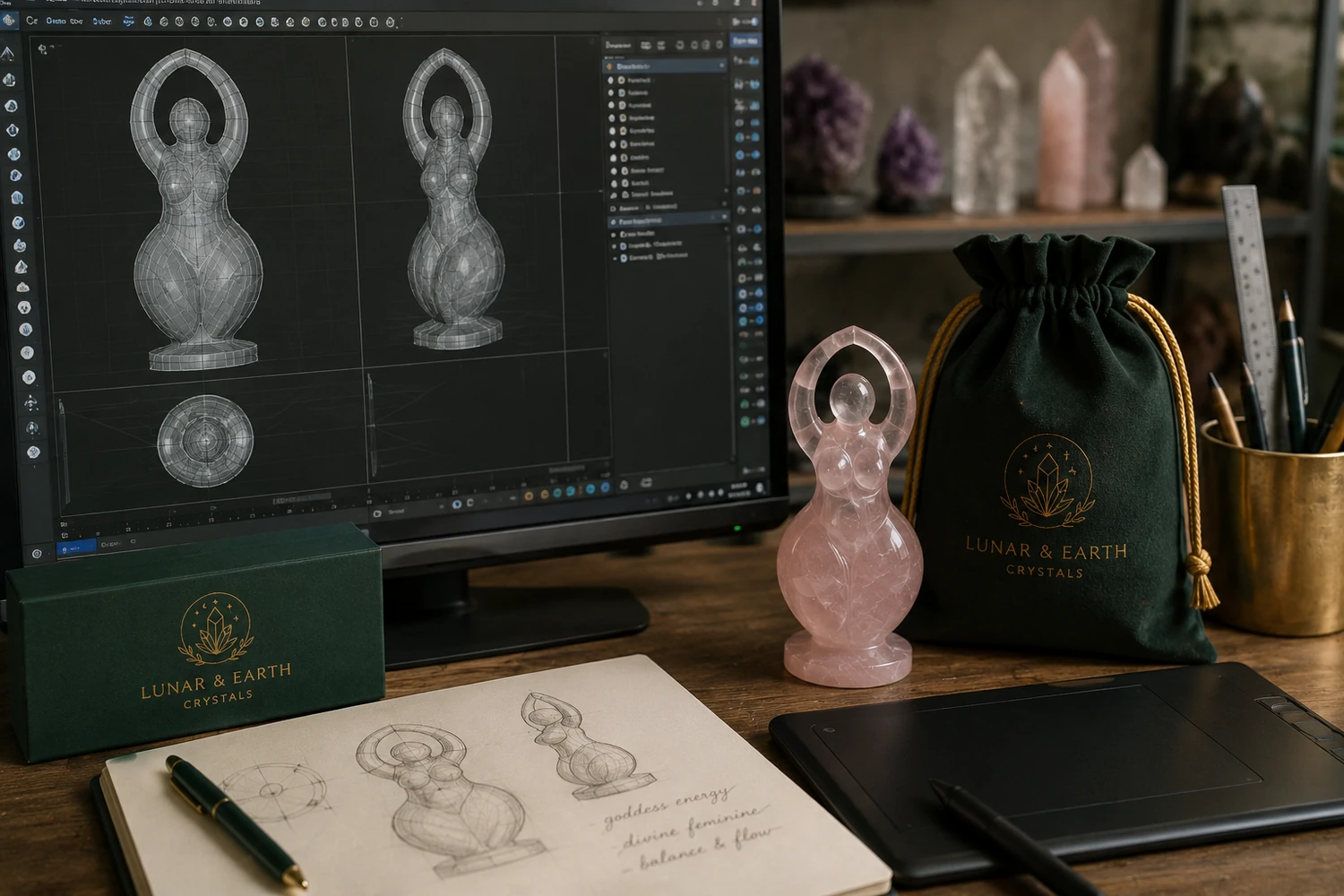
Dive Deeper: The Factory-Direct Dialogue
The difference between a trading company and a genuine factory-direct OEM supplier becomes clear at this stage. A trader often acts as a middleman, passing orders along without a deep understanding of the manufacturing constraints. They say "yes" to win the order, and then hope the factory can figure it out.
At Crystal Carvings Wholesale, we consider the process a partnership
<!--[googlesitekit-end-of-content]-->
"Mohs Hardness Scale", https://www.nps.gov/articles/mohs-hardness-scale.htm. Obsidian and agate are known for their hardness and dense structure, making them suitable for intricate carvings. However, obsidian's brittleness may require careful handling during production. Evidence role: general_support; source type: encyclopedia. Supports: Obsidian and agate are suitable for intricate carvings due to their hardness and dense structure.. Scope note: Obsidian's brittleness may limit its use in certain designs despite its suitability for sharp details. ↩
"Gem Virtuosos: The Drehers and Their Extraordinary ...", https://www.gia.edu/gems-gemology/winter-2017-gem-virtuosos. Jasper's opaque nature and structural consistency reduce material waste, making it cost-effective for large-scale carvings. However, its suitability depends on the specific design requirements. Evidence role: general_support; source type: research. Supports: Jasper's opaque nature and structural consistency make it cost-effective for large-scale carvings.. Scope note: Cost-effectiveness may vary depending on the availability and grade of jasper. ↩
"Mohs Hardness Scale (U.S. National Park Service)", https://www.nps.gov/articles/mohs-hardness-scale.htm. Mohs hardness measures a mineral's resistance to scratching, while cleavage indicates its tendency to break along specific planes. Both properties are essential for assessing carving suitability. Evidence role: mechanism; source type: education. Supports: Mohs hardness and cleavage are critical factors in determining a stone's suitability for carving.. ↩
"Fluorite | Common Minerals - University of Minnesota Twin Cities", https://commonminerals.esci.umn.edu/minerals-f/fluorite. Fluorite is characterized by perfect cleavage in four directions, which causes it to break into octahedron shapes. This property limits its use in intricate carvings. Evidence role: mechanism; source type: encyclopedia. Supports: Fluorite's perfect cleavage in four directions makes it prone to breaking into octahedron shapes.. ↩
"Variations of OH defects and chemical impurities in natural ...", https://pmc.ncbi.nlm.nih.gov/articles/PMC7200648/. Quartz minerals, including Rose Quartz, Amethyst, and Clear Quartz, often contain inclusions and fissures due to their natural formation processes. Evidence role: general_support; source type: encyclopedia. Supports: Rose Quartz, Amethyst, and Clear Quartz naturally form with internal imperfections like inclusions and fissures.. ↩
"The Economic Contributions of Forestry and Forest ...", https://extension.msstate.edu/publications/the-economic-contributions-forestry-and-forest-products-jasper-county. Picture Jasper's high yield rate and structural consistency can reduce raw material costs compared to Rose Quartz, though exact percentages may vary by supplier. Evidence role: statistic; source type: research. Supports: Switching from Rose Quartz to Picture Jasper can reduce raw material costs significantly.. Scope note: Cost reduction percentages depend on supplier pricing and material grade. ↩
"Optimizing Face-Up Appearance in Colored Gemstone ...", https://www.gia.edu/gems-gemology/optimizing-face-up-appearance-in-colored-gemstone-faceting. Opaque stones prevent light from passing through, creating strong visual contrast that highlights carved lines effectively. Evidence role: mechanism; source type: research. Supports: Opaque stones provide a solid background, enhancing visual contrast for carvings.. ↩
"Stone Carving Materials – Nasher Virtue - Sites@Duke Express", https://sites.duke.edu/nashervirtue/stone-carving-materials/. Material feasibility assessments evaluate the suitability of a stone for specific designs, reducing production risks and ensuring quality outcomes. Evidence role: expert_consensus; source type: institution. Supports: Material feasibility assessments ensure the chosen stone is appropriate for the design and production process.. ↩
Keep Reading