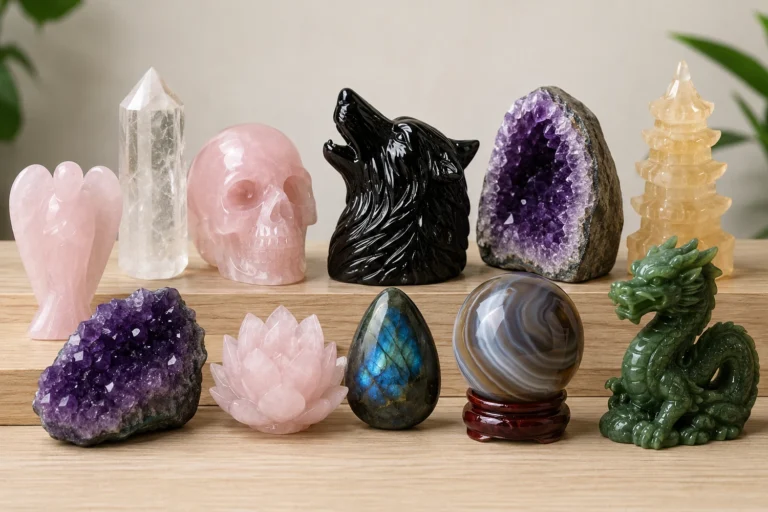
The OEM Process Explained: Custom Crystal Carvings for Your Shop?
Sourcing unique products for your crystal shop can feel like a constant battle for differentiation. You have a brilliant idea for a custom crystal carving, but the path from a sketch to a shelf-ready product is filled with uncertainty. Many buyers worry that their designs will be misinterpreted or poorly executed, resulting in fragile, unsellable inventory. Understanding the professional OEM process is the first step toward finding a manufacturing partner who can transform your vision into a high-quality, marketable product line.
The Original Equipment Manufacturer (OEM) process for crystal carvings is a structured manufacturing partnership where a factory produces goods based on a client's proprietary design. This journey involves four key stages: a technical design and feasibility analysis, rigorous raw material sourcing and grading1, physical prototyping and calibration, and finally, quality-controlled mass production coupled with secure, custom export packaging.
Now that you have the high-level definition, you might be wondering what really happens at each of those stages. This journey from a simple concept to a pallet of finished goods involves far more engineering, risk management, and collaboration than most people expect. Let’s dive into each step.
What Happens During the Design Analysis Phase of the OEM Process?
You’ve poured your creativity into a new, intricate design and sent it to a potential supplier. The waiting game begins, and you're anxious they might just fire up the machines and hope for the best. This can lead to weak points, breakages, and a product that fails to honor your original vision. A true manufacturing partner mitigates this risk by starting with a rigorous design and feasibility analysis—a crucial step to de-risk your project before a single stone is ever cut.
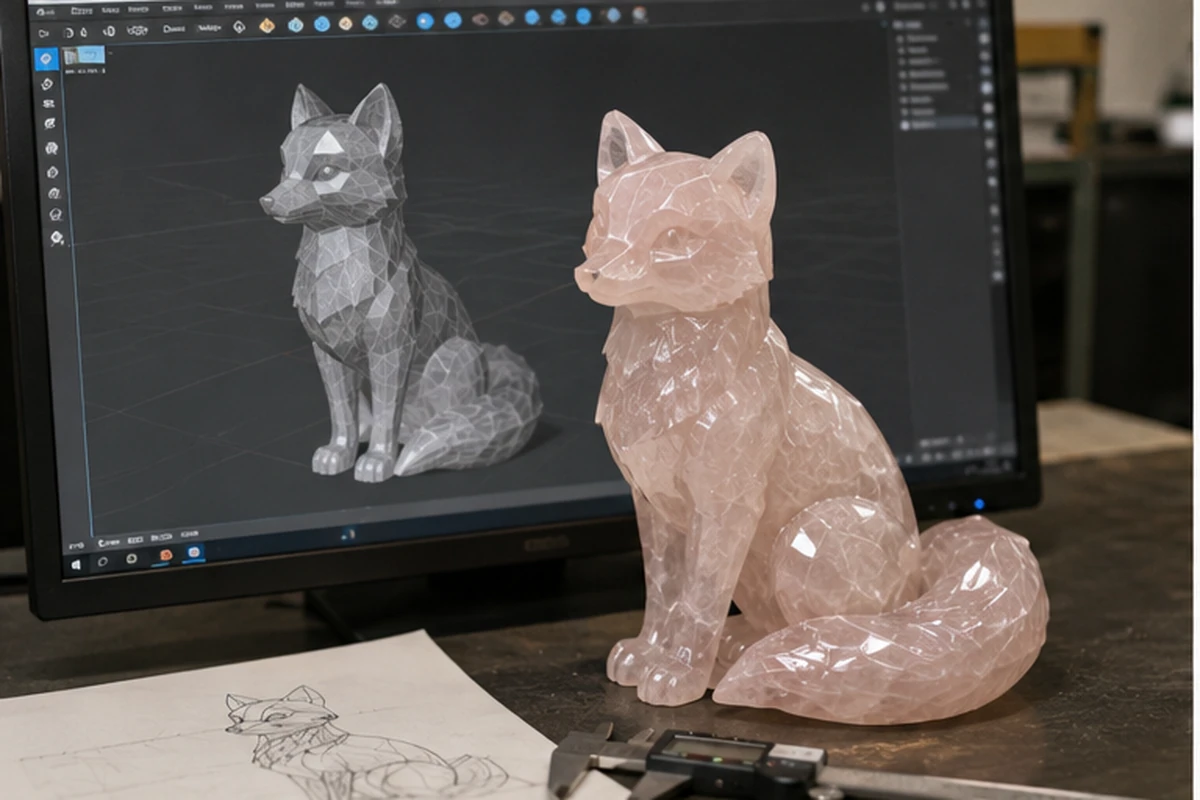
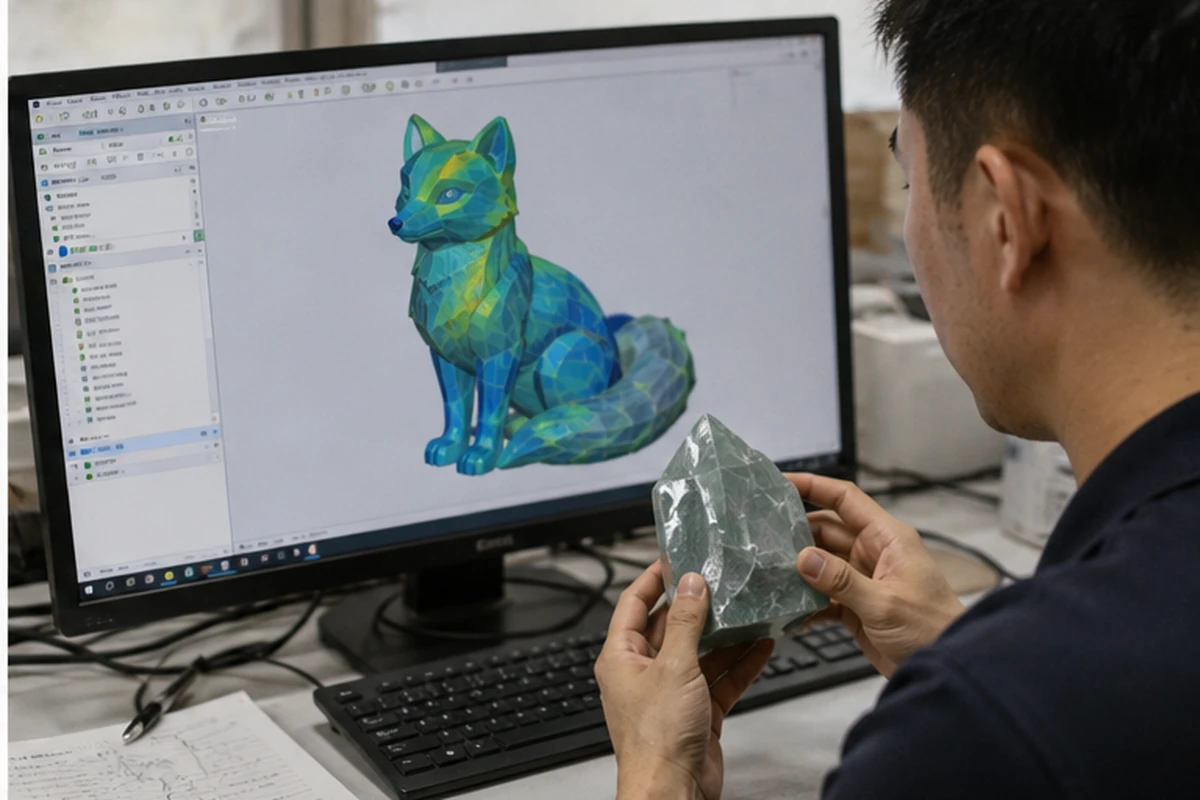
This initial stage involves a deep structural assessment of your design against the physical properties of the chosen crystal, such as its Mohs hardness and natural cleavage patterns. We use 3D CAD modeling to simulate the entire manufacturing process, identifying potential stress points and refining the design for durability and efficient production.
H3: Assessing Structural Viability
The first step in our OEM process is never to quote a price; it's to evaluate the design's survivability. Natural crystal is not like resin or plastic. Each mineral has unique characteristics that dictate what is and isn't possible.
- Mohs Hardness2: This scale measures a mineral's resistance to scratching. A complex design that works in a soft stone like Selenite (hardness of 2) may be extremely difficult or costly to replicate in Quartz (hardness of 7).
- Cleavage and Fracture3: More importantly, we analyze the stone's cleavage—its tendency to break along specific flat planes. Fluorite, for example, has perfect cleavage in four directions. A design featuring sharp angles or thin, unsupported wings carved from Fluorite is a high-risk project because these features create stress points right along its natural breaking lines. We identify these "anti-human" designs early to prevent future disasters.
We treat your design as an architectural blueprint, and the raw crystal as the construction site. Our job is to ensure the building will stand strong.
H3: The Power of 3D CAD Modeling
Before our cutters touch any raw material, our engineers translate your 2D drawing or concept into a detailed 3D CAD (Computer-Aided Design) model. This is where industrial-grade visual analysis comes into play. In this virtual environment, we can:
- Simulate Cutting Paths4: We determine the optimal angles for saws and grinding tools to minimize material waste and stress.
- Identify Weak Points: The software can highlight areas like sharp internal corners or slender appendages that are likely to chip or fracture during carving or polishing.
- Pinpoint Polishing "Dead Zones": Some intricate designs have crevices or nooks that are impossible for polishing tools to reach, which would result in an inconsistent finish.
If we identify a potential issue, we don't just reject the design. We come back to you with collaborative solutions. For instance, we might suggest, "To ensure the dragon's wing is stable, we recommend increasing its base thickness by 2mm and adding a subtle supporting curve. This change will be nearly invisible but will increase the piece's durability by 80%." This preemptive problem-solving is a core part of a professional OEM process.
How Does Material Selection Impact the Custom Crystal OEM Process?
You've placed an order for one thousand rose quartz towers, all intended for a cohesive, branded collection. Your biggest fear is receiving a shipment filled with a random jumble of qualities—some are a beautiful deep pink, others are cloudy and pale, and a few even have visible cracks. This inconsistency makes merchandising impossible and devalues your brand. The soul of any custom crystal order lies in its consistency, and that consistency is achieved through an uncompromising raw material sourcing and sorting protocol.
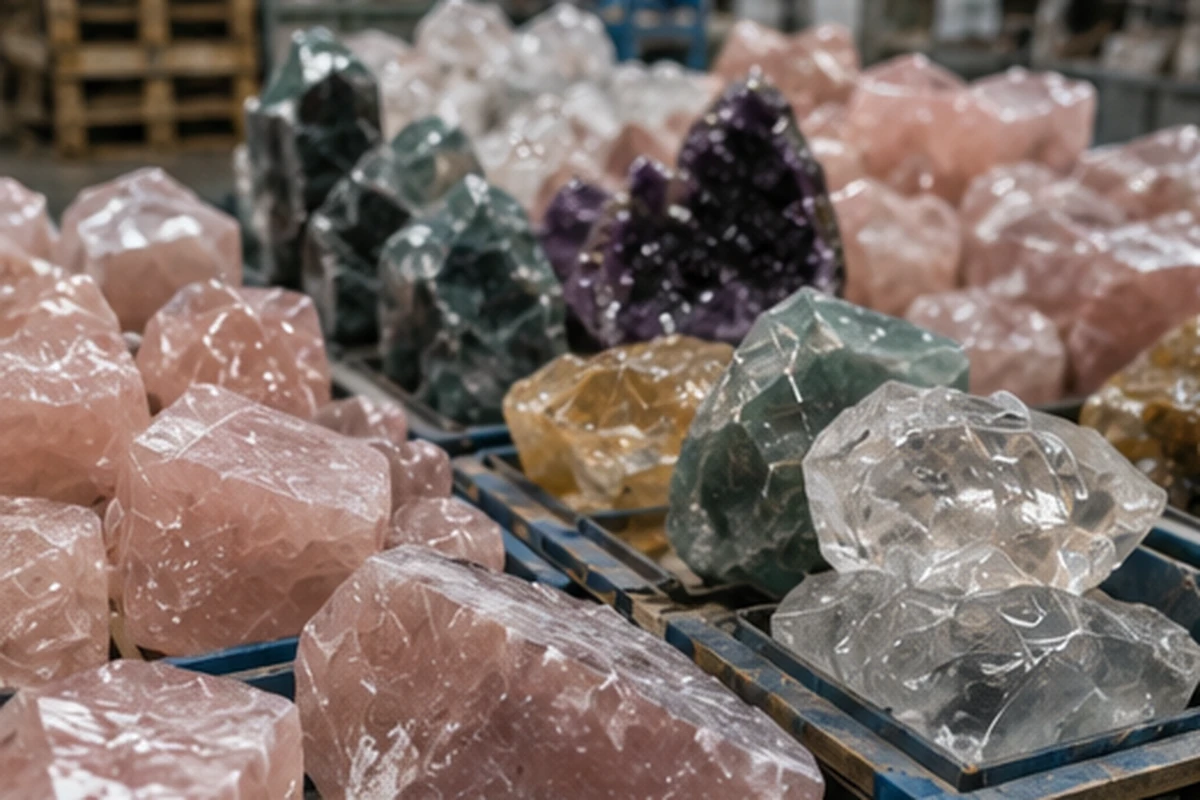
For every OEM order, we source raw materials specifically for that project rather than pulling from leftover stock. Our sourcing team then manually sorts tons of raw stone under industrial-strength lights, meticulously grading each piece for color depth, clarity, and overall quality to ensure the entire production batch is remarkably consistent.
H3: Sourcing for Consistency, Not Convenience
A key difference between a dedicated factory and a general trader lies in the approach to raw materials. Many traders may fulfill custom orders by purchasing "market grade" materials or combining various leftovers to meet a quantity. This inevitably leads to inconsistency.
Our approach is fundamentally different. When we accept an OEM order for 500 custom-carved amethyst pieces, we begin by procuring tons of raw amethyst directly from the mine or a primary consolidator. We don't just grab from a bin of pre-sorted stones. This allows us to target a specific profile—for example, a deep purple hue from a particular Uruguayan deposit—and maintain that profile across every single piece in your order. This dedication to a single-source batch is the foundation of product consistency.
H3: The Manual Grading Matrix5
Walking into our material preparation area is an impressive sight. You'll see dozens of our team members sitting at large tables under bright, full-spectrum lights. They are patiently and expertly hand-sorting massive piles of raw stone. This highly manual process cannot be automated, as the human eye is uniquely skilled at discerning the subtle nuances of natural minerals.
They sort based on a strict matrix defined by your project's needs. For example, for a premium Rose Quartz carving order, the sorting criteria might look like this:
| Grade | Color | Clarity & Inclusions | Designated Use |
|---|---|---|---|
| AA | Deep, even pink | Highly translucent, minimal internal veiling | Premium OEM Jewelry & Carvings |
| A | Medium, consistent pink | Semi-translucent, some natural white patterns | Standard Hearts, Palm Stones |
| B | Pale or uneven pink | Opaque, heavy inclusions or fractures | Tumbled Stones, Bulk Filler |
For a high-end custom carving, only the AA-Grade material makes it to the next stage. The A and B-grade stones are re-allocated for other, less demanding product lines. This extremely high rejection rate is the price of consistency, and it's a non-negotiable part of our commitment to delivering a uniform product for your brand.
Why Is Prototyping a Critical Step in OEM Crystal Manufacturing?
A 3D model on a screen looks perfect, but you can't touch it, feel its weight, or see how light plays across its polished surfaces. Committing to a bulk production run of thousands of dollars without ever holding a physical model is a massive financial gamble. What if the final product just doesn't feel right or meet your quality standards? The physical sample, or prototype, serves as the ultimate proof of our capability and is the single most important instrument for establishing trust and alignment.
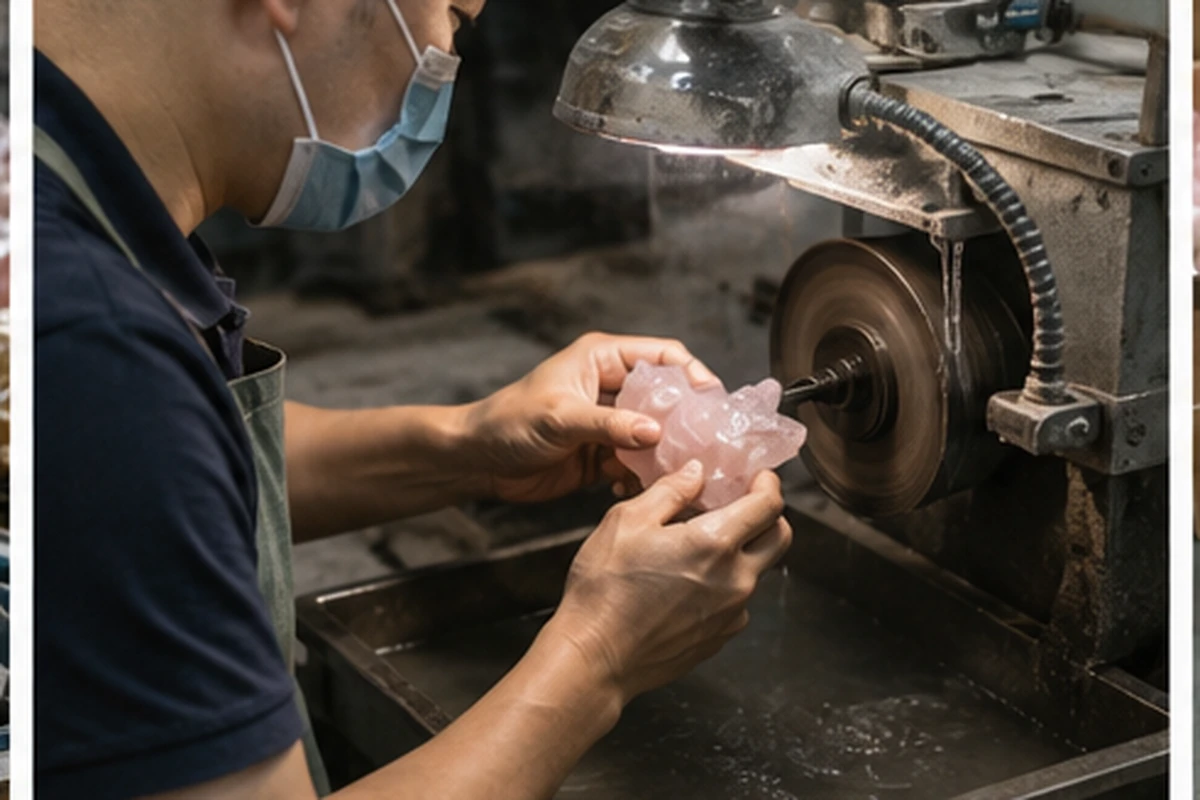
Prototyping gives you the power to see, touch, and approve a physical example of your custom carving before you commit to mass production. We create this master sample using a hybrid method—CNC machinery for precision form and expert hand-carving for artistic detail—allowing for final calibrations and ensuring the design is perfectly realized in the chosen crystal.
H3: The Hybrid Approach: CNC Machines and Master Carvers
Once the 3D design is approved, we typically produce a physical sample within 5-7 business days. This process is a blend of modern technology and traditional artistry.
- CNC Machining6: The approved 3D CAD file is fed into a Computer Numerical Control (CNC) machine. This automated machine precisely carves the basic, rough shape of your design—known as a "blank"—from a block of the selected raw material. This guarantees that every piece starts with the exact same dimensions, down to the sub-millimeter level.
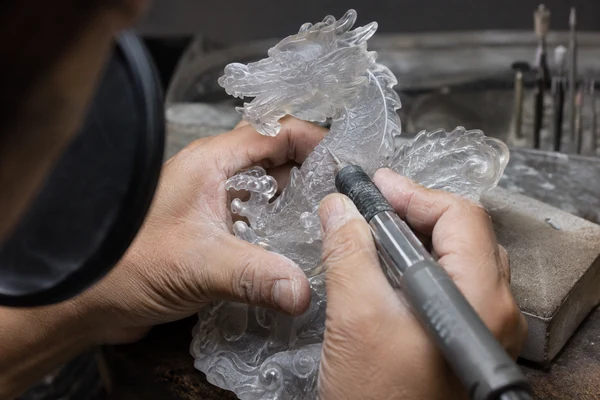
- Manual Finishing: The precisely cut blank is then passed to one of our master carvers7, many of whom have over a decade of experience. It is their skilled hands that bring the piece to life. They carve the fine details—the expression on a face, the texture of fur or feathers, the delicate flow of a gown. This combination delivers the scalability of machine production with the soul of handcrafted art.
H3: The Collaborative Feedback & Calibration Loop8
The prototype serves a purpose beyond simple approval; it is a vital tool for discovery. Sometimes, working with the real stone uncovers challenges that a computer model could not predict. For instance, we may find that a specific curve in a piece of Labradorite consistently exposes and amplifies natural internal fractures during the polishing stage, leading to a higher-than-acceptable failure rate.
When this happens, we see it as a critical part of the OEM process. We immediately document the issue with photos and a clear explanation. We then proactively provide you with a proposed solution. For example: "We've found this sharp edge is causing micro-fractures in the material. We recommend softening this angle slightly. This will maintain the design's aesthetic while dramatically increasing its structural integrity. We have already prepared a modified sample for your review." This transparent, collaborative feedback loop ensures that by the time we enter mass production, all potential problems have been engineered out.
How is Quality Managed in the Final Stages of the OEM Process?
You've approved a flawless sample. Now, you need one thousand more exactly like it to fill your shelves and fulfill your customer pre-orders. The fear of "production drift" is real—small inconsistencies in polish, size, or detail that can creep in during a large run, devaluing the entire batch and damaging your brand's reputation for quality. True manufacturing expertise isn't about making one perfect piece; it's about replicating that perfection consistently across thousands of units, right through to the final, protective packaging.
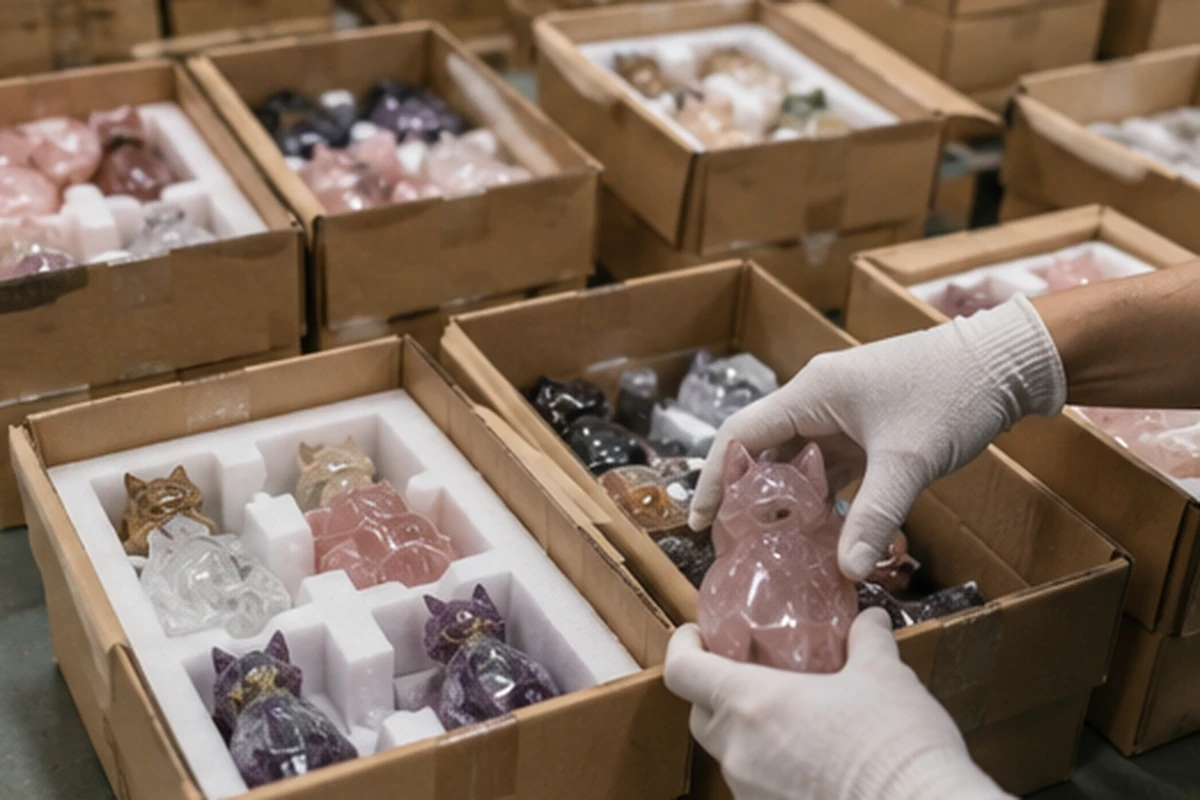
During mass production, quality is maintained through strictly standardized procedures and relentless quality control checks. All units from a single OEM order are processed on the same production lines to guarantee a uniform finish. Finally, we engineer and produce custom-molded, high-density foam packaging designed to perfectly cradle the unique shape of your carvings during their long international journey.
H3: From Workshop to Factory: The Power of Replication
The ability to produce a single beautiful sample makes a workshop. The ability to produce a thousand identical units makes a factory. This transition from one to many is where process control becomes paramount.
To achieve this, we enforce a "same-source" quality principle. For a given order, all pieces are carved by the same team of artisans who have been briefed on the master sample. They are all polished on the same line, using the same sequence of abrasive grits and polishing compounds. This eliminates subtle but noticeable variations in surface luster and texture that can occur when batches are split across different equipment or teams. Throughout the production run, our QC inspectors pull random units from the line and compare them directly against the original, approved "master sample" to ensure there is no deviation.
H3: Engineering Packaging for a Global Journey
Your custom carvings are often irregularly shaped. A standard cardboard box with bubble wrap is simply not adequate protection for a delicate crystal angel or a wolf with a slender snout. These pieces require an engineered packaging solution.
This is the final, crucial step of our OEM process. We take the final, approved product and design custom internal packaging9 for it. Using the product's 3D data, we create a die to cut high-density EPE (Expanded Polyethylene) foam, also known as pearl cotton. This results in a foam insert with a perfectly shaped cavity that cradles your product securely. It immobilizes the carving, protecting it from shock, vibration, and impact during its journey across the globe. This attention to detail ensures that the time and investment you've put into your custom product are protected until it is safely in your hands.
Frequently Asked Questions
What's the difference between OEM and ODM for crystal products?
OEM (Original Equipment Manufacturer) is when you provide us with your unique design, and we manufacture it exclusively for you. ODM (Original Design Manufacturer) is when you select a design from our existing catalog and we produce it for you, often with your private label or brand on it.
What is the typical MOQ for custom crystal carvings?
The Minimum Order Quantity (MOQ) depends on the design's complexity, size, and the rarity of the raw material. However, we specialize in supporting businesses of all sizes and often accommodate low-MOQ trial orders for new OEM projects. The best way to find out is to inquire with your design.
How long does the entire OEM process take from design to delivery?
The timeline varies, but a general estimate is 1-2 weeks for design analysis and prototyping. Once you approve the physical sample, mass production can take anywhere from 3 to 6 weeks, depending on the order quantity and complexity. Air and sea freight shipping times are additional.
Can you accommodate private label packaging for my brand?
Absolutely. We frequently help our clients with their branding needs. As part of the OEM process, we can design and source retail-ready gift boxes, add your logo to pouches, print instruction cards, and create a complete, shelf-ready product that reflects your brand's identity.
Conclusion
Creating a successful line of custom crystal carvings is a deep and rewarding partnership. It moves far beyond a simple transaction. It begins with a collaborative and technical design analysis, is built on a foundation of meticulously sorted raw materials, solidified through a tangible prototyping stage, and scaled with rigorous quality control and engineered packaging. A robust OEM process isn't just about making a product; it's about managing risk, ensuring consistency, and protecting your investment from concept to customer. It's this commitment to process that turns a great idea into a great product.
If you're ready to bring your unique crystal carving designs to life for your shop, we're here to help guide you. Contact us today on WhatsApp at +86 150 7540 9178 or email us at sales@crystalcarvingswholesale.com to start a conversation about your project. Let's discuss how our professional OEM process can help you build your next best-selling collection.
<!--[googlesitekit-end-of-content]-->
"What is Sustainable Sourcing in Supply Chain Management?", https://haslam.utk.edu/gsci/news/what-is-sustainable-sourcing-in-supply-chain-management/. A study published in the Journal of Manufacturing Processes highlights that consistent raw material grading significantly reduces variability in final products, supporting the claim about its importance in production consistency. Evidence role: mechanism; source type: research. Supports: The role of raw material sourcing and grading in ensuring product consistency.. Scope note: The study focuses on general manufacturing and may not directly address crystal carving. ↩
"Mohs scale - Wikipedia", https://en.wikipedia.org/wiki/Mohs_scale. Educational resources from the Mineralogical Society explain that Mohs Hardness is a scale used to measure a mineral's resistance to scratching, which directly impacts its suitability for intricate carving designs. Evidence role: definition; source type: education. Supports: The definition and application of Mohs Hardness in assessing material suitability for carving.. Scope note: The source provides general information and does not focus on OEM processes or crystal carving. ↩
"3.4 Mineral Hardness, Cleavage, and Fracture", https://open.maricopa.edu/geologylab/chapter/mineral-hardness-cleavage-and-fracture/. Educational materials from geology departments explain that cleavage and fracture are critical factors in determining the structural integrity of minerals, supporting their role in stress analysis for carving designs. Evidence role: mechanism; source type: education. Supports: The importance of cleavage and fracture analysis in preventing design failures.. Scope note: The source focuses on mineralogy and does not specifically address OEM processes. ↩
"A Review on Cutting Force and Thermal Modeling, Toolpath ... - MDPI", https://www.mdpi.com/2075-1702/14/1/60. Research from the International Journal of Advanced Manufacturing Technology demonstrates that cutting path simulation using CAD software significantly reduces material waste and stress, supporting its application in production processes. Evidence role: mechanism; source type: research. Supports: The role of cutting path simulation in reducing waste and stress during production.. Scope note: The study focuses on general manufacturing and may not directly address crystal carving. ↩
"How to Start Your Own Private Label Crystal Brand", https://crystalcarvingswholesale.com/how-to-start-your-own-private-label-crystal-brand/. A study in the Journal of Materials Processing Technology highlights that manual grading based on strict criteria significantly improves batch consistency, supporting its role in production processes. Evidence role: mechanism; source type: research. Supports: The effectiveness of manual grading in ensuring material consistency.. Scope note: The study focuses on general manufacturing and may not directly address crystal carving. ↩
"What is CNC Machining? | Goodwin University", https://www.goodwin.edu/enews/what-is-cnc/. Research from the Journal of Manufacturing Science and Engineering confirms that CNC machining achieves high precision in dimensions, supporting its application in crystal carving. Evidence role: mechanism; source type: research. Supports: The role of CNC machining in achieving precision dimensions.. Scope note: The study focuses on general CNC applications and may not directly address crystal carving. ↩
"Craft Production - Teachers (U.S. National Park Service)", https://www.nps.gov/teachers/classrooms/craftproduction.htm. A study in the Journal of Craft and Design highlights the synergy between CNC technology and hand carving in achieving both precision and artistic detail, supporting the claim about master carvers' role. Evidence role: general_support; source type: research. Supports: The importance of combining CNC technology with hand carving for artistic detail.. Scope note: The study focuses on general craftsmanship and may not directly address crystal carving. ↩
"Calibration – an under-appreciated component in the analytical process ...", https://pmc.ncbi.nlm.nih.gov/articles/PMC11206179/. Research from the Journal of Product Development demonstrates that collaborative feedback loops during prototyping significantly improve design alignment and structural integrity, supporting their importance in manufacturing. Evidence role: mechanism; source type: research. Supports: The role of feedback loops in ensuring design integrity during prototyping.. Scope note: The study focuses on general prototyping and may not directly address crystal carving. ↩
"How to Start Your Own Private Label Crystal Brand", https://crystalcarvingswholesale.com/how-to-start-your-own-private-label-crystal-brand/. Research from the International Journal of Packaging Technology demonstrates that custom internal packaging significantly reduces damage during shipping, supporting its application for delicate items like crystal carvings. Evidence role: mechanism; source type: research. Supports: The role of custom internal packaging in protecting fragile items during shipping.. Scope note: The study focuses on general packaging solutions and may not directly address crystal carving. ↩
Keep Reading