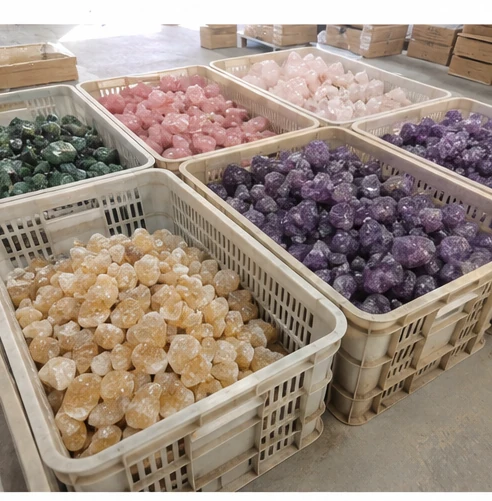
Struggling to source high-quality products for your crystal business can be frustrating. You may have already dealt with suppliers who promised the world but delivered cracked stones, dull colors, or even fakes made of resin and glass. The biggest challenge in finding a wholesale crystal manufacturer isn't a lack of options, but filtering out the thousands of traders and small workshops pretending to be a major factory.
To find a reliable wholesale crystal manufacturer, you must verify their location within a known industry hub like Donghai, conduct "workshop-level" video calls to see actual production, test their technical knowledge on material yield, and scrutinize their export packaging standards. The safest approach is to start with a small trial order before committing to bulk purchasing.
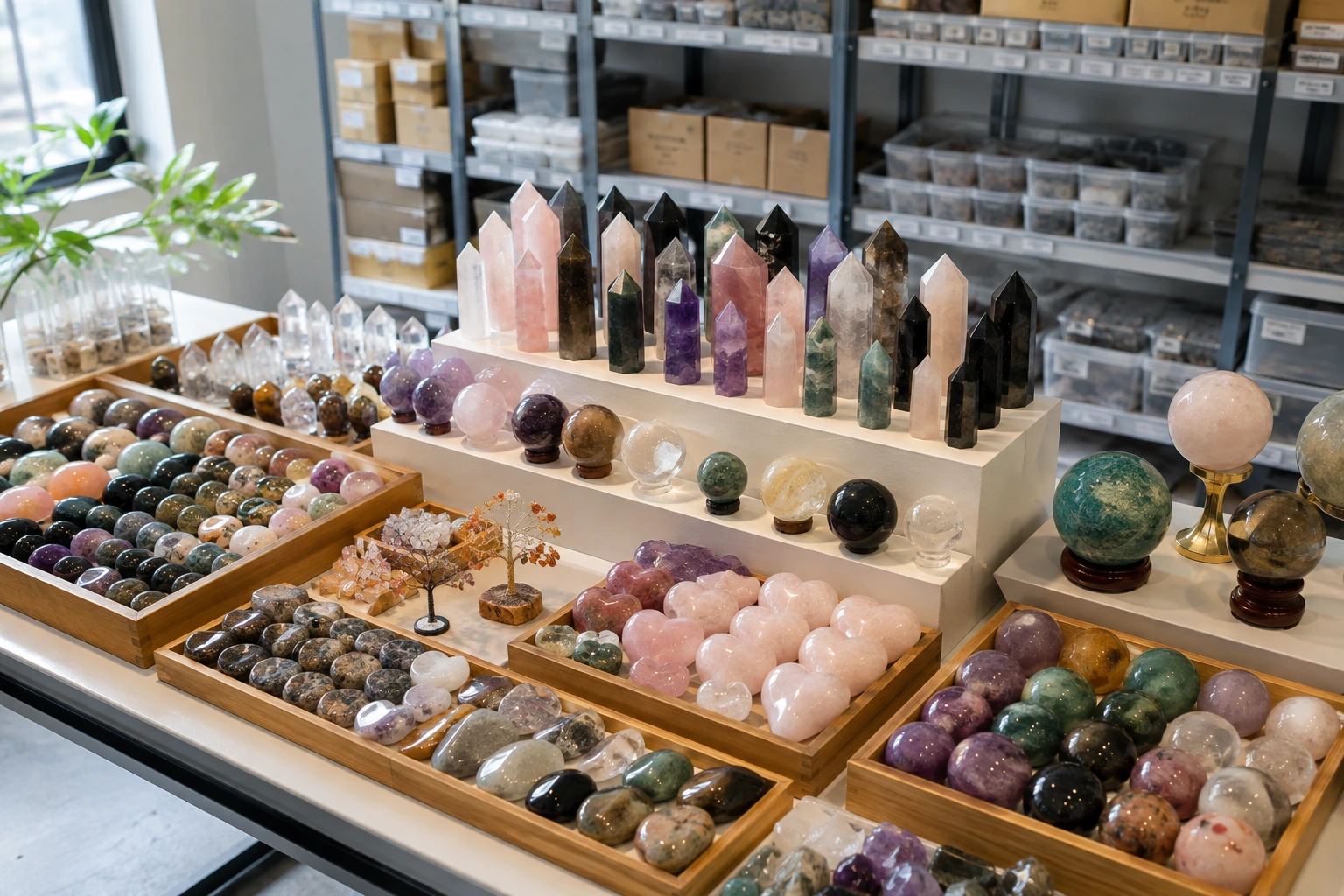
This verification process goes far beyond looking at a polished website or a low price list. To protect your investment and find a true long-term partner, you need to apply a few insider vetting techniques. Let's break down the exact steps I recommend based on over a decade of running a crystal carving factory.
How Can Geographic Location Help You Find a Wholesale Crystal Manufacturer?
You've found a supplier with a professional website, but their business registration or shipping address is in a city with no known stone processing industry. This mismatch is an immediate red flag. You need an easy, upfront way to filter out suppliers who are geographically misplaced.
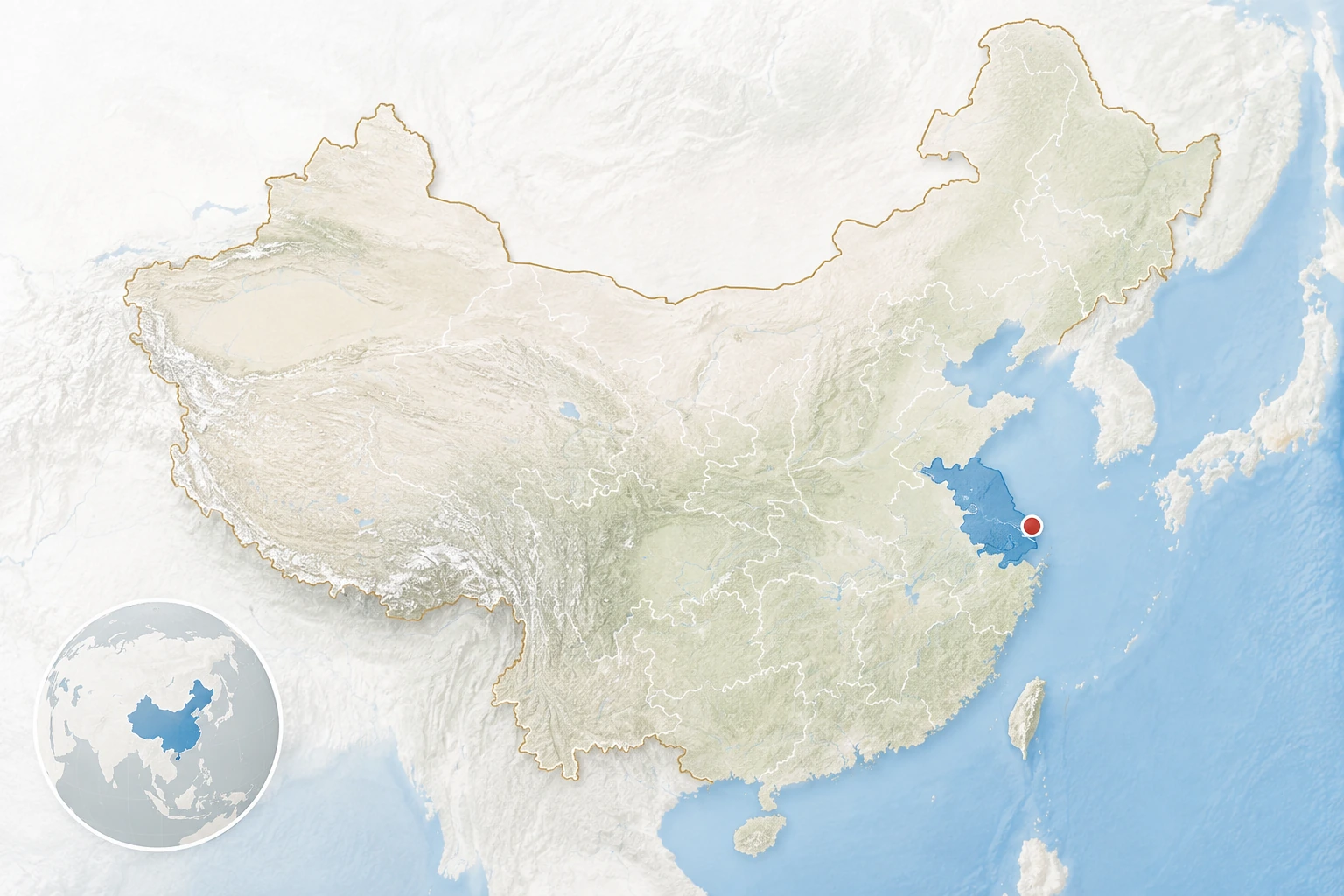
A genuine wholesale crystal manufacturer specializing in carvings, points, and decor will almost certainly be located in a major mineral processing hub. For crystals in China, that overwhelmingly means Donghai county. An address far outside these zones strongly suggests they are a middleman, not a source factory.
Dive Deeper: The Geography Litmus Test
Industry insiders look at addresses before they even look at products. China's industrial manufacturing is highly concentrated in specific geographic clusters, and the crystal processing industry is a prime example.
- Donghai, Jiangsu: This is the undisputed crystal capital of the world. Over 70% of the world's natural crystals and semi-precious stones1—from Madagascan rose quartz and Brazilian amethyst to Afghan calcite—are sent to Donghai for cutting, carving, polishing, and export. If you are sourcing crystal carvings, spheres, towers, or freeforms, your factory partner should be based here. This is where the raw material warehouses, skilled carvers, and specialized machinery are.
- Guangdong (e.g., Guangzhou, Foshan): This region is more focused on fine jewelry, jade, and small, intricate beaded items. While there is stone processing here, it's a different specialization than the bulk carving and decor items that come from Donghai.
How to Use This Information: When you first contact a potential supplier, ask for their business license and factory address. If a company claims to be a large-scale manufacturer of crystal towers and carvings but their address is in a city with no supporting stone industry, there is a 95% chance they are a trading company or a multi-layered agent. This simple location check is your first and most effective filter to weed out resellers.
What Tests Can Distinguish a Factory from a Trading Company?
A trading company's sales team is often skilled at creating beautiful presentations and curating perfect product photos. But are they just middlemen with a nice website? You need a reliable way to peek behind the curtain and see if they have a real production facility.
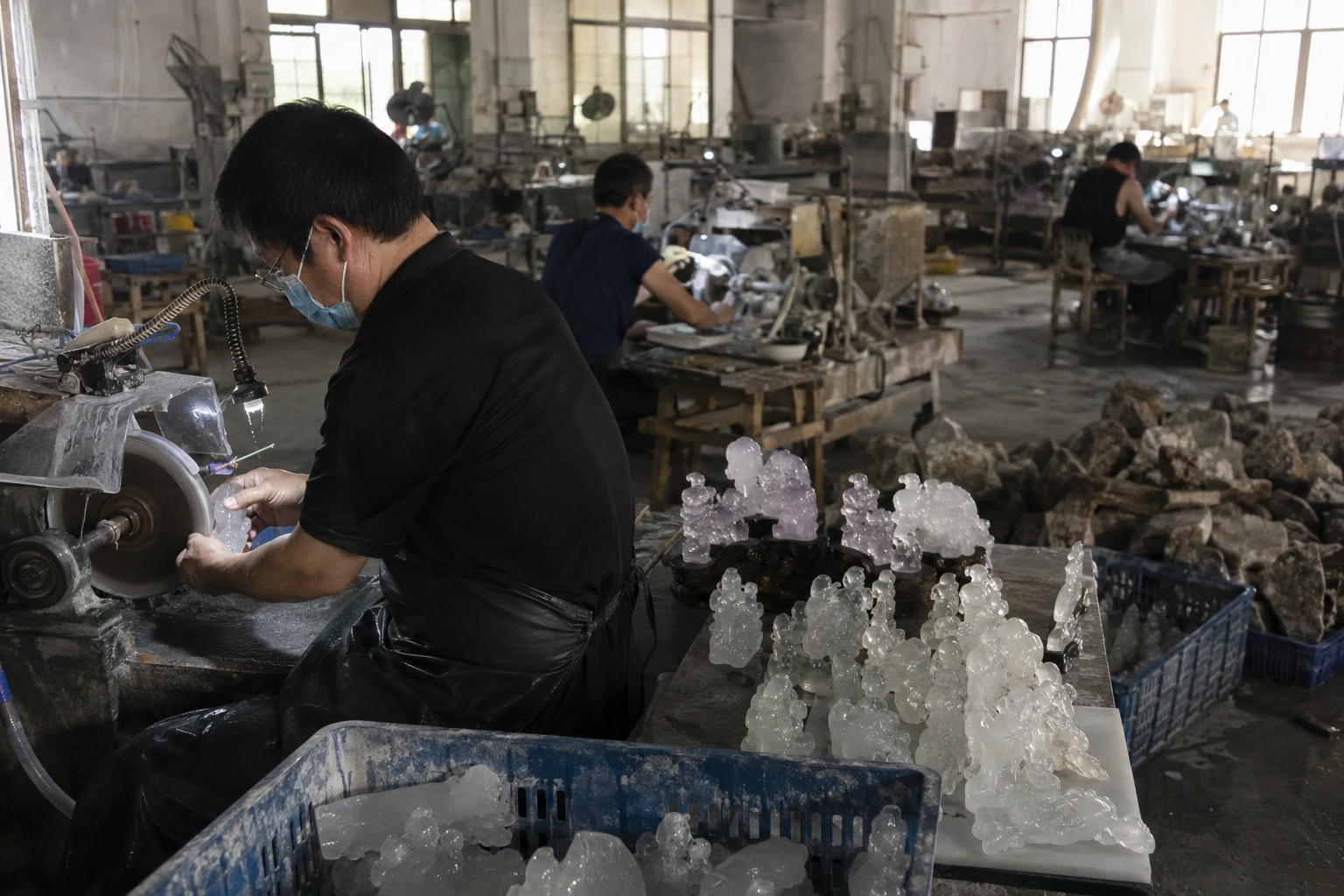
To verify a wholesale crystal manufacturer, request a live video tour of their cutting workshop and raw material warehouse—not just their clean, quiet showroom. You should also test their technical expertise by asking specific questions about material yield rates or the challenges of a custom project.
Dive Deeper: Three Hard-Core Factory Tests
Trading companies are masters of presentation, but they often fail when questioned about the realities of production. I advise buyers to use these three tests during initial discussions.
H3: The "Workshop-Level" Video Call
Don't be impressed by a polished sample showroom. Anyone can rent a nice office and fill it with products. Ask your contact for a live video call and request to see the following areas:
- Cutting Workshop: A real factory will have loud cutting machines, water spraying to cool the blades, and the distinct smell of stone dust.2
- Tumbling & Polishing Area: You should see large tumbling machines or workers actively polishing pieces, with semi-finished products organized in bins.
- Raw Mineral Warehouse: This is where they store the large, unworked stones. A true factory buys raw materials in bulk.
A trading company can only show you their showroom.3 They will make excuses for why they can't show you the workshop, or they might show you a static, pre-recorded video. A real, working factory is always a bit chaotic, noisy, and dusty—these are signs of active production.
H3: The "Yield Rate" Knowledge Test
When you inquire about a custom-shaped carving, use it as an opportunity to test their professional knowledge. Ask a question like, "If we order a 15cm custom design from this block of labradorite, what is the expected yield rate and what are the primary risks for material loss?"
A director from a genuine factory will immediately be able to discuss:
- Material Hardness (Mohs scale): How the stone's hardness affects the carving process.
- Natural Cleavage Lines: The risk of the stone splitting along its natural fault lines.
- Yield Rate: An estimate of how much of the raw block will become the final product versus how much will be lost during cutting and carving.
A middleman will simply say "No problem!" and then disappear for a few days while they ask a real factory for the answer. Their inability to discuss technical production details in real-time is a clear giveaway.
H3: The Custom Sample Speed Test
Speed is another indicator. A factory has its own master carvers and equipment. When you request a sample for a new design, they can move it through their internal process—material selection, rough shaping, fine carving, and polishing—very quickly. Feedback on design modifications is almost instant.
A trading company, however, has to communicate your request to an external workshop. Every minor change, like adjusting a curve on a carving, involves a slow back-and-forth process between you, the trader, and their supplier. This inefficiency reveals their lack of direct control over production.
How Do You Avoid Low-Price Traps from a Wholesale Crystal Manufacturer?
You've received a quote that's dramatically lower than all the others, and it’s tempting to accept it. In the natural mineral industry, however, an unusually low price is a serious warning sign for major quality compromises, undisclosed treatments, or outright fraud.
An abnormally low price from a potential wholesale crystal manufacturer often points to material downgrading, fakes like melted glass, or undisclosed treatments like dyeing. Always verify quality with pre-shipment video inspections and demand absolute clarity on whether a stone is natural or treated.
Dive Deeper: Common Scams and How to Defend Yourself
When evaluating suppliers, price is only one factor. A rock-bottom price is almost always tied to a compromise you don't want to make. Here are the most common traps and how to avoid them.
| Common Scam | How It Works | How to Prevent It |
|---|---|---|
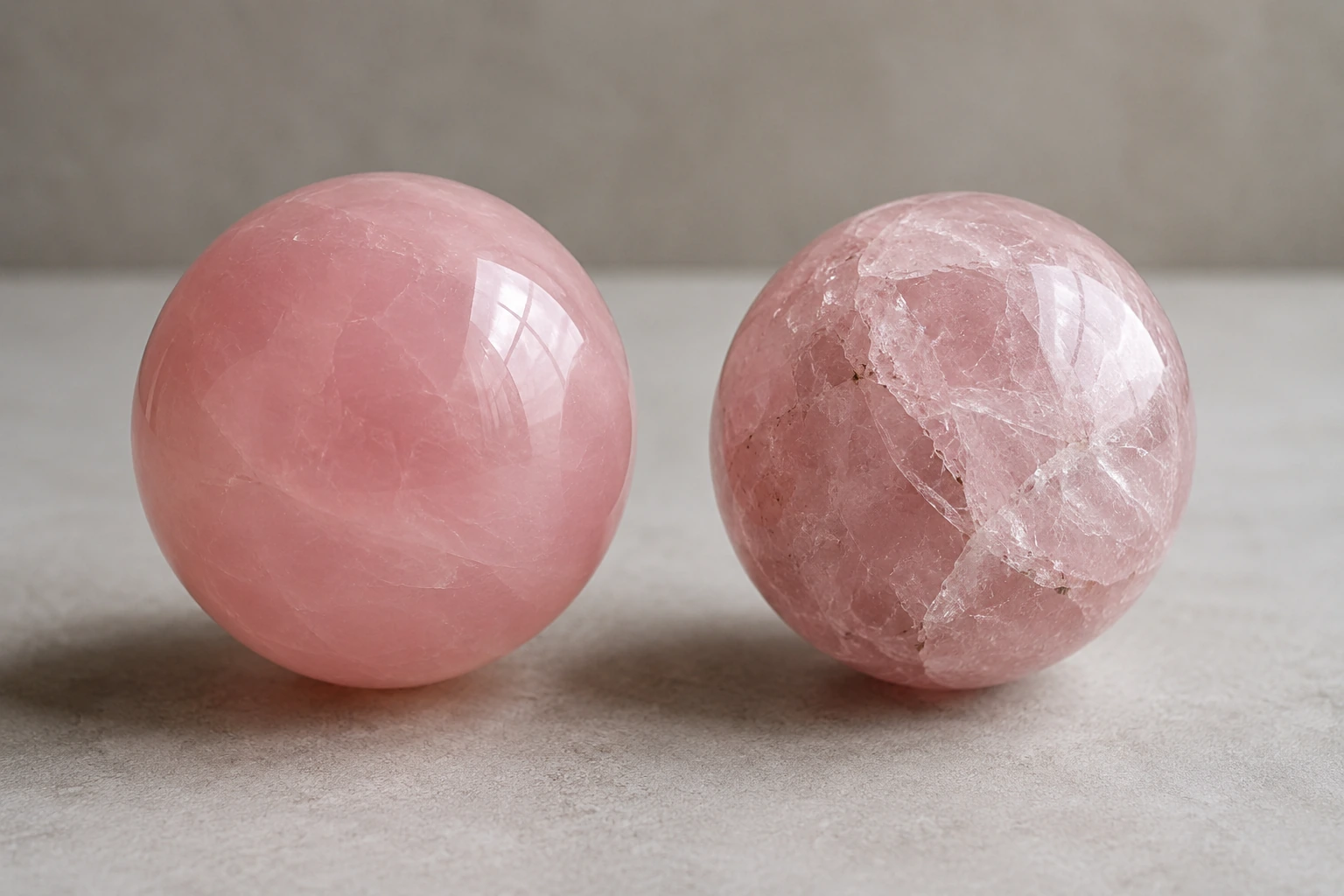
| Melted Glass Fakes | Crystal scraps are melted down and reformed into "reconstituted quartz." It has no natural inclusions, growth lines, or energy and costs a fraction of natural stone. Often sold as "clear quartz" or "citrine." | Ask for macro photos or videos showing natural internal features like inclusions and growth lines.4 For high-value orders, request a legally recognized lab certificate (e.g., from NGTC).5 |
| Acid-Washing & Dyeing | Low-grade, cracked stones are soaked in acid to remove impurities, then injected with colored resin or dye. This creates fake malachite, brightly colored agate, or "cherry quartz." | Ask the supplier to explicitly state on the invoice if the product is "Natural & Untreated" or "Treated/Dyed." Reputable suppliers will be transparent about this. |
| Bait-and-Switch Quality | The supplier sends you a beautiful, AAA-grade sample that is perfectly clear and vibrant. The bulk order that arrives, however, is filled with B or C-grade material full of cracks, cotton-like inclusions, and black spots. | Insist on a pre-shipment quality control video.6 Before the final payment, have them pull random items from the sealed cartons and show them to you on a live video call to confirm the quality matches the sample. |
As a buyer, your best defense is skepticism and verification. Never assume. Always ask for proof, document everything in writing, and make quality checks a non-negotiable part of your purchasing process.
Why is Packaging a Key Indicator of a Reliable Crystal Supplier?
You're excited for your international shipment to arrive, but you're also worried about breakage during the long journey. The last thing you want is to open a box of shattered inventory and deal with a supplier who denies responsibility.
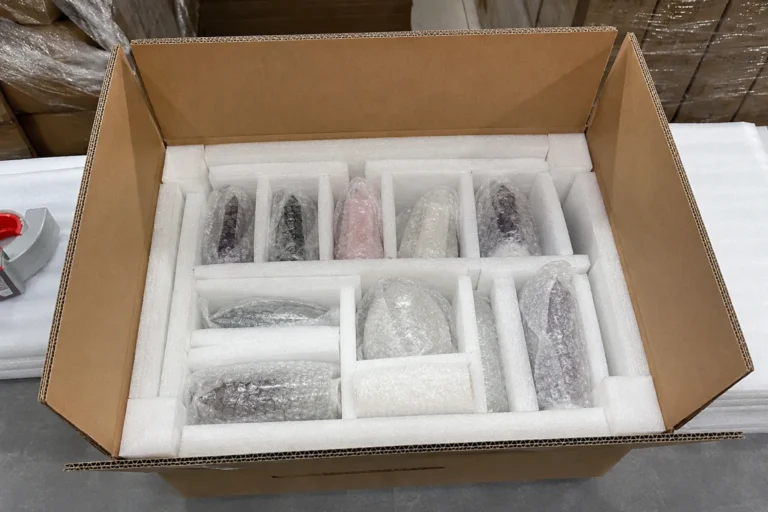
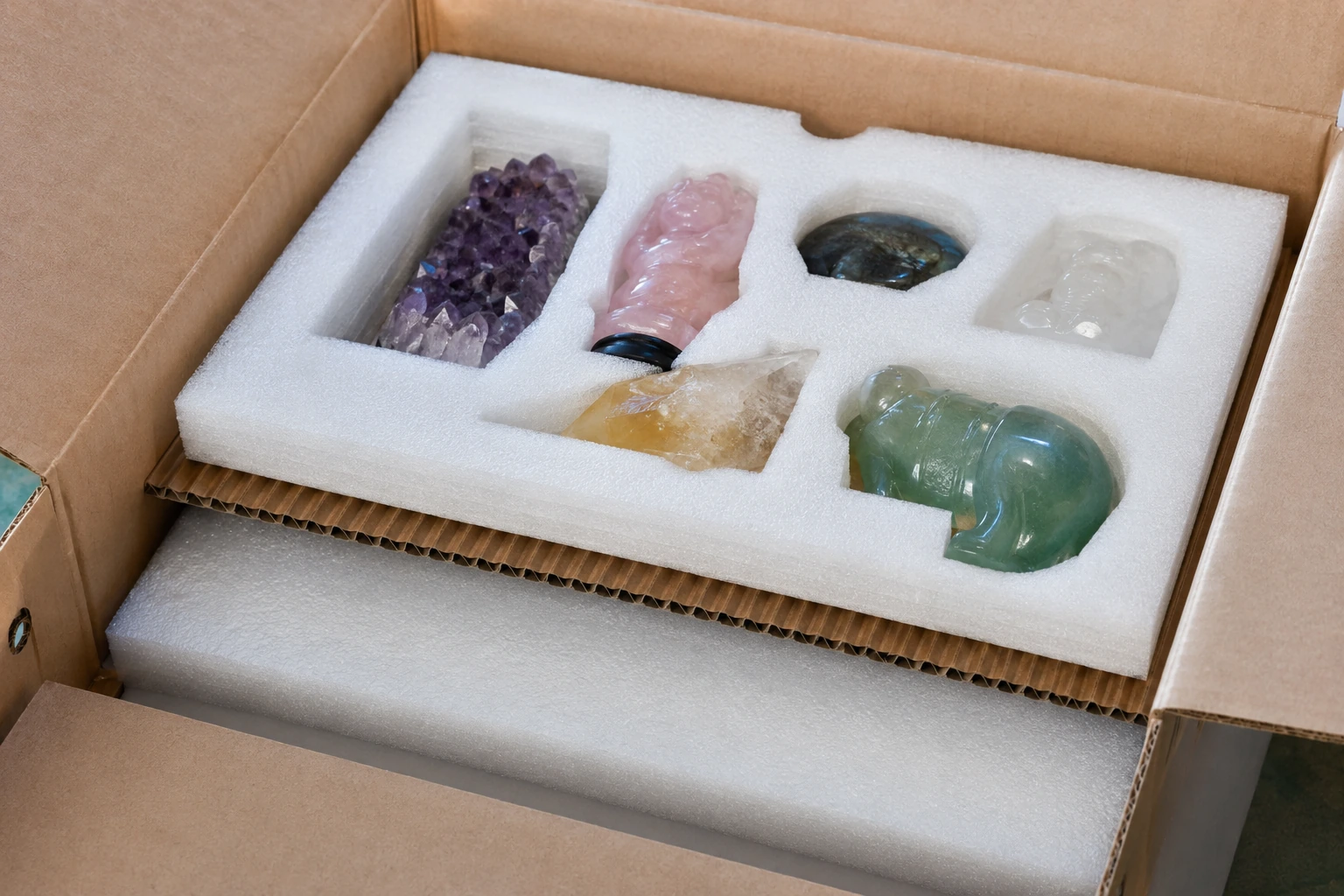
Because natural crystals are dense, heavy, and fragile, an experienced wholesale crystal manufacturer uses a robust, multi-layered packaging system. Their attention to detail—using custom foam inserts, double-wall cartons, and corner protectors—signals a professional, export-ready operation that values your investment.
Dive Deeper: The Gold Standard for Export Packaging
You can tell a lot about a supplier by how they pack their goods. A factory that cuts corners on packaging is not a factory you want to work with for long-distance shipping. A professional supplier who understands the risks of international freight will never skimp on protection.7
Here is what you should expect as standard:
- Individual Item Protection: Each item must be tightly wrapped and unable to move. For complex carvings or delicate clusters, they should use high-density EPE pearl foam with custom-cut slots to hold the item securely. For simpler shapes, thick layers of bubble wrap are the minimum.
- Inner and Outer Box System: Items should be placed in their own individual hard boxes, which are then packed into a master export carton. The master carton should be a 5-ply or 7-ply corrugated cardboard box designed for heavy loads.
- Structural Reinforcement: The corners of the master carton should be fitted with plastic or cardboard corner protectors to prevent crushing.8 The box should be filled completely so nothing can shift inside.
- Bulk Shipment Security: For large, heavy orders, the cartons must be stacked on a fumigation-free pallet, secured with strapping, and then wrapped tightly with stretch film to protect against moisture and shifting.
Finally, a reliable partner will have clear terms in their contract regarding liability for shipping damage. They will stand behind their packaging and offer a clear process for reimbursement or replacement if any items arrive broken.
Frequently Asked Questions
What is the best way to start working with a new wholesale crystal manufacturer?
The safest and most effective way is to start with a low-MOQ, mixed-style trial order.9 This allows you to test the manufacturer's ability to handle different materials, assess their quality control across various products, and evaluate their communication and shipping efficiency without a large upfront investment.
Are all crystal suppliers on Alibaba and other B2B platforms real factories?
No. Many listings on B2B platforms are from trading companies, agents, or small workshops posing as large factories. It is essential to use the verification methods discussed in this article—such as workshop video calls and technical questions—to determine if you are speaking directly with a manufacturer.
How can I be sure the crystals I am buying are natural?
Ask the supplier for macro photos or close-up videos that show the stone's natural inclusions, internal fractures, or growth patterns—imperfections are a sign of authenticity. For high-value items, you can request a gemological certificate from a reputable lab. Always get written confirmation that the products are "natural and untreated."
What is Donghai, China known for in the crystal industry?
Donghai is globally recognized as the "crystal capital." It is the largest hub in the world for processing and trading natural crystals. Over 70% of the world's raw crystal materials are sent to Donghai to be cut, carved, polished, and exported, making it the premier location for sourcing crystal products.
Conclusion
Finding a true and reliable wholesale crystal manufacturer in China requires moving beyond surface-level evaluations. By verifying a supplier's geographic location, conducting practical tests to distinguish factories from traders, scrutinizing quality to avoid price traps, and inspecting their export packaging standards, you can significantly reduce your sourcing risks. These steps empower you to build a transparent and lasting partnership with a supplier who can consistently deliver quality products and help your business grow.
As someone who has been in this industry for over a decade, I don't recommend placing a large container order on your first purchase. The healthiest partnerships are built on proven trust. I invite you to test our process with a small, mixed-lot trial order. It's the best way to experience our product quality, customization capabilities, and customer service first-hand.
To discuss your needs or start a trial order, please contact us.
Email: sales@crystalcarvingswholesale.com
WhatsApp: +86 150 7540 9178
<!--[googlesitekit-end-of-content]-->
"How to Choose a Reliable Crystal Carvings Wholesale Supplier in ...", https://crystalcarvingswholesale.com/how-to-choose-a-reliable-crystal-carvings-wholesale-supplier-in-china/. A report from a recognized trade or industry organization confirms that Donghai processes a significant percentage of the world's natural crystals and semi-precious stones, though exact figures may vary. Evidence role: statistic; source type: institution. Supports: Donghai's role as a major hub for processing and exporting natural crystals and semi-precious stones.. Scope note: The percentage may differ depending on the source and the specific types of crystals considered. ↩
"Keeping it crystal clear – The environmental impact of crystals", https://blogs.canterbury.ac.uk/sustainability/keeping-it-crystal-clear-the-environmental-impact-of-crystals/. Educational or industry resources describe the typical setup and environment of a crystal cutting and polishing workshop. Evidence role: mechanism; source type: education. Supports: The physical and operational characteristics of a genuine crystal factory.. Scope note: Descriptions may vary slightly depending on the scale and specialization of the factory. ↩
"How to Choose a Reliable Crystal Carvings Wholesale Supplier in ...", https://crystalcarvingswholesale.com/how-to-choose-a-reliable-crystal-carvings-wholesale-supplier-in-china/. Research or expert commentary highlights the operational differences between trading companies and manufacturing factories in the crystal industry. Evidence role: expert_consensus; source type: research. Supports: The distinction between trading companies and factories in the crystal industry, particularly regarding access to production facilities.. Scope note: Some trading companies may have partial access to workshops, which could blur the distinction. ↩
"Inclusions in Gemstones - GIA", https://www.gia.edu/gems-gemology/summer-2022-colored-stones-unearthed. Educational resources or gemological guides explain how macro photography can reveal natural inclusions and growth lines in crystals. Evidence role: mechanism; source type: education. Supports: The use of macro photography to identify natural features in crystals for authenticity verification.. Scope note: Macro photography may not detect all types of treatments or fakes. ↩
"GIA: Gemological Institute Of America | All About Gemstones", https://www.gia.edu/. Gemological institutions outline the standards and processes for issuing certificates that verify crystal authenticity. Evidence role: case_reference; source type: institution. Supports: The use of lab certificates like those from NGTC to verify the authenticity of high-value crystals.. Scope note: The availability and recognition of certificates may vary by region. ↩
"What should be inspected before a wholesale crystal shipment ...", https://crystalcarvingswholesale.com/what-should-be-inspected-before-a-wholesale-crystal-shipment-leaves-the-factory/. Educational or trade resources recommend pre-shipment quality control videos as a best practice for ensuring product quality. Evidence role: mechanism; source type: education. Supports: The use of pre-shipment quality control videos to verify product quality in the crystal industry.. Scope note: Videos may not capture all potential quality issues, especially internal defects. ↩
""Benefits of a supplier packaging guideline" by Kristin Waxmonsky", https://repository.rit.edu/theses/7371/. Research or trade guidelines emphasize the need for secure packaging to minimize damage during international freight. Evidence role: general_support; source type: research. Supports: The importance of robust packaging practices for international crystal shipments.. Scope note: Specific packaging standards may vary by supplier and shipping method. ↩
"Shipping Box Corner Protectors Plastic Packaging Edge ...", https://www.amazon.com/Shipping-Corner-Protectors-Plastic-Packaging/dp/B08CZKH6RH. Educational or logistics resources recommend corner protectors as a standard practice for securing fragile items in transit. Evidence role: mechanism; source type: education. Supports: The use of corner protectors to prevent crushing during international shipping.. Scope note: Effectiveness may depend on the overall packaging design and shipping conditions. ↩
"Crystal Carvings Wholesale Supplier | Crystalcarvings", https://crystalcarvingswholesale.com/. Educational or trade resources suggest low-MOQ trial orders as a best practice for evaluating new suppliers. Evidence role: expert_consensus; source type: education. Supports: The recommendation to use low-MOQ trial orders as a risk mitigation strategy when working with new suppliers.. Scope note: Effectiveness may depend on the supplier's willingness to offer low-MOQ options. ↩
Keep Reading