
Struggling to turn your social media posts and blog articles into actual sales? Many crystal shop owners feel this frustration, creating beautiful content that gets likes but doesn't move inventory1. The issue isn't that your content is bad; it's that it exists in a vacuum, disconnected from your products and your customers' buying intent. The solution is not to create more content, but to build a cohesive crystal e-commerce content ecosystem where every part works together to drive profitable growth.
Building a successful crystal e-commerce content ecosystem means shifting from creating generic content to a product-led strategy. This involves sourcing unique inventory, creating content that highlights those specific product features to answer buyer questions, and ensuring your product pages seamlessly continue the story to convert high-intent traffic into sales. This creates a self-sustaining flywheel, not an endless to-do list.

This integrated approach might sound complex, but it's the most sustainable path to growth I've seen among the hundreds of online retailers we supply. Let's move beyond the content creation treadmill and explore how you can build a system that works for you, not against you.
Should Your Products Lead Your Crystal E-Commerce Content Strategy?
Are you spending hours writing about the general meaning of rose quartz, only to see your post get lost among thousands of identical articles? This is a common trap. When your content is generic, your products become generic, too.
The answer is an emphatic yes. Your unique inventory should be the starting point and centerpiece of your crystal e-commerce content. The specific cut of an amethyst, the rainbow flash in a labradorite palm stone, or the unique formation of a quartz cluster—these are your true differentiators.
Dive Deeper: The Power of Product-Led Storytelling
From our perspective as a supplier, the most successful e-commerce clients don't just sell crystals; they sell stories that are intrinsically tied to the physical items they have in stock. Generic content creates brand awareness at best. Product-led content drives sales.
Think about it this way: a potential customer doesn't just wake up wanting to buy "a crystal." They have a problem or a desire. They want a beautiful object for their desk, a thoughtful gift for a friend, or a tool to help them create a calmer space. Your content's job is to connect their need to one of your specific products.
If I were starting a crystal shop today, here’s how I’d approach it:
- Source for Uniqueness: Instead of just ordering "amethyst clusters," I'd look for clusters with unique calcite inclusions or a particularly deep purple hue. These details are content gold. When we source for our clients, we often highlight these unique characteristics so they can build stories around them.
- Translate Features into Benefits: Don't just list a product's features. Connect them to the customer's life.
- Instead of: "Fluorite tower, 10cm tall, green and purple bands."
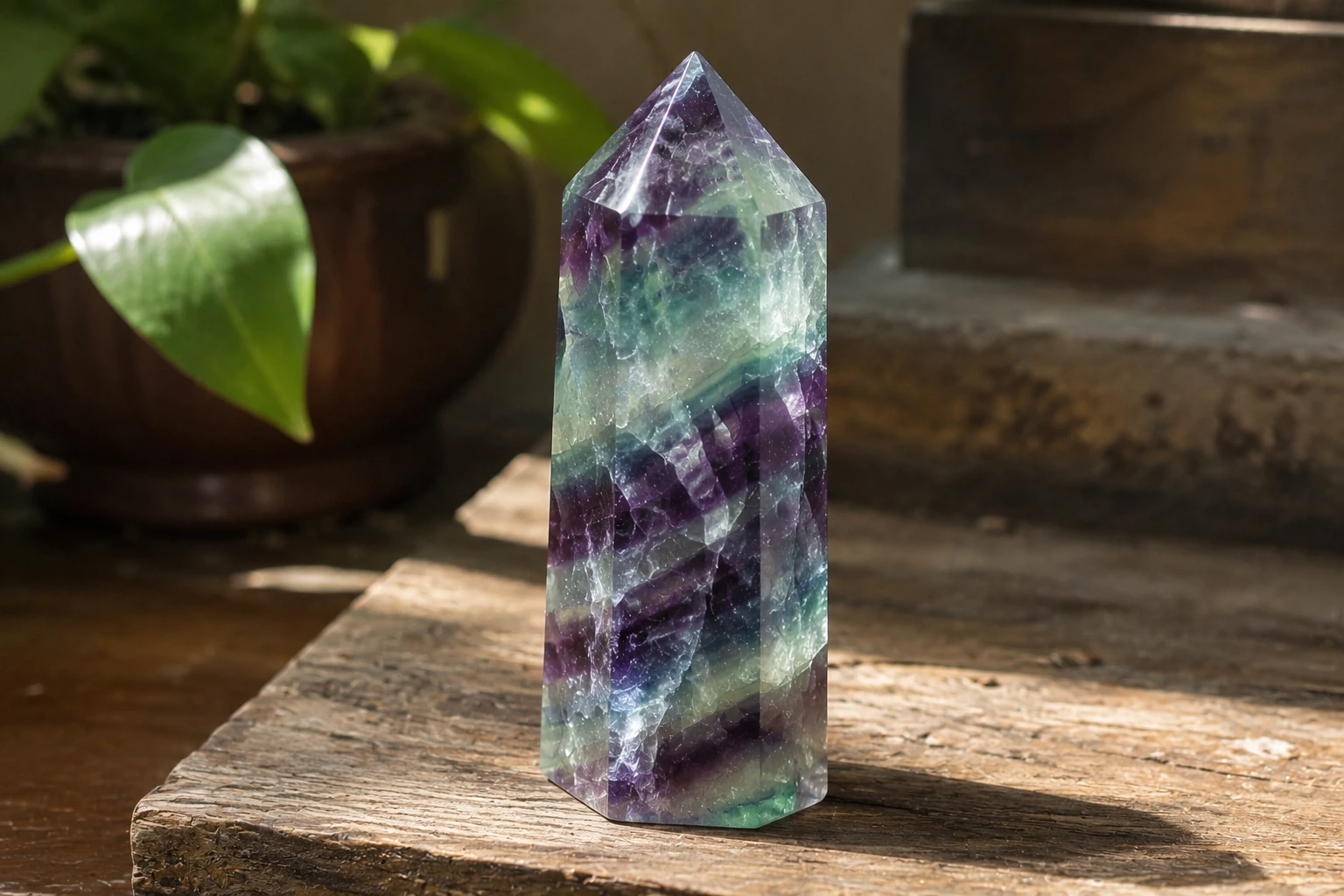
- Try: "The 'Focus' Fluorite Tower: A Desk Companion for Clarity. Its calming green and purple bands help reduce mental clutter, while its 10cm vertical shape directs energy upward, perfect for breaking through creative blocks."
- Create Content That Shows, Not Just Tells: A blog post is good, but a short video or a series of high-quality photos is better. If you sourced one of our unique fluorite towers, don't just describe it. Create a short video reel showing how its colors shift in the sunlight. Title it "The Living Crystal for Your Focus Zone." This makes the abstract property of "focus" tangible and desirable.
Here's a comparison of the two approaches:
| Generic Content Approach | Product-Led Content Approach |
|---|---|
| Topic: "The Healing Properties of Rose Quartz" | Topic: "3 Ways to Style Our Heart-Shaped Rose Quartz in Your Home" |
| Visuals: Stock photos of rose quartz | Visuals: High-quality photos of your specific rose quartz hearts on a nightstand, a desk, and a bookshelf. |
| Goal: Attract broad search traffic for "rose quartz" | Goal: Show a customer exactly how to use the product you sell, creating immediate purchase intent. |
| Result: High bounce rate, low conversion. | Result: Lower, but highly qualified traffic that converts. |
By letting your products lead, you differentiate yourself from competitors who are all repeating the same information. Your content becomes a showcase for your unique inventory, which is precisely what customers want to see.
Is Chasing Virality Better Than Targeting Buyer Intent?
Are you mesmerized by the idea of a TikTok video getting a million views? It's tempting to chase viral trends, but from what we've seen, viral traffic is often vanity traffic2. It's composed of viewers, not buyers, and rarely translates into a healthy bottom line.
No, targeting buyer intent is far more valuable than chasing virality3. A successful crystal e-commerce content strategy focuses on attracting a smaller, more qualified audience that is actively looking to make a purchase. These are customers with a problem to solve or a specific gift to find.
Dive Deeper: The Path from Intent to Purchase
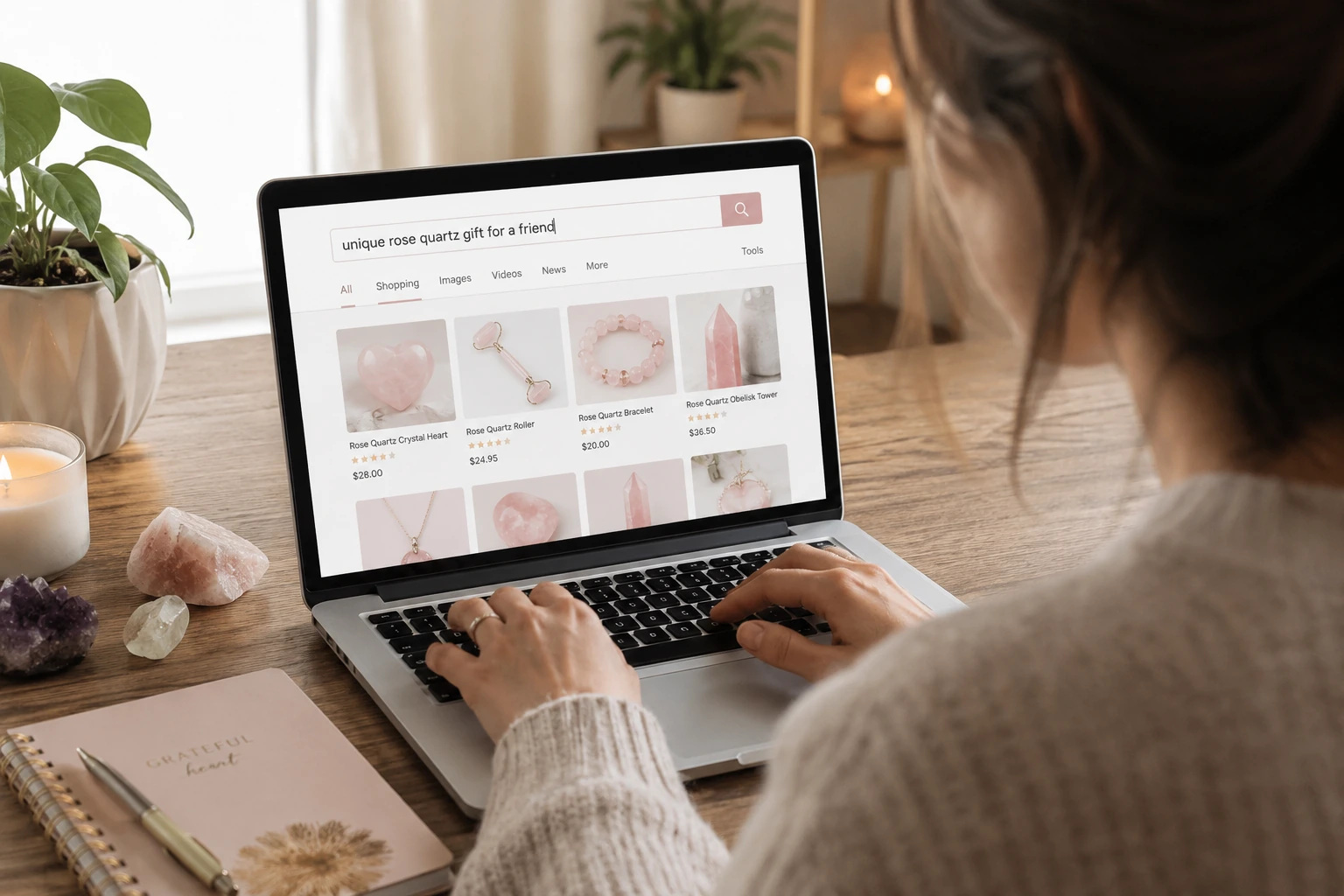
High-intent traffic comes from people typing specific questions into search engines4. Your goal is to create content that directly answers these questions and presents your product as the perfect solution.
Think about the difference between these two search queries:
- Low Intent (Informational): "what is clear quartz"
- High Intent (Commercial): "best crystal for a productive home office"
The first person is browsing. The second person is buying. You want to attract the second person.
How to find and target high-intent queries:
- Think Like Your Customer: What problems are they trying to solve?
- "I can't focus at work." → Content Idea: "Our Top 5 Crystals for a Distraction-Free Workspace."
- "I need a unique birthday gift for my spiritual friend." → Content Idea: "The Ultimate Gift Guide: Unique Crystals for Every Zodiac Sign."
- "My living room feels stagnant." → Content Idea: "How to Use Large Amethyst Geodes to Transform Your Home's Energy."
- Use Specific, Long-Tail Keywords: Instead of "amethyst," target "large amethyst cathedral for living room" or "ethically sourced amethyst bracelet." These longer phrases have lower search volume but much higher conversion rates because the searcher knows exactly what they want.
- Answer the Question Directly: When creating content, get straight to the point. If your article is titled "Best Crystal for a Productive Home Office," the first paragraph should list your top recommendation and link directly to the product.
Let's map out the ideal customer journey for an intent-driven sale:
- The Search: A customer searches "unique housewarming gift crystal."
- Your Content: They find your blog post, "Beyond Sage: 5 Unique Crystal Housewarming Gifts They Won't Already Have."
- The Solution: The post features your specific, beautifully photographed Labradorite Freeform, describing it as "a stone of transformation, perfect for a new beginning in a new home."
- The Click: A clear link or button takes them from the blog post directly to the Labradorite Freeform product page.
- The Conversion: The product page reinforces the story, with photos of the exact piece, its dimensions, and text that echoes the "new beginnings" narrative.
This path is clean, logical, and effective. You're not hoping a random viewer stumbles upon your product; you're guiding an interested buyer directly to their solution. This is the core of a profitable crystal e-commerce content strategy.
Why Does the Content-to-Commerce Gap Kill Conversions?
Have you ever clicked from a compelling Instagram post to a product page, only to be met with a single, generic photo and a one-line description? That jarring disconnect is the content-to-commerce gap, and it's the number one conversion killer we see in the online crystal space.
This gap shatters the customer's journey and breaks the trust you just built. Your content's job is to tell a story and "pre-sell" the customer on an idea or solution. The product page's job is to close the deal by proving that this specific product is the fulfillment of that story.
Dive Deeper: Bridging the Gap to Close the Sale
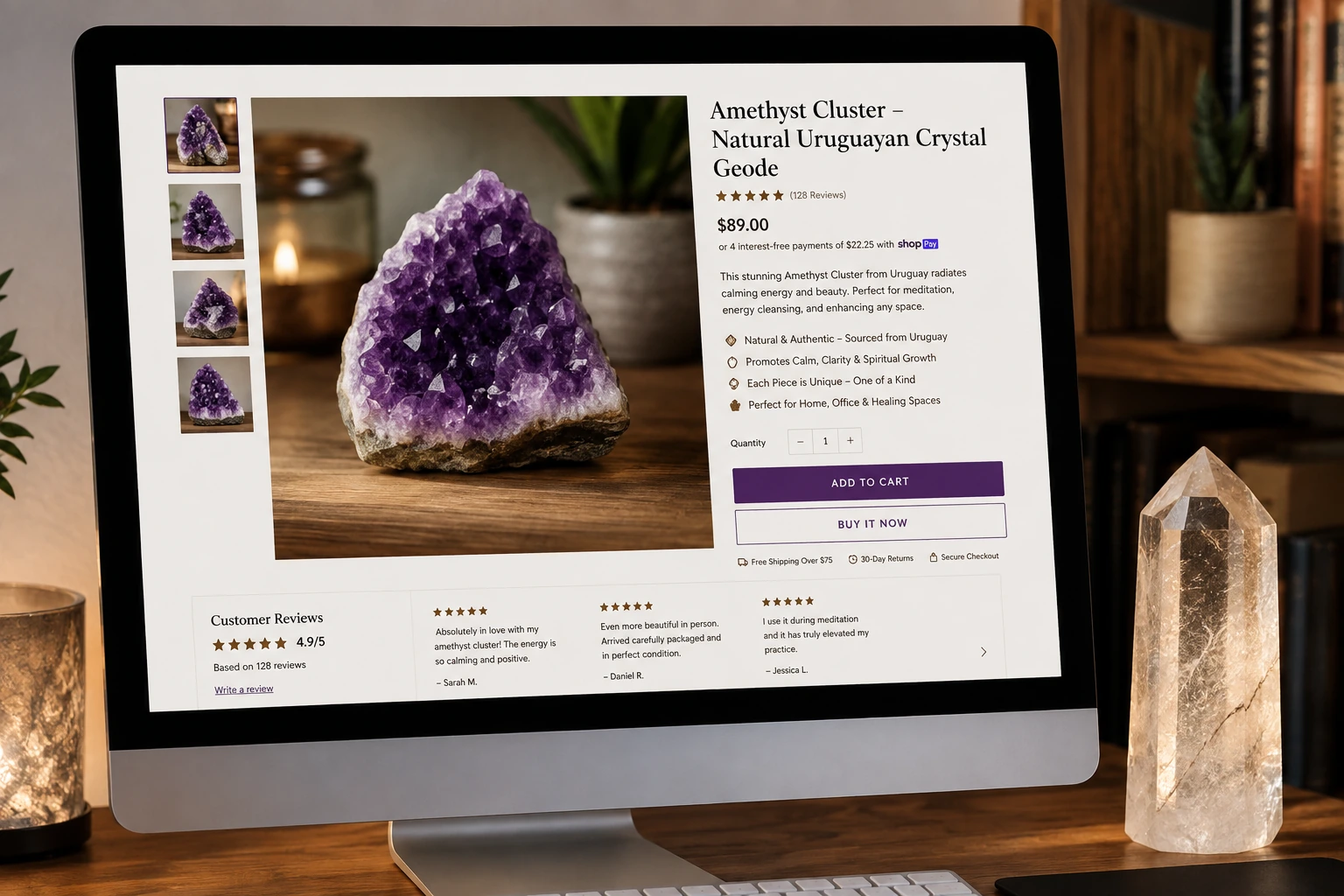
A seamless transition from content to commerce is non-negotiable. The product page is not just a checkout portal; it's the final and most crucial chapter of your product's story. It must feel like a natural continuation of the blog post, video, or social media update that brought the customer there.
We've observed that our most successful B2B clients master this handoff. Their product pages don't just list specs; they resonate with the emotional and practical promises made in their marketing content.
Checklist for a High-Converting, Gap-Free Product Page:
- Echo the Story: Does the product description use the same keywords and narrative as the content that led here? If your blog post was about a "bedside companion for restful nights," the product description for the recommended howlite palm stone should repeat that language.
- Showcase the Exact Product: For unique items like carvings or freeforms, use photos of the actual piece the customer will receive. For items sold in multiples like tumbles or bracelets, use high-quality photos that are truly representative of your current stock. Show the product from multiple angles, in different lighting, and next to a common object (like a coin) for scale.
- Leverage Video: A short, 15-second video showing the crystal's flash, texture, or how it sits in a hand is incredibly powerful. It makes the product tangible and real.
- Be Radically Transparent: Clearly state the dimensions, weight, and origin. If a crystal has natural inclusions or fissures, point them out as marks of its authenticity. This builds immense trust.
- Incorporate Social Proof: Feature customer reviews and user-generated photos directly on the page. Seeing someone else happy with their purchase is a powerful motivator.
- Make the Call-to-Action (CTA) Clear: The "Add to Cart" button should be prominent and easy to find.
Consider this scenario: Your Instagram reel about a "Sunstone Sphere to Spark Creativity" gets a lot of engagement. A potential customer clicks the link in your bio.
- Bad Experience (The Gap): They land on a page with one blurry photo of a sunstone sphere, titled "Sunstone Sphere," with the description "Orange crystal ball." The story is dead. The sale is lost.
- Good Experience (The Bridge): They land on a page titled "The 'Creator's Spark' Sunstone Sphere." It features a gallery of photos showing the sphere's internal glitter (schiller), a video of it catching the light, and a description that reads, "Ignite your passion and overcome creative blocks with this radiant Sunstone Sphere. Its joyful energy, captured in thousands of tiny glittering inclusions, serves as a beautiful reminder to pursue your creative spark."
The second experience is cohesive, convincing, and converts.
How Do You Build a Sustainable Crystal E-Commerce Content Flywheel?
Feeling exhausted by the endless demand for new content? The "post and pray" method is a recipe for burnout. The goal isn't to be a content machine; it's to build a smart, self-sustaining system—a flywheel.
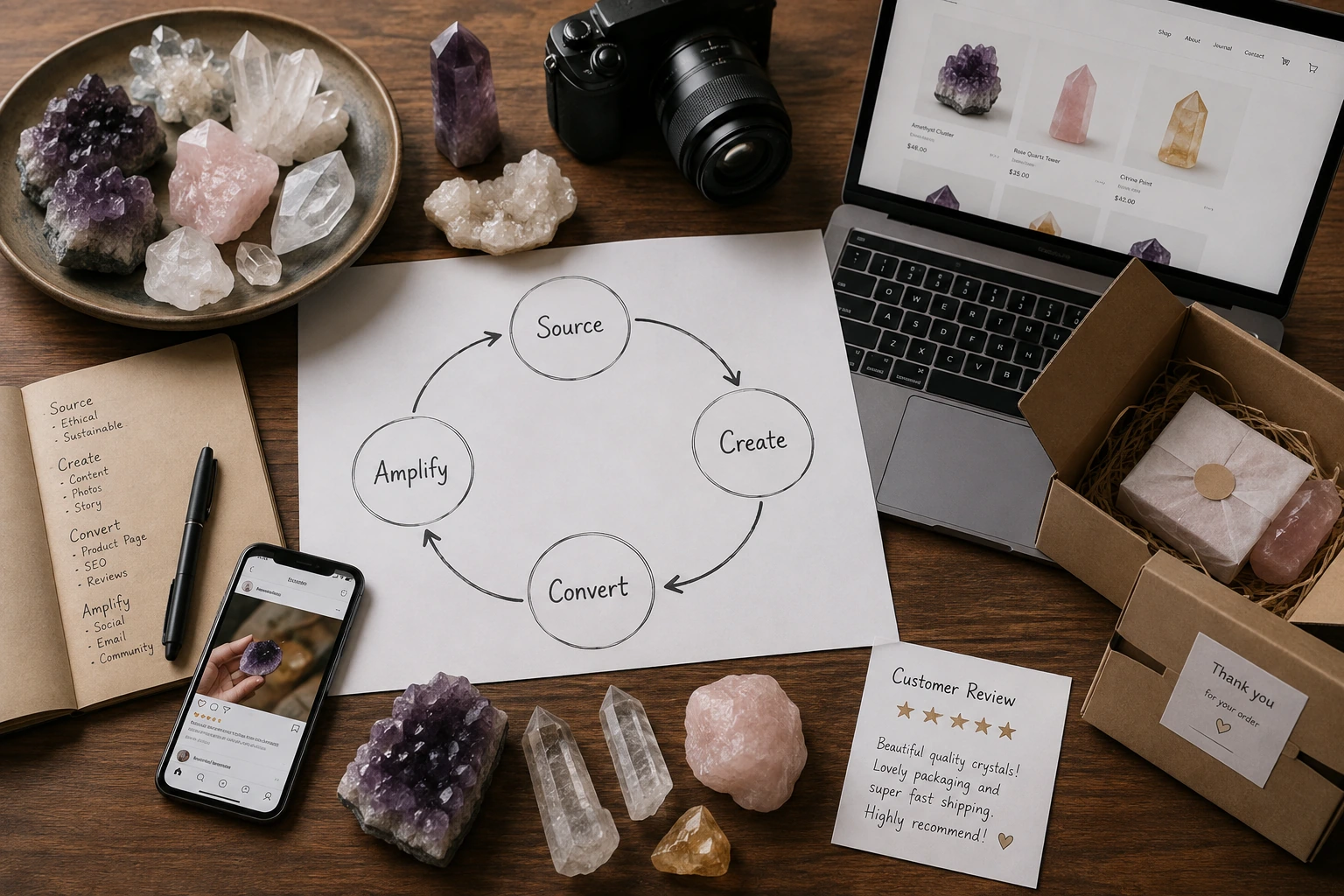
You build this flywheel by creating an integrated loop where each stage naturally fuels the next. It starts with strategic sourcing, flows into product-led content, drives conversions with intent-driven traffic, and uses customer feedback as fuel for the next cycle. This transforms your efforts from a linear to-do list into an exponential growth engine.
Dive Deeper: The Four Stages of the Flywheel
This system thinking is what separates thriving seven-figure crystal shops from struggling startups. From my vantage point, I see our most strategic partners operating this way, whether they realize it or not. Every investment in product feeds their marketing, and every marketing success validates their product choices.
Here are the four stages to build your own crystal e-commerce content flywheel:
1. Source (The Fuel): This is the starting point. Don't just buy what's popular; source products with unique features you can build a story around5. When you work with a supplier like us, ask about new materials, unique carvings, or special-quality batches. For example, instead of standard rose quartz hearts, ask for hearts with a rare asteroid inclusion. This unique feature becomes the hook for your content.
2. Create (The Engine): Create product-led content based on the unique features of your inventory.
- Product: Rose quartz hearts with asteroid inclusions.
- Content Angle: "A Love That's Written in the Stars: Our Limited Edition Asteroid Rose Quartz Hearts."
- Content Formats:
- A blog post explaining the metaphysical symbolism of the star pattern.
- An Instagram carousel with close-up photos of the inclusions.
- A TikTok video showing the "star" effect when light hits the stone.
3. Convert (The Action): Drive high-intent traffic to your content and then to your perfectly bridged product pages. Optimize your content for search terms like "unique valentine's day crystal gift" or "star rose quartz meaning." Ensure the product page continues the "written in the stars" narrative and has crystal-clear photos of the exact item.
4. Amplify (The Momentum): This is where the flywheel becomes self-sustaining. After a customer makes a purchase, encourage them to leave a review and share a photo of their new crystal.
- Post-Purchase Email: "We'd love to see how you styled your Asteroid Rose Quartz Heart! Tag us on Instagram for a chance to be featured."
- User-Generated Content (UGC): A customer posts a beautiful photo of the heart on their altar.
- Fuel for New Content: You can now re-share that UGC (with permission) as social proof. This becomes new, authentic content that fuels the next cycle of the flywheel, attracting new customers and validating your product choices.
This flywheel turns one-time customers into advocates6 and transforms your inventory from static objects into dynamic stories that sell. It's a strategic, sustainable approach that honors both the beauty of the crystals and the intelligence of your business.
Frequently Asked Questions
What's the best type of content for a crystal e-commerce store?
The best crystal e-commerce content is product-led. Instead of generic posts, create content that showcases the unique features of your specific inventory. This includes high-quality photos from multiple angles, short videos showing the crystal's light play or texture, and blog posts that solve a specific customer problem (e.g., "Crystals for a Calmer Workspace") using products you actually stock.
How do I find high-intent keywords for my crystal products?
Think like a customer who is ready to buy. They use specific, descriptive phrases. Combine crystal names with use cases ("amethyst for better sleep"), recipients ("crystal gift for coworker"), or desired qualities ("large clear quartz point for altar"). Use tools like Google's search suggestions or simply browse forums like Reddit to see how real people ask for recommendations.
How can I improve my crystal product pages to convert better?
To improve conversions, your product page must seamlessly continue the story from your content. Use multiple high-resolution photos of the exact item, write a description that echoes the benefits you mentioned in your marketing, include dimensions and a photo for scale, and feature customer reviews. A short video can also be incredibly effective at making the product tangible.
Should I focus on Instagram, TikTok, or a blog for my crystal shop?
Focus on where you can best tell a product's story and link directly to it. A blog is excellent for SEO and answering high-intent search queries. Instagram is great for high-quality visuals and community building. TikTok is powerful for short-form video. The best strategy is to create a core piece of product-led content (like a blog post) and then adapt it for social channels, always leading back to the product page.
Conclusion
Building a successful online crystal business is less about out-posting your competition and more about out-thinking them. The path to sustainable growth lies in creating an integrated crystal e-commerce content and conversion ecosystem. This flywheel—fueled by unique products, driven by intent-focused content, and amplified by customer satisfaction—turns the exhausting content treadmill into a powerful engine for sales7. By rejecting the myth of virality and closing the gap between your stories and your storefront, you create a shopping experience that is authentic, helpful, and highly profitable.
Ready to find the unique, story-rich products that will become the fuel for your content flywheel? At Crystal Carvings Wholesale, we specialize in providing high-quality, unique crystal carvings, decor, and jewelry to online sellers. Contact us to discuss your needs, request a catalog, or get a fast quotation.
WhatsApp: +86 150 7540 9178 Email: sales@crystalcarvingswholesale.com Website: https://crystalcarvingswholesale.com/
<!--[googlesitekit-end-of-content]-->
"Harnessing Social Media to Drive Sales", https://extension.missouri.edu/publications/g6229. Research indicates that while social media engagement can increase brand visibility, it does not always directly translate into sales due to factors like audience intent and content relevance. Evidence role: general_support; source type: research. Supports: Social media engagement does not always correlate with increased sales.. Scope note: The source may not focus specifically on crystal shops but provides general insights into e-commerce trends. ↩
"Analyzing the impact of social networks and social behavior ...", https://pmc.ncbi.nlm.nih.gov/articles/PMC9759667/. Research on viral marketing shows that while it can increase visibility, it often fails to generate significant sales due to low buyer intent among viewers. Evidence role: statistic; source type: research. Supports: Viral traffic often results in low conversion rates and limited impact on overall sales.. Scope note: The impact of viral traffic may vary depending on the product and target audience. ↩
"How buyer intent data can help increase sales and ROI", https://www.algolia.com/blog/ux/what-is-buyer-intent-and-why-is-analyzing-it-key-for-your-bottom-line. Studies in digital marketing suggest that targeting buyer intent leads to higher conversion rates compared to the often fleeting impact of viral content. Evidence role: general_support; source type: research. Supports: Intent-driven marketing strategies are generally more effective at driving e-commerce sales than viral content.. Scope note: The effectiveness of each strategy may depend on the specific market and audience. ↩
"How I find high intent SEO keywords that'll still WIN in the AI search era", https://www.linkedin.com/posts/connorgillivan_how-i-find-high-intent-seo-keywords-thatll-activity-7402707827904946176-8IAM. Educational resources on digital marketing define high-intent traffic as users searching for specific solutions or products, often leading to higher conversion rates. Evidence role: definition; source type: education. Supports: High-intent traffic is characterized by specific search queries that indicate a readiness to purchase.. Scope note: The source may provide a general definition without focusing on the crystal e-commerce niche. ↩
"Carnelian Crystal Carvings: Color, Quality and Wholesale Buying Tips", https://crystalcarvingswholesale.com/carnelian-crystal-carvings-color-quality-and-wholesale-buying-tips/. Educational resources on content marketing highlight the role of unique product features in creating compelling narratives that resonate with customers. Evidence role: general_support; source type: education. Supports: Unique product features can enhance storytelling and make e-commerce content more engaging.. Scope note: The source may provide general insights without focusing on the crystal e-commerce niche. ↩
"Marketing Flywheel: How It Builds Customer Loyalty (2026)", https://www.shopify.com/blog/marketing-flywheel. Research on e-commerce strategies suggests that content flywheels foster customer loyalty by integrating product, content, and user feedback into a cohesive system. Evidence role: mechanism; source type: research. Supports: Content flywheels can enhance customer loyalty and turn one-time buyers into advocates by creating a continuous cycle of engagement.. Scope note: The source may not specifically address the crystal e-commerce niche. ↩
"Sustainable Ecommerce: Strategies for Eco-Friendly Retail - apu.apus.edu", https://www.apu.apus.edu/area-of-study/business-and-management/resources/sustainable-ecommerce-strategies-for-eco-friendly-retail/. Research on e-commerce content strategies suggests that flywheels create a self-sustaining cycle of engagement and sales by integrating product, content, and customer feedback. Evidence role: mechanism; source type: research. Supports: Content flywheels can streamline content creation and drive sustainable sales growth.. Scope note: The source may not specifically address the crystal e-commerce niche. ↩
Keep Reading