Struggling to find consistent, high-quality carnelian carvings? You're not alone. Many buyers are frustrated by inconsistent colors and quality, which hurts their sales and profits.1
Successful wholesale buying means defining your quality standard based on your market. Focus on carving craftsmanship, verify color with videos, and know the difference between natural features and actual defects. This ensures you get profitable, sellable products every time.
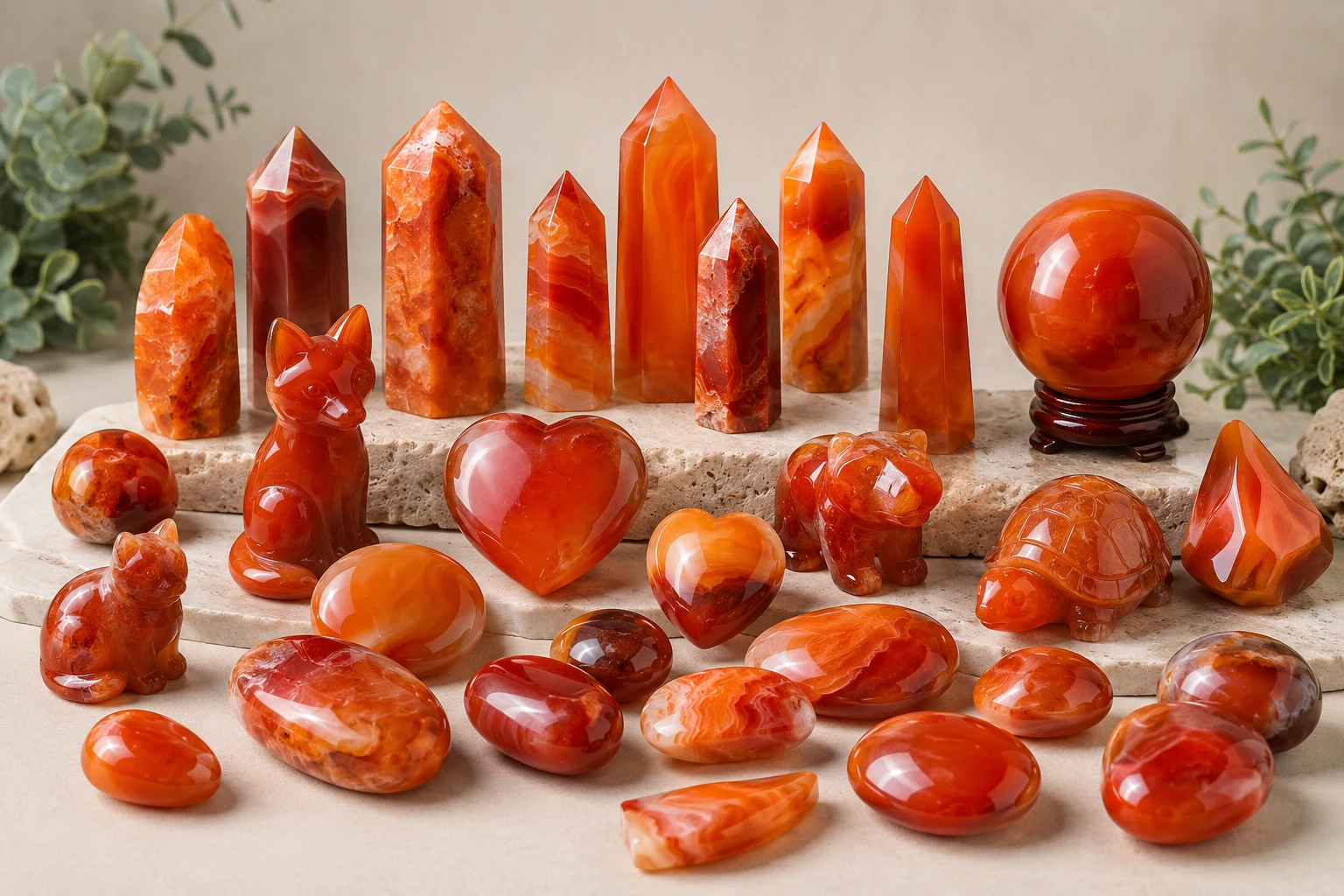
As a supplier, I've seen many buyers focus only on color. They ask for "the best red" carnelian. But this often leads to disappointment. There's a better way to think about buying carnelian carvings that protects your investment and delights your customers. Let's break down what truly matters for your business.
Should You Stop Asking for 'AAA Grade' Carnelian?
Are you tired of "AAA grade" carnelian that looks nothing like the sample? This vague label causes confusion and leads to disappointing orders.2 You need a more reliable system.
Yes, you should. Instead of using meaningless grades, define your standard with specific commercial variables. Specify your target color range, carving complexity, polish level, and what natural variations you accept. This clear communication is key to getting what you paid for.3
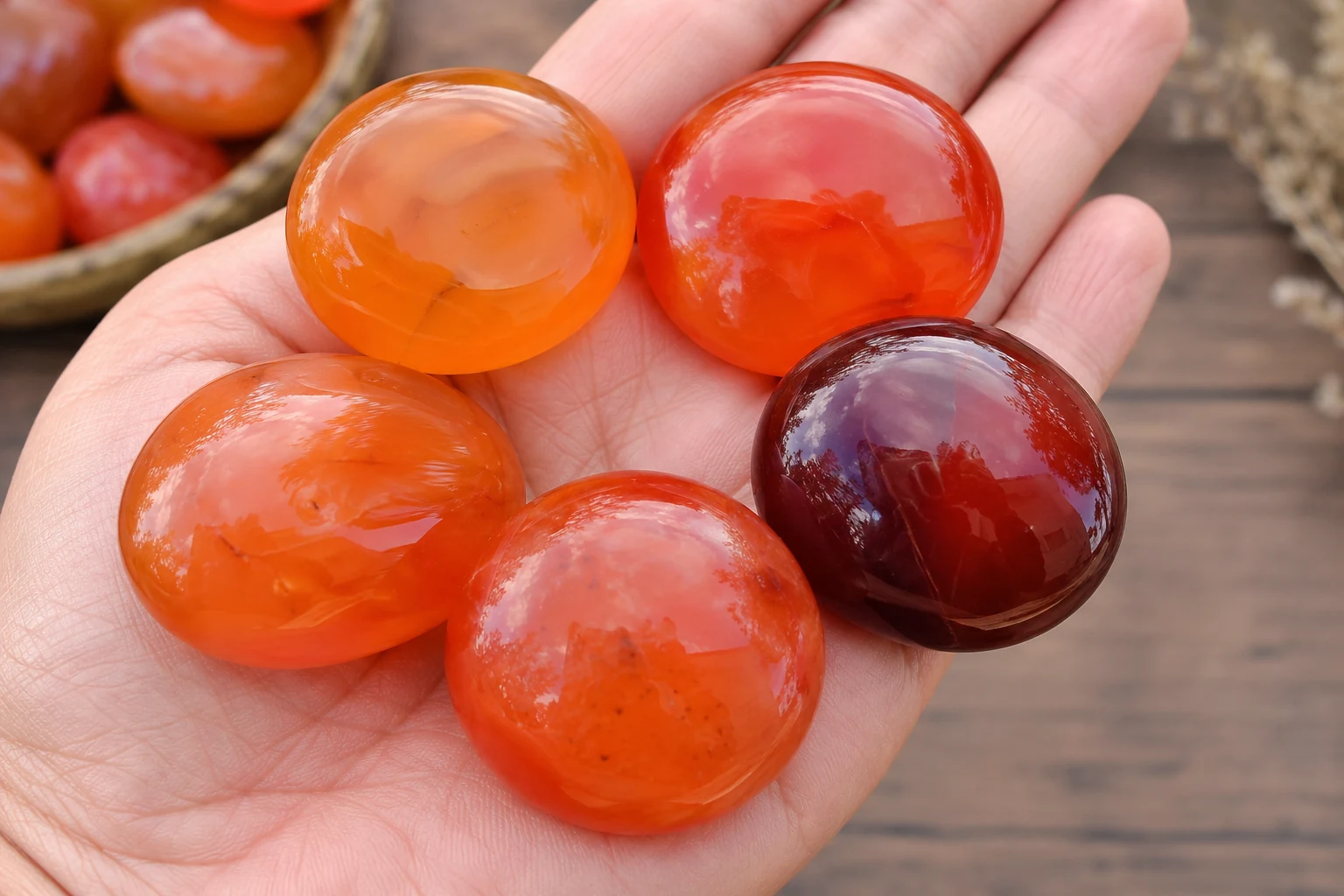
I get emails all the time asking, "Can you quote me your price for AAA grade carnelian carvings?" While I understand the intention, this question is almost impossible to answer accurately. One factory's "AAA" is another's "A". It's a marketing term, not a technical standard. Successful buying is a commercial process, not a treasure hunt. You need to define a quality standard that is profitable for your specific retail market. A consistent, well-finished, medium-priced carving is often more profitable than a rare, top-color piece with weak craftsmanship.4 Stop asking for "AAA grade" and start providing a clear spec sheet. This de-risks your purchase and shows the supplier you are a professional buyer.
Here is how you can break down your request:
| Vague Request | Clear, Professional Request |
|---|---|
| "AAA Grade" | "Target Color: Bright, even orange. Avoid brown/yellow." |
| "Good Quality" | "Carving: Crisp details on the face, no tool marks." |
| "Nice Polish" | "Polish: High-gloss, smooth finish. No rough spots." |
| "No Flaws" | "Acceptable Variations: Light internal banding is okay. No surface cracks." |
This approach transforms the conversation from a guessing game into a clear manufacturing instruction.
Is Color More Important Than Carving Quality?
Did you get a batch of carnelian with amazing color but poor details? Now you're stuck with carvings that look cheap and won't sell. This is a common and costly trap.
No, it's not. For carved products, craftsmanship is king. A vibrant raw material cannot save a poorly executed carving.5 A well-carved piece in a standard orange will always outsell a poorly carved piece in a premium deep red.6
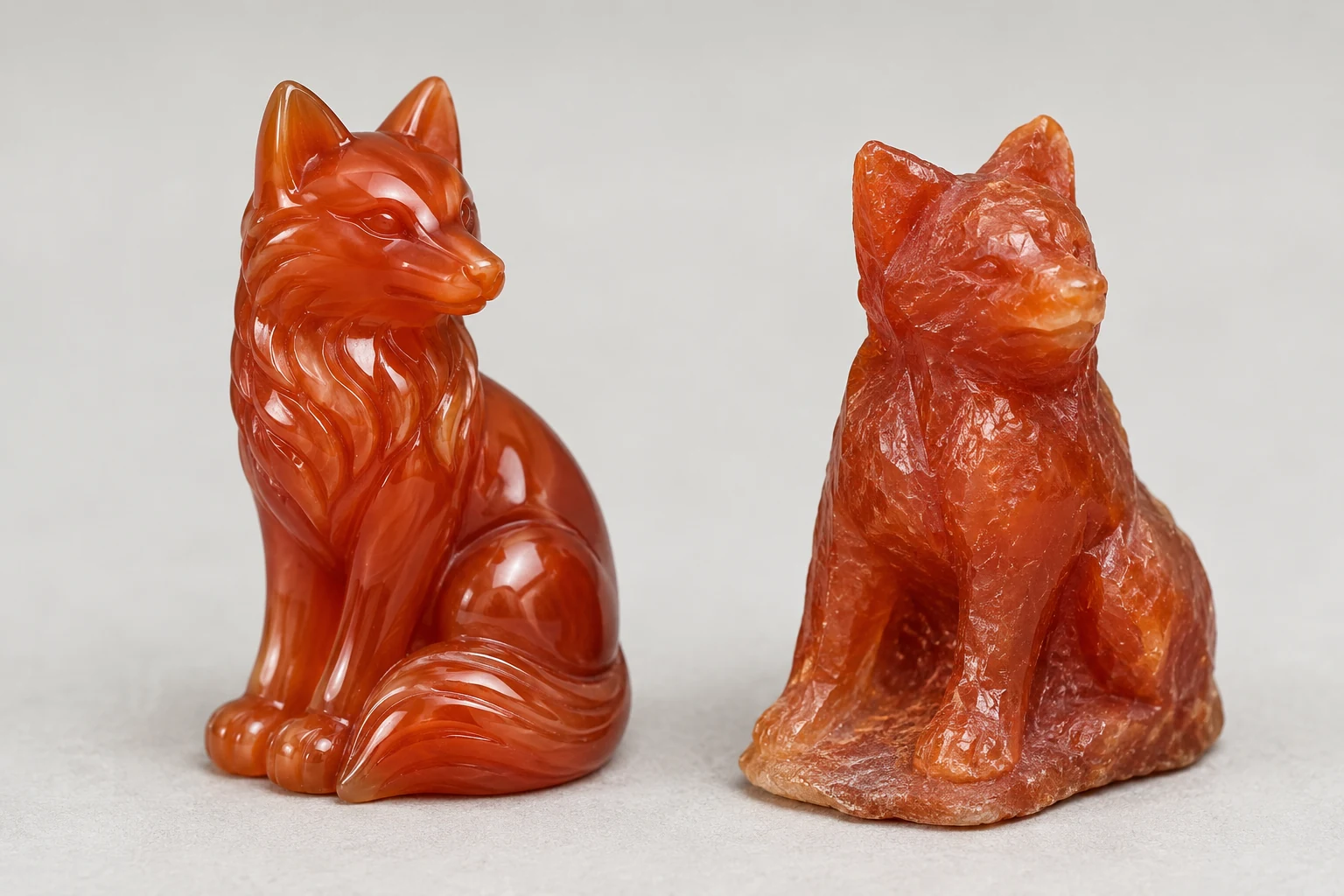
One of the biggest mistakes I see buyers make is getting obsessed with color. They spend a premium on deep red or "strawberry" carnelian rough, only to have it carved by a less-skilled workshop to save money. The result? A product that fails. Your customers are buying a carving, not just a stone. They are paying for the artistry and the shape. A beautiful raw material cannot save a carving with a lopsided base, blurry details, or visible tool marks from a grinding wheel. When we inspect batches for our clients, we look at the carving quality first. Is the shape symmetrical? Are the lines clean and sharp? Is the polish even, especially in the small crevices? A well-carved piece feels good in the hand and looks professional, which justifies a higher retail price, regardless of whether the color is standard orange or premium red.
Can You Trust Your Supplier's Photos?
Have you ever approved an order based on a stunning photo, only to receive a batch that looks completely different? This is a costly mistake. You feel misled and stuck with unsellable inventory.
Never approve a bulk order from a single "hero shot." Supplier photos are marketing tools designed to sell.7 To see the truth, you must demand verification videos of random pieces, photos under neutral light, and both backlit and non-backlit views.
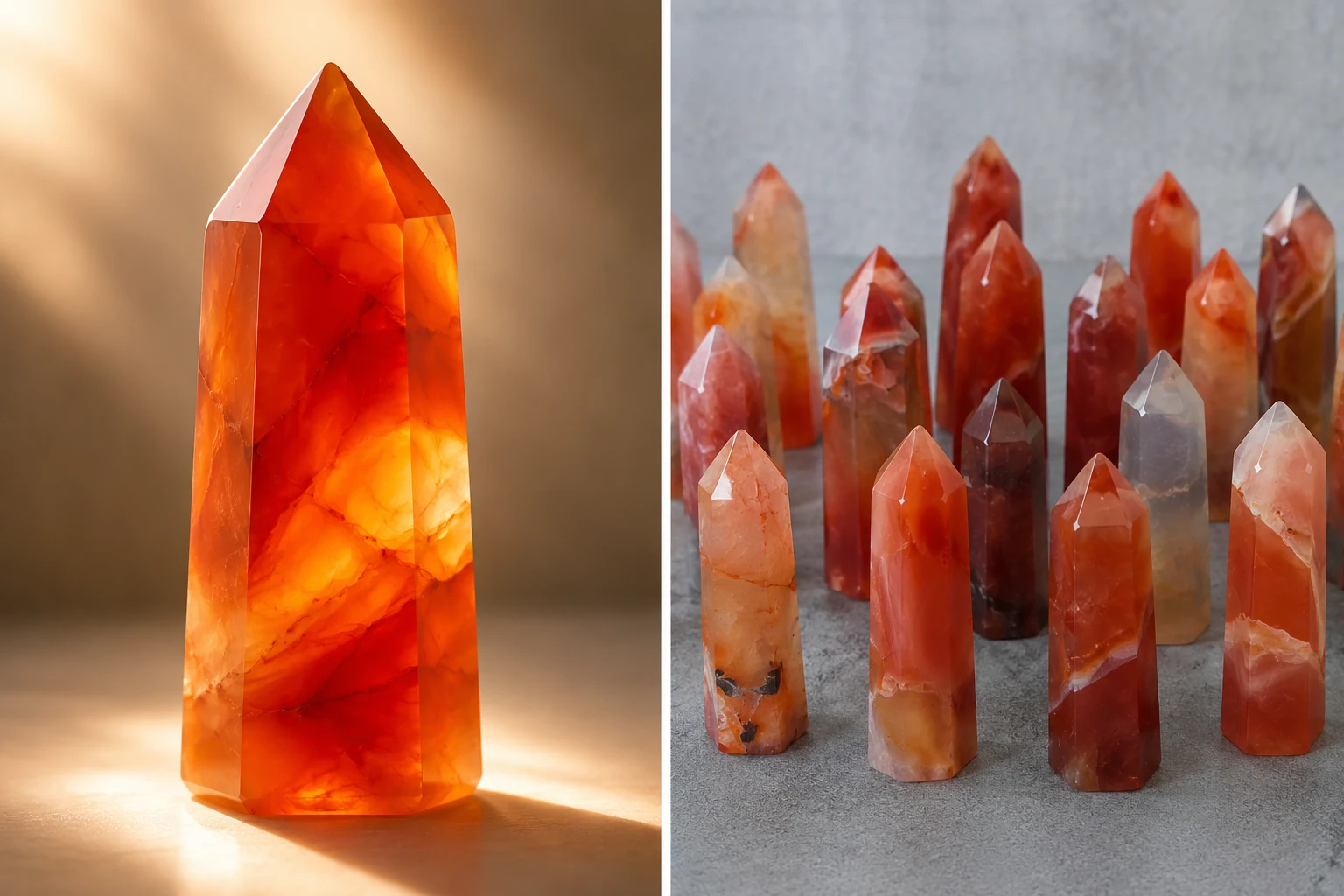
As a supplier, I know how photos are made. We want to show the product in its best possible light. This can be misleading for a wholesale buyer. A "hero shot" is a photo of the single best piece from a 10kg batch, taken under a bright lamp to make the color pop, maybe with some editing to increase saturation. Backlighting is another common trick; it makes the stone glow and shows off translucency, but it hides surface imperfections and can make a pale orange look like a deep red. To protect your investment, you must get a realistic view of the entire batch. I always encourage my long-term clients to request a simple verification checklist before they send payment. It takes us 5 extra minutes, but it builds trust and prevents problems later. Your supplier should be happy to provide this; if they refuse, that's a major red flag.
Your Verification Checklist:
- Ask for a short video of someone grabbing 5-10 pieces at random from the bulk box.
- Request photos taken in natural, indirect light (not under a strong lamp) on a neutral grey or white background.
- Ask for two photos: one with backlighting and one without. This shows you both the translucency and the true body color.
Are Cracks and Lines in Carnelian a Defect?
You just received a batch of carnelian and see lines and cloudy spots inside. Are these defects? Rejecting them could sour your supplier relationship, but keeping them might hurt sales.
It depends. You must learn to distinguish between harmless natural features and commercial defects that affect value. Internal banding and cloudy spots are usually acceptable.8 Surface-reaching cracks, fresh chips, and wobbly bases are unacceptable defects you should reject.9
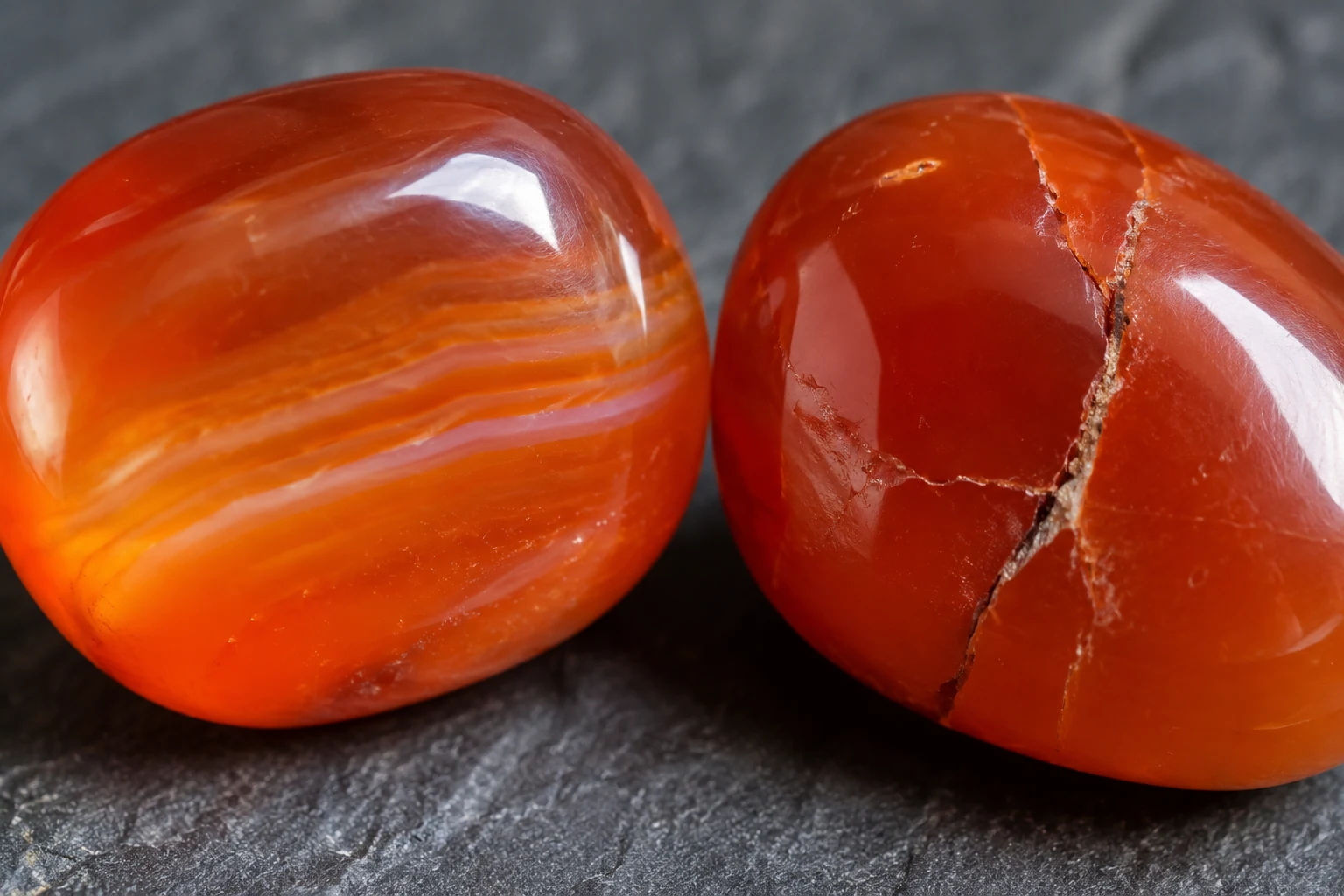
A major mistake new buyers make is rejecting pieces with perfectly normal, natural internal lines or clouds. An even bigger mistake is accepting pieces with structural defects that make them unsellable. Natural carnelian is formed in the earth; it will have variations. Learning to tell the difference is key to setting a fair quality standard with your supplier.10 Internal bands, color zones, and healed fractures (cloudy spots) are part of the stone's story and are generally accepted by end customers. However, a crack that reaches the surface, which you can feel with your fingernail, is a commercial defect. It compromises the piece's structure and can break. The same goes for fresh chips from poor packing or a carving that wobbles on a flat surface. These are manufacturing or handling errors, and you are justified in rejecting them.
| Feature Type | Description | Buyer Action |
|---|---|---|
| Acceptable Natural Feature | Internal banding, color zones, cloudy areas. | Accept. Educate customers about natural beauty. |
| Unacceptable Commercial Defect | Surface-reaching cracks, fresh chips, unstable base. | Reject. Provide clear photos to your supplier. |
Conclusion
In short, buying carnelian carvings is about clear communication and verification. Define your standards, prioritize craftsmanship, and demand transparent visuals to build a profitable and reliable crystal product line.11
<!--[googlesitekit-end-of-content]-->
"Bench Tip 17 - Avoid Stone Loss with Quality Assurance Benchmarks", https://www.gia.edu/bench-tip-avoid-stone-loss-with-quality-assurance-benchmarks. Studies on consumer behavior in the gemstone market suggest that inconsistent product quality can lead to reduced customer satisfaction and lower sales performance. Evidence role: general_support; source type: research. Supports: The relationship between inconsistent product quality and its impact on sales and profits in the gemstone or crystal industry.. Scope note: The evidence may not specifically address carnelian carvings but applies broadly to similar markets. ↩
"Why doesn't GIA issue grading reports for colored stones?", https://www.gia.edu/FAQ/gia-faq-analysis-gradinggrading-report-colored-stone. Research on gemstone grading practices highlights that inconsistent or vague labels can lead to buyer confusion and unmet expectations. Evidence role: general_support; source type: research. Supports: The challenges associated with vague grading labels in the gemstone industry and their impact on buyer satisfaction.. Scope note: The findings may not be specific to carnelian but are relevant to the broader gemstone market. ↩
"The Color of Responsibility: Ethical Issues and Solutions in ...", https://www.gia.edu/gems-gemology/summer-2016-color-responsibility-ethical-issues-solutions-colored-gemstones. Guides on wholesale gemstone buying emphasize that clear communication with suppliers is critical for achieving expected quality standards. Evidence role: general_support; source type: education. Supports: The importance of clear communication in ensuring quality outcomes in wholesale gemstone transactions.. Scope note: The evidence may not include specific case studies but is based on general industry practices. ↩
"Carnelian - Wikipedia", https://en.wikipedia.org/wiki/Carnelian. Market analyses in the gemstone industry suggest that craftsmanship often outweighs material rarity in determining profitability. Evidence role: general_support; source type: research. Supports: The profitability of medium-priced, well-crafted gemstone carvings compared to high-end but poorly crafted pieces.. Scope note: The evidence may not specifically focus on carnelian carvings but applies to similar products. ↩
"Colored Gemstone Value Factors - GIA", https://www.gia.edu/gia-news-research/value-factors-design-cut-quality-colored-gemstone-value-factors. Studies on consumer preferences in gemstone markets indicate that craftsmanship significantly influences product value, often more than material quality. Evidence role: general_support; source type: research. Supports: The idea that craftsmanship is a critical factor in the perceived value of gemstone carvings.. Scope note: The findings may not directly address carnelian but are applicable to similar contexts. ↩
"Colored Gemstone Value Factors", https://www.gia.edu/gia-news-research/value-factors-design-cut-quality-colored-gemstone-value-factors. Consumer studies in the gemstone industry show that craftsmanship often has a greater impact on sales than material color or rarity. Evidence role: general_support; source type: research. Supports: The preference for well-crafted gemstone carvings over poorly crafted ones, regardless of color.. Scope note: The evidence may not specifically focus on carnelian but is relevant to similar products. ↩
"How to Photograph Gems & Jewelry", https://www.gia.edu/gem-photography. Research on e-commerce practices indicates that product photos are often optimized for marketing, which can lead to discrepancies between images and actual products. Evidence role: general_support; source type: research. Supports: The tendency of supplier photos to prioritize marketing appeal over accurate representation.. Scope note: The findings may not be specific to gemstone suppliers but are broadly applicable to online wholesale markets. ↩
"Colored Gemstone Value Factors - GIA", https://www.gia.edu/gia-news-research/value-factors-design-cut-quality-colored-gemstone-value-factors. Gemstone industry guidelines often classify internal banding and cloudy spots as natural and acceptable features in carnelian. Evidence role: expert_consensus; source type: institution. Supports: The acceptability of internal banding and cloudy spots as natural features in carnelian.. Scope note: The guidelines may vary by region or market segment. ↩
"Inclusions in Gemstones - GIA", https://www.gia.edu/gems-gemology/summer-2022-colored-stones-unearthed. Industry standards for gemstone carvings typically identify surface-reaching cracks, chips, and unstable bases as defects that reduce commercial value. Evidence role: expert_consensus; source type: institution. Supports: The classification of surface-reaching cracks, fresh chips, and unstable bases as defects in carnelian carvings.. Scope note: The standards may not be universally applied across all markets. ↩
"Bench Tip 17 - Avoid Stone Loss with Quality Assurance Benchmarks", https://www.gia.edu/bench-tip-avoid-stone-loss-with-quality-assurance-benchmarks. Educational resources on gemstone evaluation emphasize the need to differentiate natural features from defects to establish fair quality standards. Evidence role: expert_consensus; source type: education. Supports: The importance of distinguishing natural features from defects in setting quality standards for gemstone suppliers.. Scope note: The guidance may vary depending on the specific gemstone or market. ↩
"The Color of Responsibility: Ethical Issues and Solutions in ... - GIA", https://www.gia.edu/gems-gemology/summer-2016-color-responsibility-ethical-issues-solutions-colored-gemstones. Educational materials on gemstone business practices highlight the importance of clear standards, craftsmanship, and transparency in achieving profitability. Evidence role: general_support; source type: education. Supports: The role of clear standards, craftsmanship, and transparency in creating a profitable and reliable crystal product line.. Scope note: The evidence may not specifically focus on carnelian but applies broadly to the gemstone industry. ↩
Keep Reading