Struggling with inconsistent Tiger's Eye quality? You receive batches that don't match the sample photos. It's time to stop gambling and start sourcing with a clear, professional plan.
Successful wholesaling depends on creating a detailed purchase specification. Forget unreliable "AAA" grades. Instead, clearly define your required color range, chatoyancy visibility, and workmanship standards with your supplier to ensure you get the quality your business needs every time.
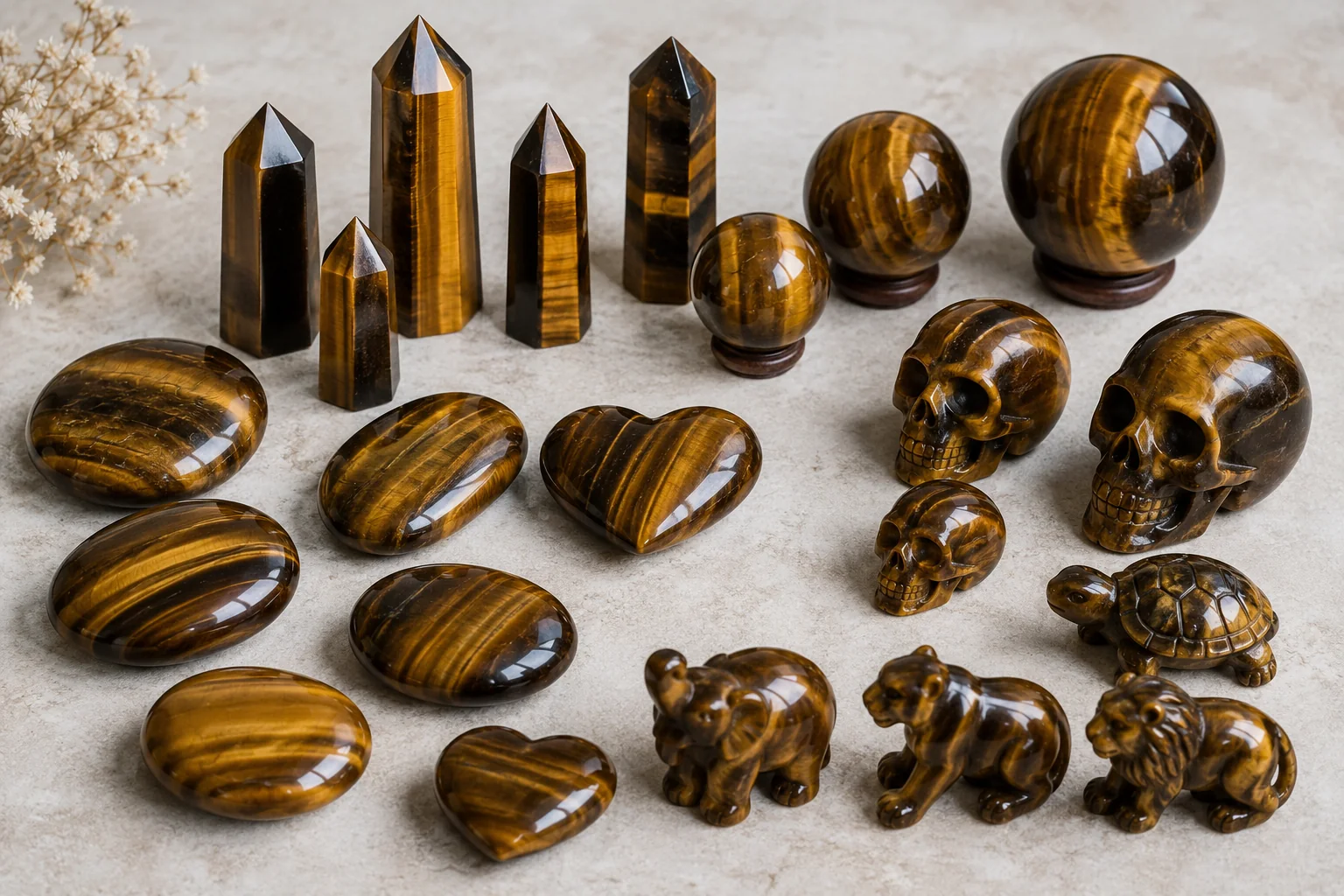
I've seen many new buyers get frustrated when sourcing Tiger's Eye. They focus on finding the "best grade" but end up with inventory that's difficult to photograph and hard to sell. The problem isn't the crystal itself; it's the sourcing method. Let's break down how experienced buyers get consistent, marketable results from their suppliers. Understanding the key factors turns sourcing from a guess into a repeatable business process.
Why are Supplier "Grades" for Tiger's Eye Unreliable?
Paying for "AAA" Tiger's Eye but receiving dull, lifeless stones? These marketing labels have no universal standard, leaving you with unpredictable quality and potential losses on unsellable inventory.
"AAA," "A-Grade," or "5A" are just supplier-specific labels, not official gemological standards. One factory's "AAA" can be another's "B-grade." To get consistent quality, you must create a detailed specification sheet that defines your exact requirements for color, flash, and finish.
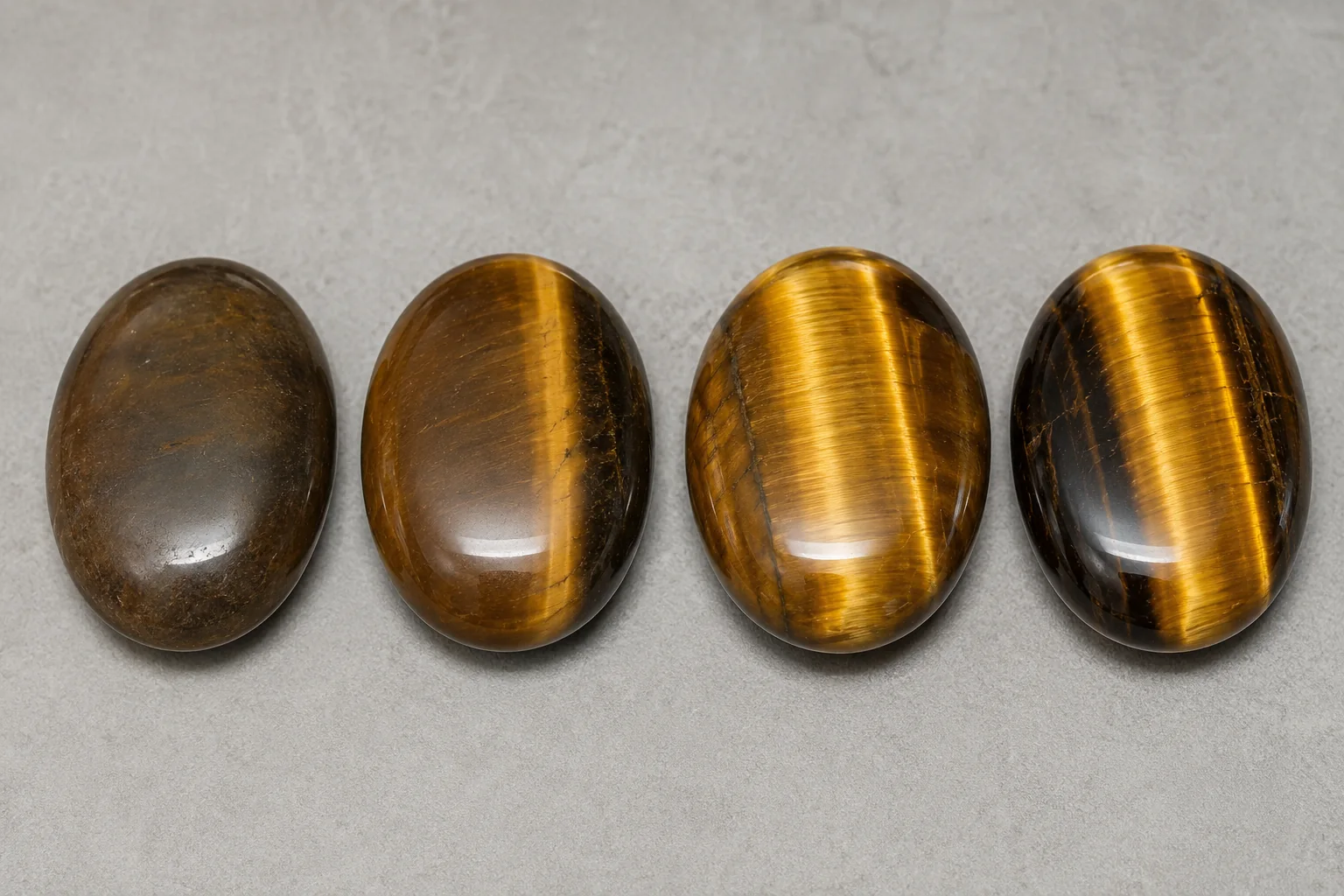
A frequent question we receive from first-time buyers is, "What grade is this Tiger's Eye?" It's an understandable question, but it's based on a common myth in the wholesale world. There is no globally recognized, standardized grading system for Tiger's Eye like there is for diamonds. Terms like "AAA" are purely marketing tools used by individual suppliers. This means that you can order "AAA" towers from two different suppliers and receive wildly different products. One batch might have a brilliant, silky flash, while the other is mostly dull brown rock. Relying on these grades is a gamble for your business. Instead of asking for a grade, professional buyers provide a specification. This shifts the responsibility from hoping the supplier understands a vague term to confirming they can meet a concrete standard. It turns a risky purchase into a manageable quality control process.
The Problem with 'AAA' Labels
The core issue is that a grade like "AAA" doesn't communicate any specific, measurable attributes. Does it refer to the richness of the golden-brown color? The intensity of the chatoyancy? The absence of matrix rock? The quality of the polish? Without a clear definition, it means whatever the seller wants it to mean. This ambiguity often leads to disappointment and disputes.
Building Your Purchase Specification
To solve this, you need to create a simple document that outlines your needs. This doesn't have to be complicated. It should clearly state what you find acceptable for your specific market and product type.
| Vague Request (High Risk) | Specific Request (Low Risk) |
|---|---|
| "I want 100 AAA Tiger's Eye towers." | "Material: Golden Tiger's Eye" |
| "Color: Mid-to-deep golden brown, minimal gray matrix." | |
| "Chatoyancy: Visible flash across at least 70% of one primary face." | |
| "Surface: High polish, no chips or deep scratches." | |
| "Structure: No visible fractures that compromise stability." |
By providing a clear specification, you give your supplier a target to hit and give yourself a clear checklist for approving the final production.
How Does the Cutting Process Affect Tiger's Eye Chatoyancy?
Ever wonder why some Tiger's Eye carvings have a brilliant, silky flash while others from the same batch look flat? The "eye" effect isn't just about the raw material; it's about the craftsman's skill.
The vibrant flash, or chatoyancy, depends entirely on how the crystal's fibers are oriented during cutting1. The craftsman must cut the stone perpendicular to the fibrous structure to maximize the "eye." Poor orientation results in a dull or patchy appearance, even with high-quality raw material.
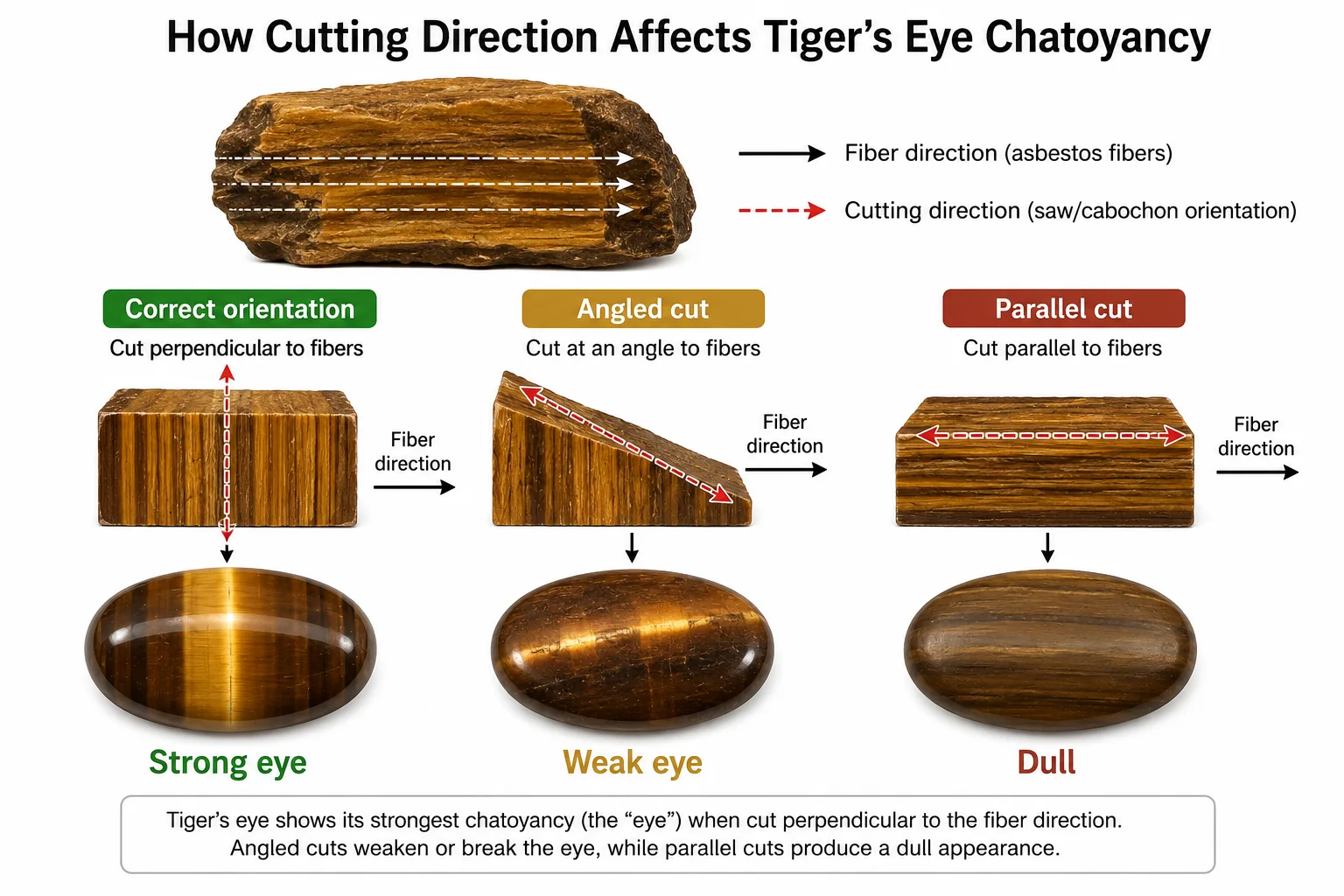
When we inspect a new lot of raw Tiger's Eye, we see its potential. But that potential is only realized if the carving workshop understands the material. Tiger's Eye is composed of quartz with fine, parallel fibers of other minerals inside it2. The famous "cat's eye" flash is light reflecting off these tiny, aligned fibers. To get that beautiful moving shimmer, the carving's surface must be cut at the correct angle relative to these fibers. If it's cut parallel to them, the light doesn't reflect correctly, and you get a dull, almost woody appearance. This is why a skilled lapidary artist is so important. They can take the same piece of rough stone and produce either a gem-quality carving or a disappointing, lifeless one. This is a key point of discussion with a knowledgeable supplier who manages their own workshops.
What Creates the 'Eye' Effect?
Think of it like stroking velvet. If you brush your hand in one direction, it looks smooth and shiny. In the other direction, it looks dark and matte. The light is interacting with the fibers differently. The same principle applies to Tiger's Eye. The cutter must identify the direction of the internal fibers and orient the carving to create the largest, most vibrant "eye" on the most important surfaces.
Orientation in Different Carvings
The ideal orientation changes based on the shape of the carving. Understanding this helps you set clear expectations with your supplier.
| Carving Shape | Good Orientation | Poor Orientation |
|---|---|---|
| Sphere | The "eye" band moves smoothly across the entire surface as you rotate it. | The flash is stuck in one spot or appears as patchy, weak splotches. |
| Tower/Point | At least one, preferably two, of the main faces have a strong vertical flash. | The flash is on the corners or bottom, or it runs horizontally, looking unnatural. |
| Palm Stone | A strong, shimmering eye covers the majority of the domed front face. | The flash is weak, on the flat back, or only visible from an odd angle. |
| Pendant | A bright, forward-facing flash that is visible when worn. | The flash is on the back side or is only visible when held sideways. |
When you source, you're not just buying a stone; you're buying the skill it took to reveal its beauty.
Is "Top Quality" Tiger's Eye the Same for All Products?
You want the "best" Tiger's Eye for your shop, but what does that really mean? The ideal quality for a bracelet is very different from that of a large decorative sphere3, and misunderstanding this can lead to costly inventory mistakes.
No, "top quality" is product-specific. For bracelets, consistent color and bead size are key. For a pendant, a strong forward-facing flash is crucial. For large decor pieces, structural integrity and an interesting overall pattern matter more than a single perfect "eye."
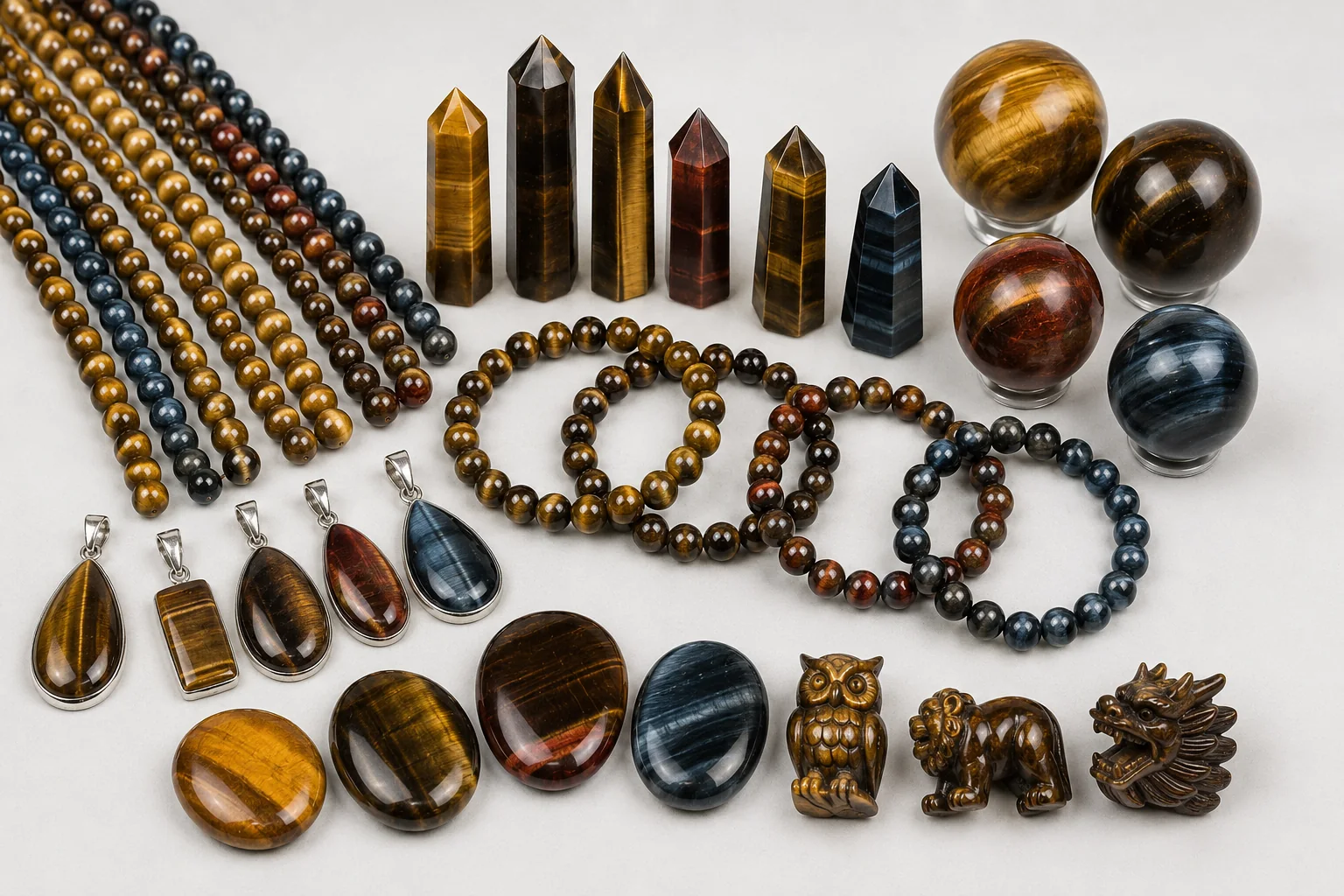
A common situation we see in wholesale sourcing is a buyer requesting "the best" quality for every item in their order. While the intention is good, it's not a practical or cost-effective approach. The features that make a Tiger's Eye piece valuable and sellable are directly tied to its final use. Applying the same strict criteria to every product type can unnecessarily increase your costs or lead you to reject perfectly marketable inventory. For example, insisting on a flawless, continuous chatoyancy band for every bead in a bracelet order is often unrealistic and very expensive. Customers buying a bracelet are more interested in the overall look, color consistency, and feel4. However, for a single, high-ticket pendant, that flawless flash is exactly what makes it a premium item. Matching your quality specification to the product is a sign of a savvy buyer.
Quality for Wearable Items
For items like bracelets, beads, and small tumbled stones, consistency is king. Customers look at the product as a whole.
- Bracelets: The beads should have similar color tones and diameters. Drill holes must be clean and centered. The overall aesthetic should be uniform.
- Pendants: The "money shot" is the front face. It needs a strong, appealing flash that is visible when the piece is worn. The back quality is less critical.
Quality for Decorative Pieces
For larger items like spheres, towers, freeforms, and hearts, the overall impression is more important.
- Spheres and Hearts: The goal is a rolling flash that moves as the piece is turned. Interesting patterns and bands of color add value. Minor natural pits or fissures are often acceptable if they don't compromise the piece's stability.
- Towers and Freeforms: Structural integrity is paramount5. They must be stable and free of deep cracks that could cause them to break. A strong flash on one or two primary viewing faces is more important than having flash on all sides.
| Product Type | Primary Quality Focus | Secondary Concern |
|---|---|---|
| Bracelets | Color/size consistency, clean drill holes. | Perfect flash on every single bead. |
| Pendants | Strong flash on the front face. | Flash on the back or sides. |
| Spheres | Rolling flash, interesting patterns. | A completely flawless surface. |
| Towers | Stability, strong flash on main faces. | Flash on the bottom or back faces. |
Why Do Static Photos Fail to Show True Tiger's Eye Quality?
You approved a wholesale batch based on a stunning photo, only to be disappointed when the shipment arrived? Still images can be very misleading, hiding flaws and creating a false impression of quality for chatoyant stones like Tiger's Eye.
Chatoyancy is a dynamic effect of light and motion6. A single, perfectly lit "hero shot" can make a mediocre piece look amazing. To assess true quality, you must request videos showing the items rotating under different lighting conditions (natural and indoor) to see the true flash.
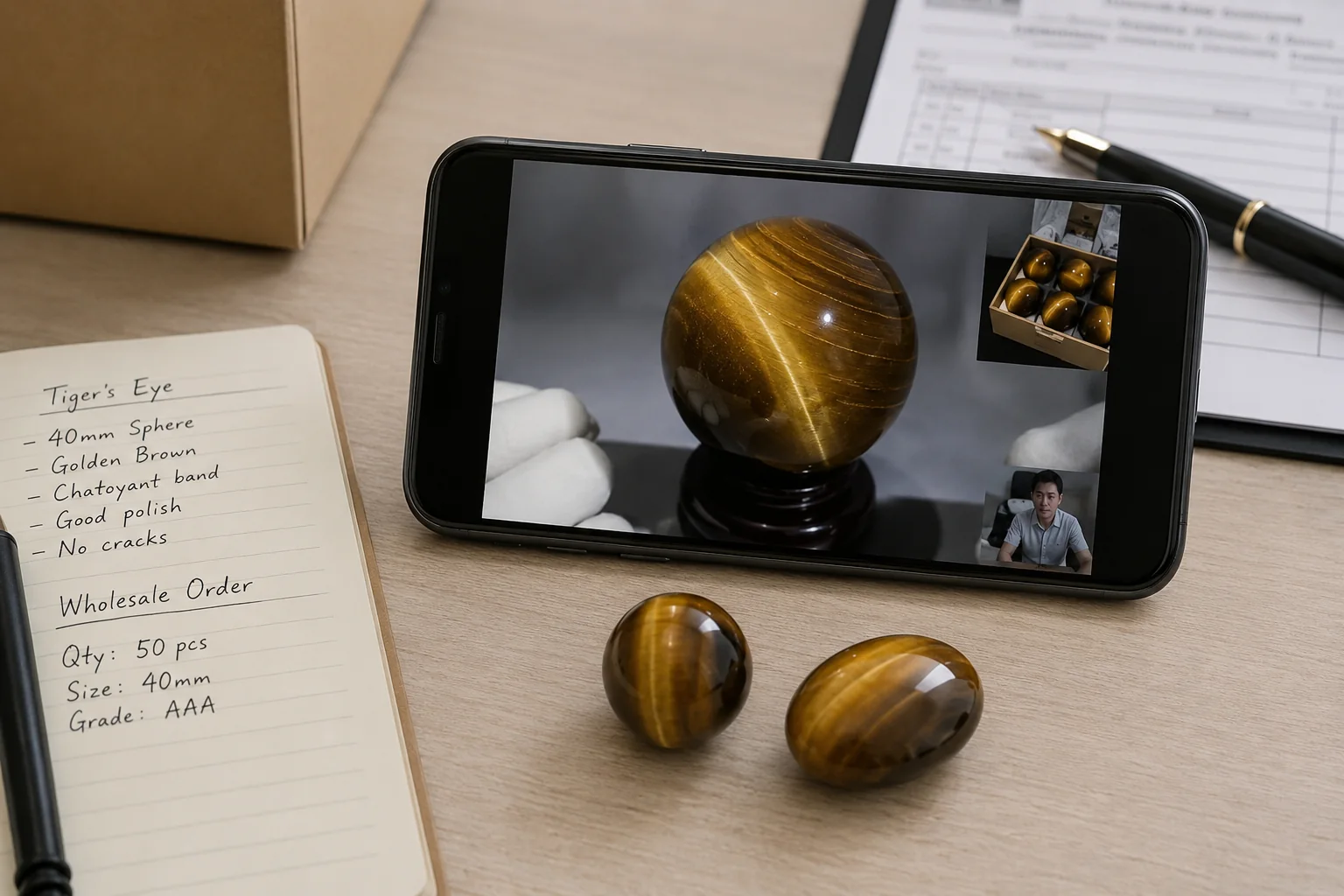
A common mistake we see is buyers approving a large order based on a single, beautiful photo. I understand why; it's fast and easy. However, for a stone like Tiger's Eye, a photo can easily lie. A supplier can spend time finding the one perfect angle and lighting condition that makes a C-grade piece look like an A-grade specimen. The flash might only appear from that exact angle. When you get the batch, you find that 90% of the pieces don't have that brilliant flash in normal lighting. This is the "hero shot" trap. It's not always intentional deception; sometimes it's just good marketing photography. But as a buyer, you cannot rely on it for quality control. The truth of chatoyancy is revealed in motion. You must see how the light plays across the surface as the object turns7.
The 'Hero Shot' Trap
A single photo hides a lot. It doesn't show you the flash on the other sides. It doesn't show you if the flash is just a tiny spot on a large surface. It doesn't show you surface flaws, chips, or a poor polish on the other sides. It is a curated, 2D snapshot of a 3D object whose beauty is based on movement.
Your Inspection Checklist
To protect your investment, you need to adopt a more thorough inspection process. This is something we do with all our clients to ensure there are no surprises.
| Inspection Method | What It Reveals | Why It's Crucial |
|---|---|---|
| Rotating Video | The movement, size, and intensity of the flash across all surfaces. | This is the ONLY way to truly judge chatoyancy. |
| Multiple Lighting Sources | How the piece looks in bright natural light vs. standard indoor light. | Ensures the product will look good in a customer's home, not just a photo studio. |
| Random Sampling | The typical quality of the whole batch, not just the best piece. | Ask for a video of 5-10 random pieces from the box to assess consistency. |
| Close-ups | Polish quality, surface texture, chips, or natural pitting. | Helps you verify the workmanship and structural integrity. |
Insisting on video is not being a difficult customer; it's being a professional buyer8. A good supplier will be happy to provide this because it ensures you are both aligned on quality expectations before shipment.
Conclusion
Sourcing Tiger's Eye effectively means shifting from gambling on grades to managing with specifications. Define your needs, inspect with video, and partner with a supplier who understands the material's nuances.
<!--[googlesitekit-end-of-content]-->
"Chatoyancy - Wikipedia", https://en.wikipedia.org/wiki/Chatoyancy. Educational resources explain that chatoyancy in Tiger's Eye is caused by light reflecting off parallel fibers, which must be properly oriented during cutting. Evidence role: mechanism; source type: education. Supports: The dependence of chatoyancy on the orientation of crystal fibers during cutting.. ↩
"Tiger's eye", https://en.wikipedia.org/wiki/Tiger%27s_eye. Encyclopedic entries confirm that Tiger's Eye is a variety of quartz containing parallel fibers of crocidolite or other minerals. Evidence role: definition; source type: encyclopedia. Supports: The mineralogical composition of Tiger's Eye as quartz with parallel fibers.. ↩
"Investing in Tigers Eye Stone: A Collector's Value Guide - Astro West", https://astrowest.com/tigers-eye-stone/?srsltid=AfmBOoqQ_goK3_e_qjy8Q2ZlaIMYPVQybrGrJl84aBCtpqOnbC9jnW4q. Research on gemstone applications confirms that quality criteria differ for jewelry and decorative items, depending on factors like size, color, and structural integrity. Evidence role: general_support; source type: research. Supports: The variation in quality standards for Tiger's Eye based on product type.. ↩
"Gemstone Bracelet Settings", https://naturalgemstones.com/gemstone-bracelet-settings/?srsltid=AfmBOoqp3SGhSednecqm7oXN4CdpBnO1OhySg-JaE1G9-qHEpbuaBoxF. Market research indicates that buyers prioritize aesthetic appeal, color uniformity, and tactile quality in gemstone bracelets. Evidence role: expert_consensus; source type: research. Supports: Customer preferences for overall look, color consistency, and feel in gemstone bracelets.. Scope note: The findings may not apply universally across all markets. ↩
"More than the Mohs Scale | Understanding Gem Durability - GIA 4Cs", https://4cs.gia.edu/en-us/blog/more-than-mohs-scale-gem-durability/. Educational resources on gemstone decor highlight that structural integrity is critical to prevent breakage in larger pieces. Evidence role: general_support; source type: education. Supports: The importance of structural integrity in larger decorative pieces like towers and freeforms.. ↩
"Chatoyancy", https://en.wikipedia.org/wiki/Chatoyancy. Gemological studies describe chatoyancy as a dynamic optical effect caused by light reflecting off aligned fibers or inclusions in gemstones. Evidence role: definition; source type: education. Supports: The dynamic nature of chatoyancy as an effect of light and motion.. ↩
"The role of eye movements in motion detection - PubMed - NIH", https://pubmed.ncbi.nlm.nih.gov/3660636/. Gemological guidelines recommend observing gemstones in motion to accurately assess chatoyancy, as static views can be misleading. Evidence role: mechanism; source type: education. Supports: The necessity of observing light play in motion to evaluate chatoyancy.. ↩
"Yes, gemstone dealers use filters in videos. But not always ...", https://www.instagram.com/reel/DT-MsQIESep/?hl=en. Industry best practices highlight video inspections as a critical tool for professional buyers to verify gemstone quality and avoid misrepresentation. Evidence role: expert_consensus; source type: research. Supports: The importance of video inspections in professional gemstone sourcing.. ↩
Keep Reading