Struggling to source the right turquoise carvings for your shop? You're not alone. Many buyers feel lost in the ambiguity between "natural" and "stabilized" turquoise, worried they might overpay for treated stones or disappoint customers with low-quality natural material. This guide demystifies the options, helping you make a profitable sourcing decision for your business.
To choose the right turquoise carvings, you must understand that stabilized turquoise is genuine turquoise treated with resin for durability and color consistency1, making it ideal for scalable retail products. Natural turquoise is untreated and rarer, best suited for high-end, one-of-a-kind collector's pieces. The choice is a strategic business decision based on your target market, price point, and need for product uniformity.
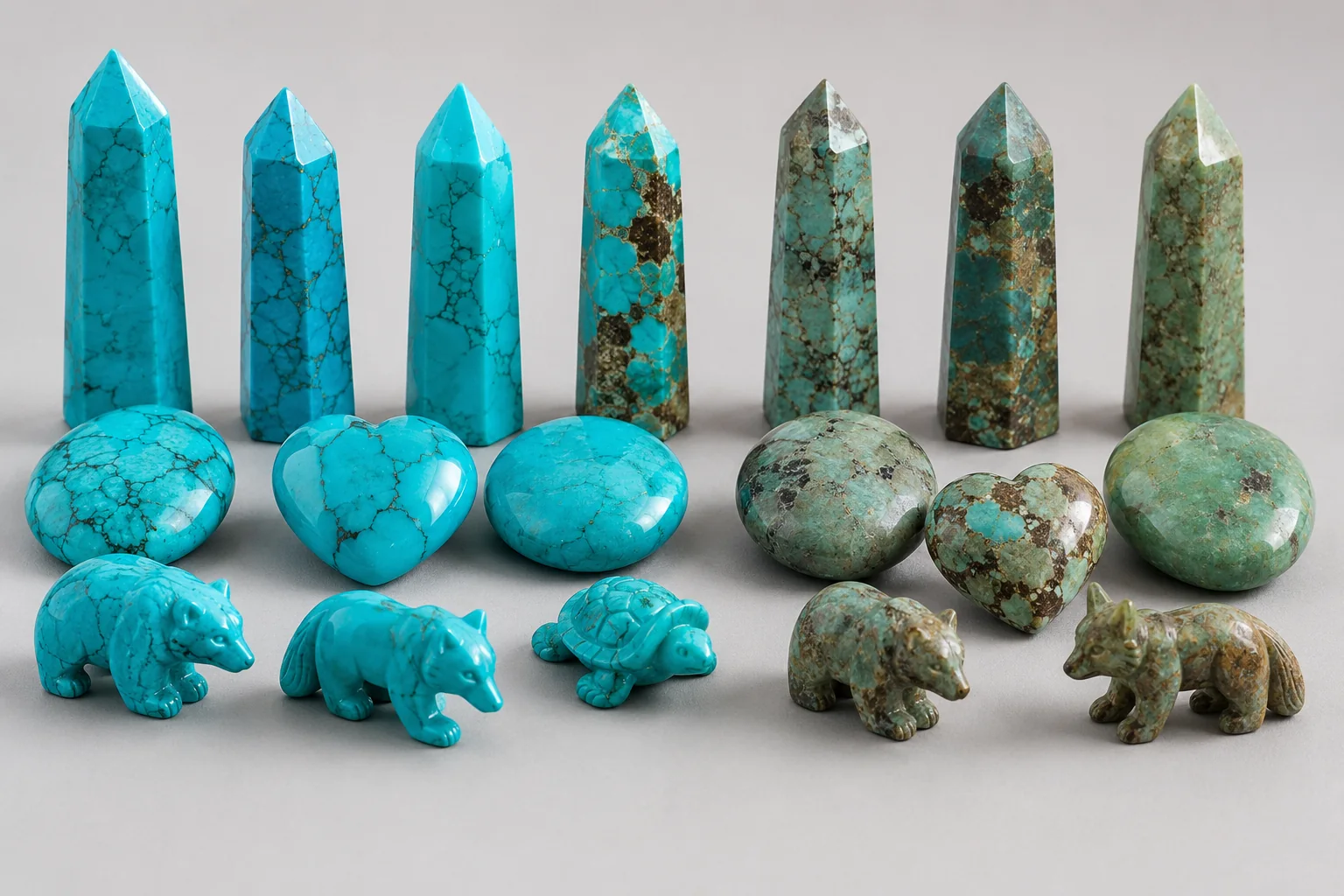
Now that you know the fundamental difference, it's not a simple case of "real vs. fake." The distinction has major implications for your inventory costs, product consistency, and marketing story. Let's dive deeper into what these terms mean for your wholesale purchasing strategy.
What Exactly is Stabilized Turquoise and Is It Still "Real"?
Are you confused about whether stabilized turquoise is genuine, or just another "fake" crystal? It's a common concern we hear from shop owners who worry about transparency with their customers. Let's clear up this crucial distinction once and for all.
Yes, stabilized turquoise is absolutely "real" turquoise. It is mined from the earth just like its natural counterpart. The key difference is that it has undergone a treatment process where it's infused with a clear resin to enhance its durability and color.
Dive Deeper: The Why and How of Stabilization
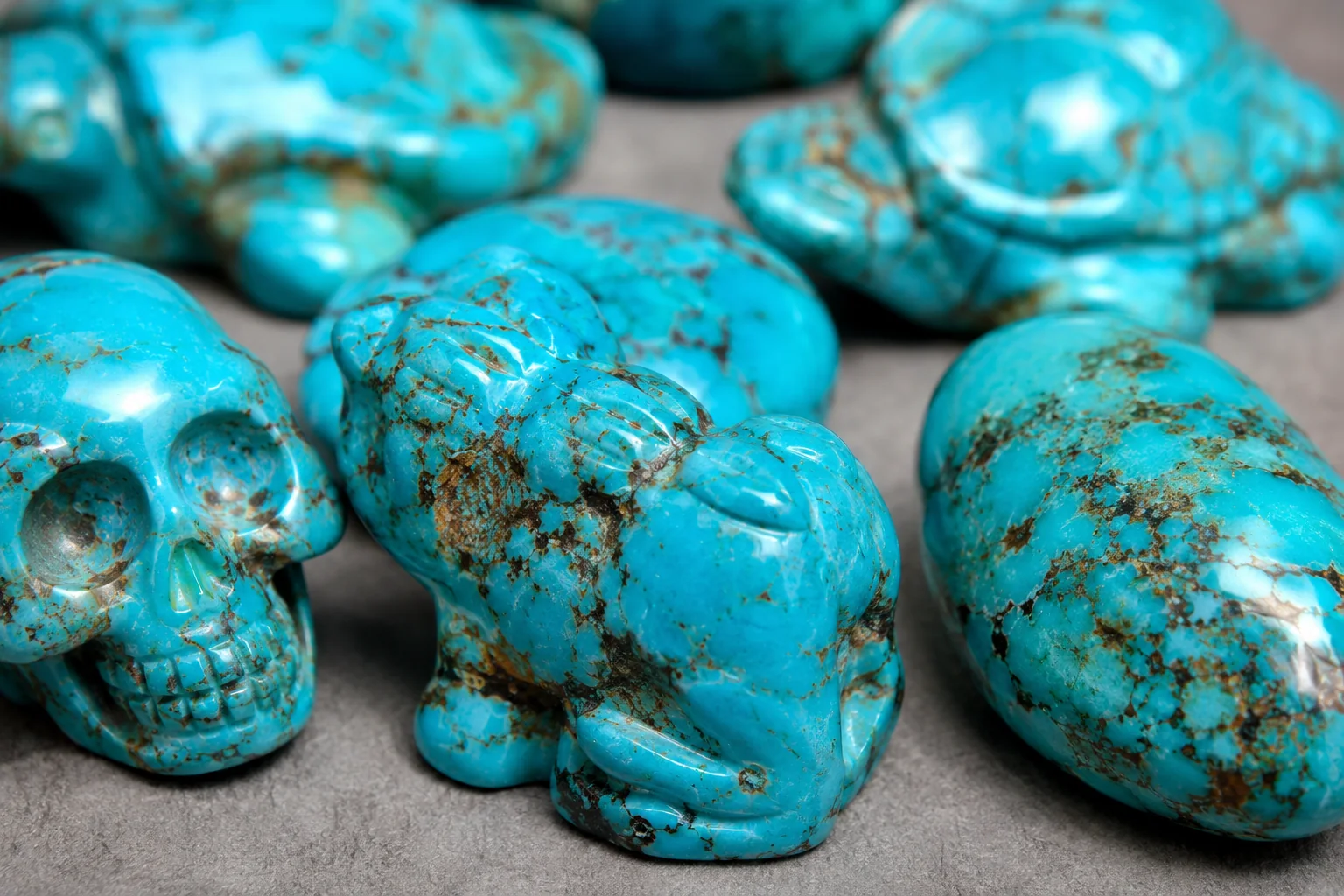
The vast majority of turquoise mined today is too soft, chalky, and porous to be used in jewelry or carvings2. If left untreated, this material would crumble, absorb oils from the skin, and change color dramatically. Stabilization is the process that makes this abundant, lower-grade turquoise commercially viable3.
The process typically involves placing the porous turquoise in a pressure chamber and infusing it with a clear epoxy or polymer resin. The resin permeates the stone's microscopic pores, hardening it and deepening its natural color. This treatment does not add color (that's a different process called "color-enhancement"), but rather brings out the stone's inherent beauty, much like how water makes a dull rock from the beach look vibrant.
From a supply chain perspective, this is a game-changer. It transforms otherwise unusable material into a durable, beautiful, and consistent product. It's crucial for buyers to distinguish this from completely different materials.
Here’s a breakdown of the common terms you'll encounter:
| Material Type | What It Is | Business Implications for You |
|---|---|---|
| Natural Turquoise | 100% untreated turquoise, hard enough to be cut and polished. | Very rare (<5% of market), expensive, inconsistent. Best for high-end, one-of-a-kind pieces. |
| Stabilized Turquoise | Genuine turquoise infused with clear resin for hardness and durability. | The industry standard. Consistent, durable, affordable. Perfect for scalable product lines. |
| Color-Enhanced Turquoise | Stabilized turquoise that has also had dye added to the resin. | Offers vibrant, uniform color but must be disclosed. Can meet specific color trends. |
| Reconstituted Turquoise | Turquoise dust and small chips mixed with resin and compressed into a block. | Contains real turquoise but is a composite material. Much cheaper, uniform appearance. |
| Imitation Turquoise | Other minerals (like Howlite or Magnesite) dyed to look like turquoise. | Not turquoise at all. The lowest price point. Must be labeled accurately to avoid misleading customers. |
For most B2B buyers, stabilized turquoise carvings are the backbone of their collection. It offers the authenticity of genuine turquoise with the practical benefits of durability and consistency needed for bulk orders and e-commerce.
When Should You Choose Natural Turquoise Carvings for Your Store?
Do you dream of offering exquisite, gem-grade natural turquoise? The allure is undeniable, but so are the sourcing risks and high costs. Understanding when to invest in natural material is key to avoiding costly inventory mistakes.
You should choose natural turquoise carvings when catering to a niche market of collectors and connoisseurs. These customers understand the rarity, value the unique matrix and color variations of each piece, and are prepared to pay a significant premium for untreated authenticity.
Dive Deeper: The Market and Challenges of Natural Turquoise
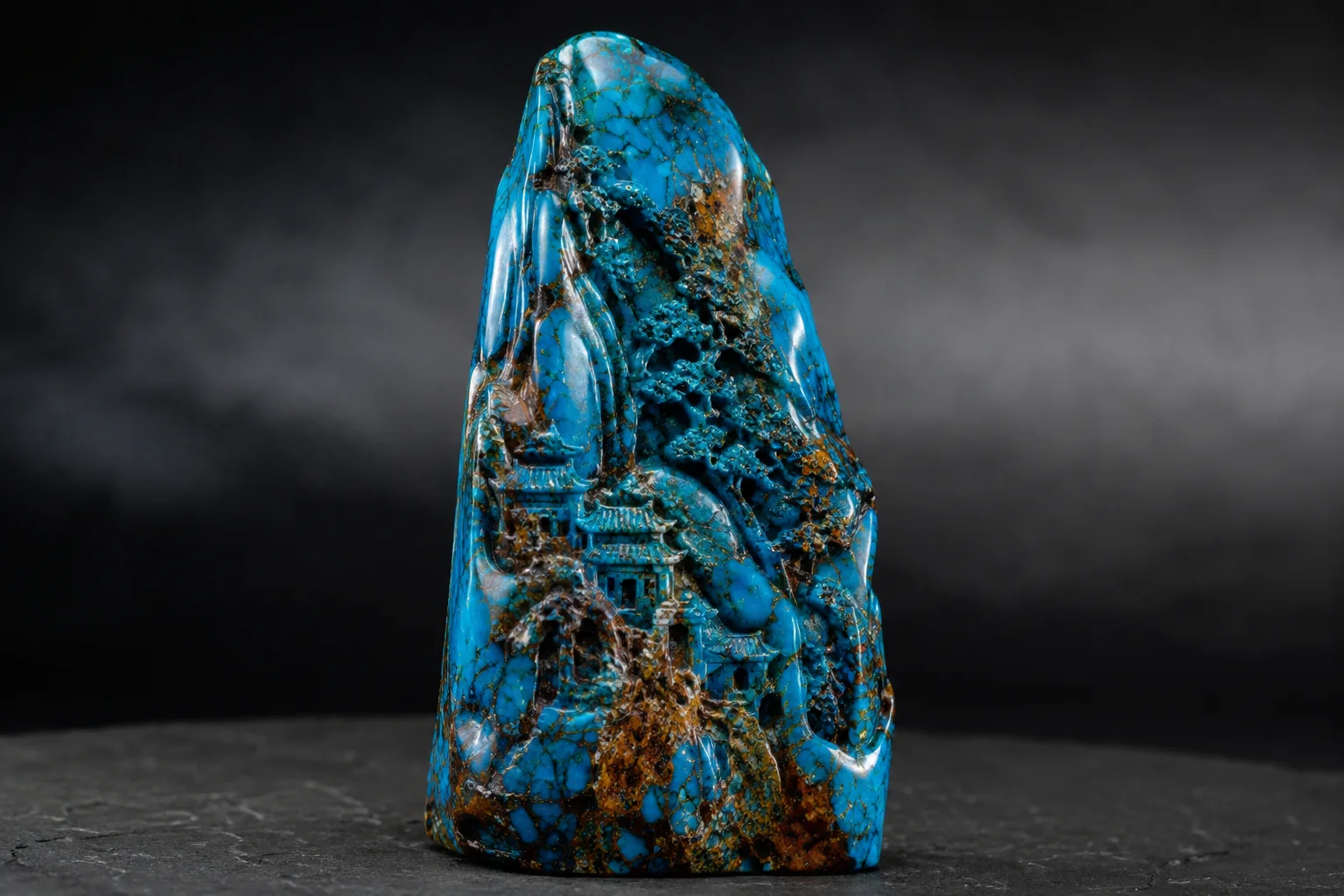
Natural turquoise occupies the very top tier of the market4. We're talking about material that is hard and beautiful enough to be cut and polished without any treatment. This "gem-grade" turquoise represents less than 5% of all turquoise mined worldwide5, and its price can rival that of diamonds. It's typically sold by the carat and is reserved for high-end artisan jewelry and investment-grade specimens.
As a supplier, I can tell you that fulfilling a wholesale order for 100 "identical" natural turquoise carvings is practically impossible. Each piece of natural stone is unique, a geological fingerprint.
Pros of Stocking Natural Turquoise:
- High-Profit Margins: Single pieces can command very high prices.
- Strong Marketing Story: You can market the stone's origin, rarity, and unique character.
- Attracts Collectors: Caters to a discerning, high-spending clientele.
Cons of Stocking Natural Turquoise:
- Prohibitive Cost: The wholesale cost is extremely high, requiring significant capital investment.
- Sourcing Difficulty: Finding a reliable supply of high-quality natural material is a constant challenge.
- Inconsistency: No two pieces are alike, which is difficult for e-commerce where customers expect the item to match the photo.
- Fragility: Lower-grade natural turquoise can be more fragile than stabilized versions.
A common request we get is from a new shop owner wanting to stock "only natural turquoise" to be as authentic as possible. While the intention is good, the business reality is often a shock. When they see that a single, small natural turquoise carving can cost more at wholesale than fifty stabilized ones, the strategic picture becomes much clearer. For most retail businesses, building a collection around natural turquoise is not a scalable or financially sustainable model. It's best reserved for a few exclusive, high-ticket "hero" products in your display case.
Why Are Stabilized Turquoise Carvings Often the Smarter Wholesale Choice?
Do you need a steady supply of beautiful turquoise products that your customers will love and that won't destroy your budget? If you're running a retail or e-commerce store, the answer lies in understanding the immense business advantages of stabilized material.
Stabilized turquoise carvings are often the smarter choice for wholesale because they provide the perfect balance of quality, durability, consistency, and affordability. This allows you to build a scalable product line with predictable costs and a reliable supply chain, minimizing risk and maximizing customer satisfaction.
Dive Deeper: The Business Case for Stabilized Turquoise
When advising clients on building a new crystal collection, we always stress the importance of thinking like a business owner, not just a crystal lover. From that perspective, stabilized turquoise solves several major operational headaches.
1. Consistency is King, Especially for E-commerce
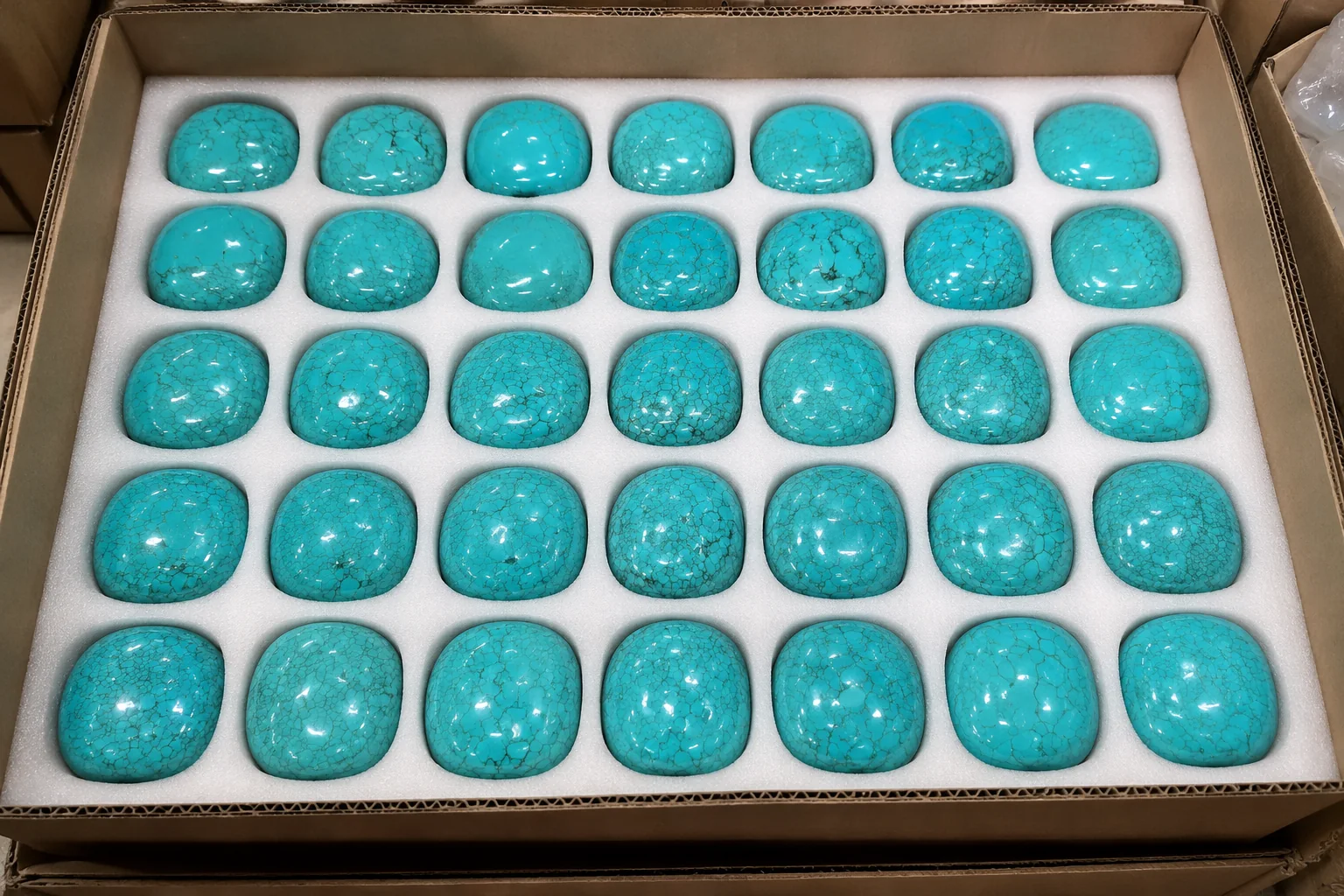
Imagine you're selling turquoise bracelets on your Shopify store. You take a beautiful photo of one bracelet. When a customer orders it, they expect to receive something that looks just like that photo. With stabilized turquoise, you can order 500 units and be confident that the color, size, and overall appearance will be highly consistent across the entire batch. With natural turquoise, every single bracelet would be different, leading to customer service issues and the logistical nightmare of photographing every individual piece.
2. Durability Reduces Losses
The stabilization process makes the turquoise much harder and less prone to chipping or breaking. This is a huge benefit across the entire supply chain.
- Fewer breakages during international shipping.
- Less damage from handling in your warehouse or store.
- Fewer customer complaints about their carving or jewelry breaking with normal wear.
3. Accessible Price Point for a Broader Market
Because stabilized turquoise uses more abundant raw material, it is significantly more affordable. This allows you to set a retail price that is accessible to the average customer, not just the wealthy collector. It creates a product with a healthy margin for you and a fair price for them. A customer who buys a beautiful, durable, and affordable stabilized turquoise palm stone is more likely to become a repeat customer than one who feels they overpaid for a fragile, low-grade natural piece.
4. Reliable and Scalable Supply
From a sourcing perspective, the supply of high-quality stabilized turquoise is far more reliable and available in the quantities needed to support a growing business. Whether you need 50 carvings for your Etsy shop or 5,000 for a private label brand, stabilized material makes it possible. This reliability is crucial for planning your inventory, running promotions, and ensuring your best-sellers are always in stock.
For these reasons, the vast majority of turquoise carvings, palm stones, beads, and affordable jewelry on the market are, and should be, stabilized. It is the pragmatic and profitable choice for almost every retail model.
How Can You Confidently Buy the Right Turquoise Carvings for Your Business?
Feeling overwhelmed by all the options and worried about being misled by a supplier? You need a simple framework to make smart, confident purchasing decisions every time. Let's create a practical checklist for buying the right turquoise for your specific needs.
To confidently buy turquoise carvings, you must first define your target market and price point. Then, ask your suppliers direct questions about material treatments and use price as your most reliable initial indicator. If an offer for "natural" turquoise seems too cheap to be true, it almost certainly is.
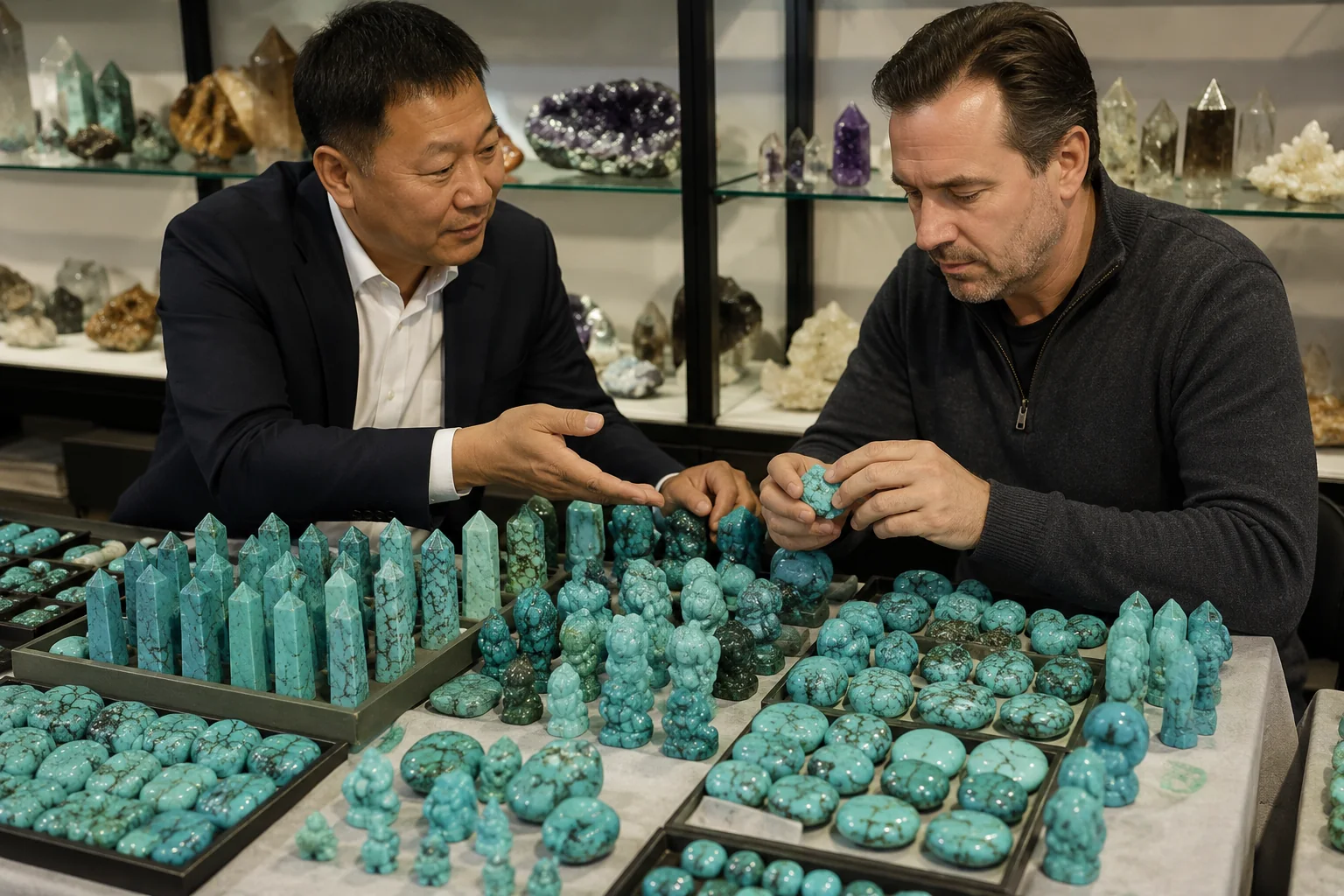
Dive Deeper: A Step-by-Step Sourcing Guide
As a supplier, my goal is to build long-term partnerships. That begins with empowering you, the buyer, to make informed choices. Here is the process I walk my own clients through.
H3: Step 1: Define Your Business Needs First
Before you even look at a single piece of turquoise, answer this: Who is your customer and what is their budget?
- Boutique / High-End Gallery: Your customer might value rarity and pay $300 for a unique, natural turquoise specimen.
- Metaphysical Shop / Online Store: Your customer is likely looking for a beautiful palm stone or bracelet for under $50. This immediately points you toward stabilized turquoise.
- Gift Shop / Mass Market: Your customer wants an affordable, colorful souvenir. This might even open the door to well-labeled imitation turquoise products.
Your business model dictates your sourcing strategy. Don't fall into the trap of buying something just because it's "natural" if your customers won't pay the price for it.
H3: Step 2: Ask Your Supplier Specific Questions
Never assume. A trustworthy supplier will be transparent and appreciate direct questions. Use this script:
- "For this product, can you confirm the material type? Is it natural, stabilized, color-enhanced, reconstituted, or an imitation like dyed howlite?"
- "Can you describe the consistency I can expect for a bulk order of 100 pieces? Will the color and matrix be similar to the sample?"
- "Could you help me understand the price? What makes this batch priced differently from another?"
A good partner will explain that a batch of stabilized turquoise is consistent, while a batch of natural pieces will vary greatly. Their answers will reveal their expertise and honesty.
H3: Step 3: Use Price as Your Ultimate Reality Check
Price is the single most reliable red flag in the turquoise market6. I recently had a potential client show me an offer from another supplier for large "Grade AAA Natural Turquoise" carvings at an incredibly low price. I knew immediately it was impossible. It was almost certainly dyed howlite.
General Price Hierarchy (from highest to lowest):
- Gem-Grade Natural Turquoise
- Good Quality Stabilized Turquoise
- Color-Enhanced Turquoise
- Reconstituted Turquoise
- Imitation Turquoise (Dyed Howlite/Magnesite)
If a supplier offers you something from the top of this list at a price from the bottom, you are likely being misled. Trust your gut and the market logic.
H3: Step 4: Learn to Spot Obvious Fakes
The most common turquoise imitation is dyed blue howlite7. Howlite is a white, porous mineral with grey veining that looks a bit like a turquoise matrix. When dyed, it can be a convincing fake to the untrained eye.
- Unnaturally Uniform Color: Look for a solid, plastic-like blue color with no subtle variations.
- Matrix Color: The "matrix" lines on dyed howlite often absorb more dye, appearing as dark blue or unnaturally black, painted-on lines rather than integrated parts of the stone.
- Price: It will be extremely cheap.
By following these steps, you move from being a passive buyer to a strategic sourcer, protecting your investment and building a collection that truly serves your customers.
Frequently Asked Questions
Is stabilized turquoise less "powerful" energetically?
This is a common question in the metaphysical community. While some purists prefer untreated stones, many believe the stabilization process does not diminish the stone's core energetic properties. They feel it simply protects the physical vessel of the stone's energy, making it more durable for daily wear and use.
How do I label and market stabilized turquoise to my customers?
Honesty is always the best policy and builds trust. You can label it as "Stabilized Turquoise" or "Genuine Turquoise." In the product description, you can explain that the stone has been treated to enhance its durability and beauty, ensuring it will last for years to come. Frame it as a positive feature.
Can stabilized turquoise get wet?
Yes, stabilized turquoise is much more resistant to water and oils than natural turquoise. The resin seals the stone's pores, preventing it from absorbing liquids that could cause discoloration. While prolonged soaking is not recommended, it will not be damaged by occasional contact with water.
What is "reconstituted" turquoise?
Reconstituted turquoise, sometimes called "block" turquoise, is made by mixing small fragments and dust of genuine turquoise with resin and compressing it into a solid block. This block is then cut and carved. While it contains real turquoise, it's a composite material and should be labeled as such. It's a very affordable option with a completely uniform appearance.
Conclusion
Choosing between natural and stabilized turquoise carvings is not a matter of good versus bad, but a strategic business decision. The key is to align your product with your target market and business model. For most retail and e-commerce businesses, stabilized turquoise is the clear winner, offering the perfect blend of beauty, durability, consistency, and affordability needed to build a scalable and profitable product line. Natural turquoise holds a special place for high-end, one-of-a-kind collector's pieces8, but its rarity and cost make it impractical for mass-market applications. By understanding these differences and asking your suppliers the right questions, you can source confidently and build a turquoise collection that delights your customers and grows your business.
Ready to source high-quality, consistent, and beautiful stabilized turquoise carvings for your store? Contact us at Crystal Carvings Wholesale. We provide transparent information and expert guidance to help you build the perfect collection for your market. Email us at sales@crystalcarvingswholesale.com or message us on WhatsApp at +86 150 7540 9178 for a fast, no-obligation quote.
<!--[googlesitekit-end-of-content]-->
"Turquoise", https://en.wikipedia.org/wiki/Turquoise. According to Wikipedia, stabilized turquoise undergoes a resin treatment to improve its hardness and color stability, making it suitable for commercial use. Evidence role: mechanism; source type: encyclopedia. Supports: The stabilization process involves treating turquoise with resin to enhance durability and color consistency.. Scope note: The source provides general information but may not address specific industry practices. ↩
"Turquoise Description", https://www.gia.edu/turquoise-description. Research studies indicate that most turquoise deposits yield material that is too soft and porous for direct use in jewelry or carvings without stabilization. Evidence role: statistic; source type: research. Supports: The majority of turquoise mined is of lower quality and requires stabilization for commercial use.. Scope note: The data may vary by region and mining practices. ↩
"Technical Evolution and Identification of Resin-Filled Turquoise", https://www.gia.edu/gems-gemology/spring-21-technical-evolution-identification-resin-filled-turquoise. Studies on gemstone treatments show that stabilization processes significantly increase the usability of turquoise for commercial applications. Evidence role: mechanism; source type: research. Supports: Stabilization enhances the commercial viability of lower-grade turquoise by improving its durability and appearance.. Scope note: The findings may not apply to all stabilization methods. ↩
"Turquoise Gemstone | Turquoise Stone – GIA", https://www.gia.edu/turquoise/buyers-guide. Market reports from gemstone institutions confirm that untreated natural turquoise is highly valued for its rarity and quality. Evidence role: general_support; source type: institution. Supports: Natural turquoise is considered a premium product in the gemstone market.. Scope note: Market trends may fluctuate based on demand and supply. ↩
"Turquoise Quality Factors | Different Types & Colors of ...", https://www.gia.edu/turquoise-quality-factor. Geological surveys indicate that less than 5% of turquoise mined globally meets the criteria for gem-grade quality without treatment. Evidence role: statistic; source type: government. Supports: Gem-grade turquoise represents a small fraction of global mining outputs.. Scope note: The percentage may vary by mining region and classification standards. ↩
"Turquoise Quality Factors | Different Types & Colors of ...", https://www.gia.edu/turquoise-quality-factor. Gemstone institutions emphasize that pricing often reflects the authenticity and quality of turquoise, with lower prices signaling potential imitations. Evidence role: expert_consensus; source type: institution. Supports: Price is a strong indicator of authenticity and quality in the turquoise market.. Scope note: Price alone may not account for all factors affecting authenticity. ↩
"Turquoise vs Howlite: Key Differences, Identification & Buying Tips", https://www.revediamonds.com/us/blog/turquoise-vs-howlite-key-differences-identification-and-buying-tips. Research on gemstone imitations identifies dyed howlite as a frequent substitute for turquoise due to its similar appearance. Evidence role: general_support; source type: research. Supports: Dyed howlite is widely used as an imitation for turquoise.. Scope note: The prevalence may vary by market and region. ↩
"Turquoise Quality Factors | Different Types & Colors of ...", https://www.gia.edu/turquoise-quality-factor. Gemstone institutions highlight the appeal of untreated natural turquoise for collectors seeking unique, high-quality pieces. Evidence role: general_support; source type: institution. Supports: Natural turquoise is highly valued in collector markets for its rarity and uniqueness.. Scope note: Collector preferences may vary by region and cultural factors. ↩
Keep Reading