Are you worried about mixing your crystal carvings? You have a growing collection but fear that putting different stones together might cause damage or create bad vibes. Let’s clear this up.
Yes, you can absolutely collect and display different crystal carvings together. There are no strict rules against it. The key is to arrange them in a way that looks beautiful and to handle them carefully to prevent physical damage like scratches between harder and softer stones.
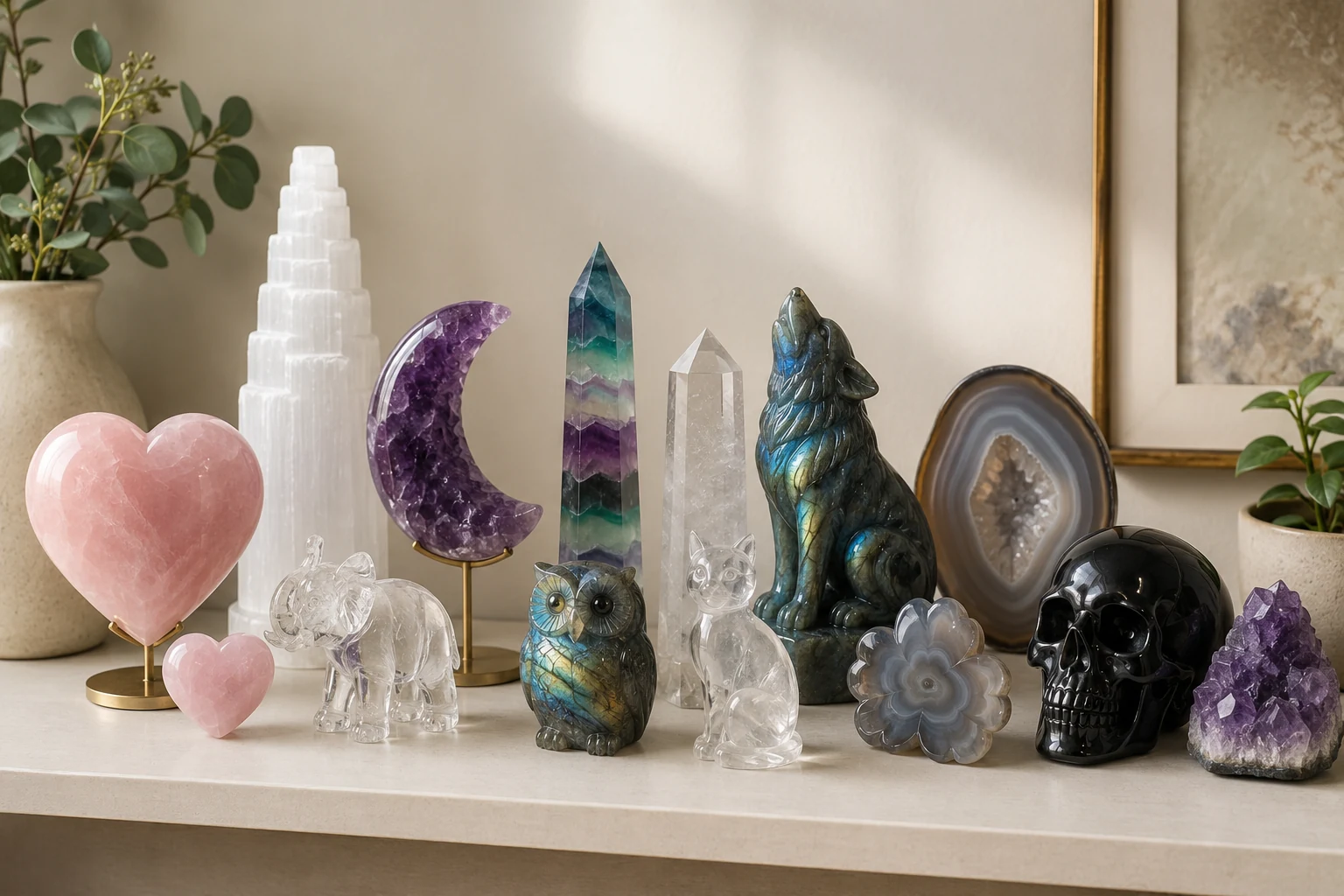
Now that you know it’s perfectly fine to mix your crystals, let's get into the details that actually matter. I’ve learned a lot from handling thousands of these pieces for my wholesale business. The secrets to a great mixed collection are less about mystical rules and more about smart display, proper care, and for retailers, strategic sourcing. Let’s dive into how you can create a beautiful and safe display that you love.
How Can I Make My Mixed Crystal Collection Look Good?
Does your collection of carvings look more like a cluttered pile than a curated display? You love each piece, but together they just feel random. Simple design tips can transform your collection.
To make your mixed collection look good, group items by color, theme, or size1. Use a larger carving as a focal point, arrange smaller items in odd numbers like 3s or 5s, and use risers to create height and visual interest.
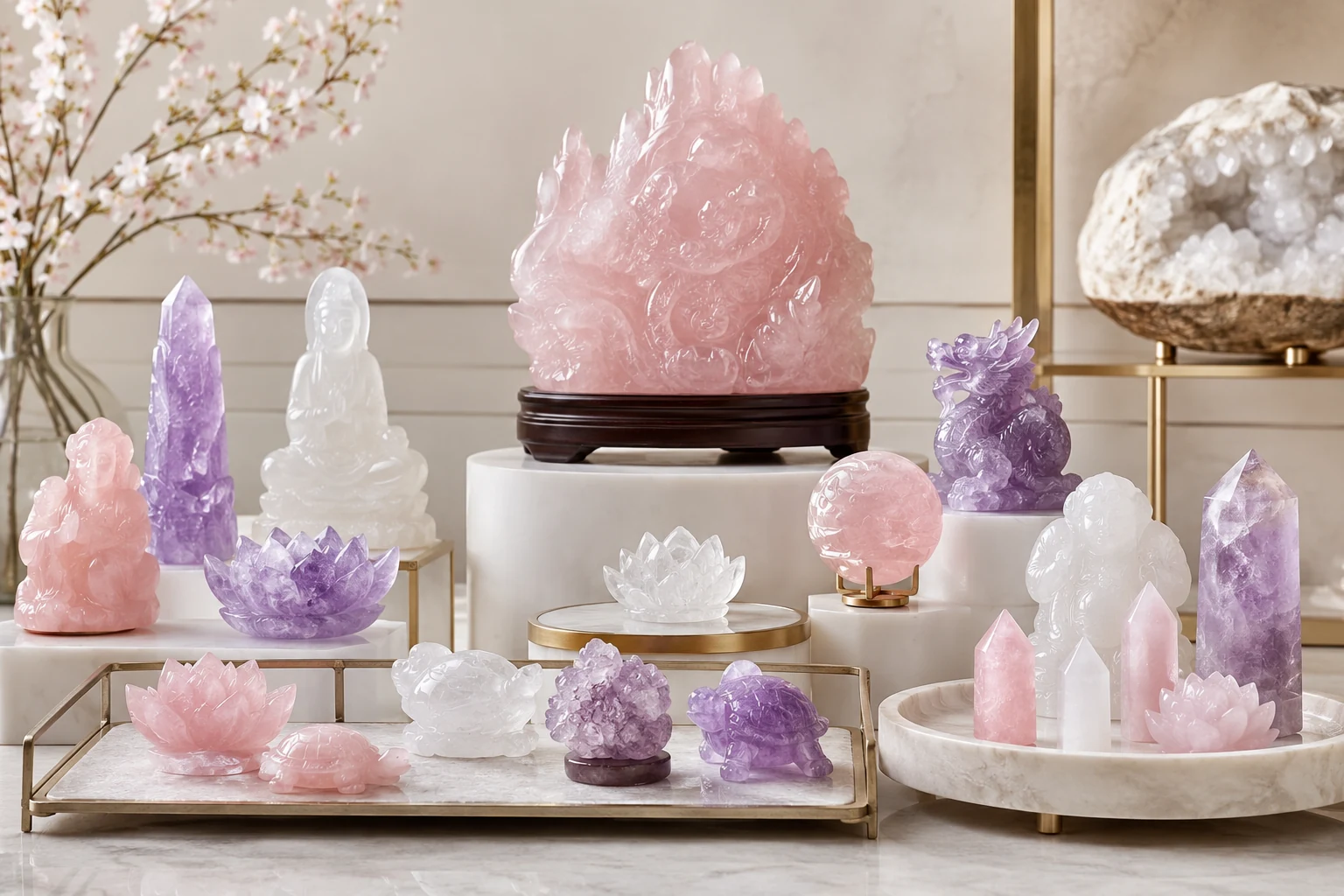
When we help shop owners build their first orders, we often talk about display. A jumbled shelf doesn't sell. The same principles they use can make your personal collection look amazing. It’s all about creating visual harmony.
Grouping Strategies
The easiest way to create a cohesive look is through grouping. You can try a few different approaches:
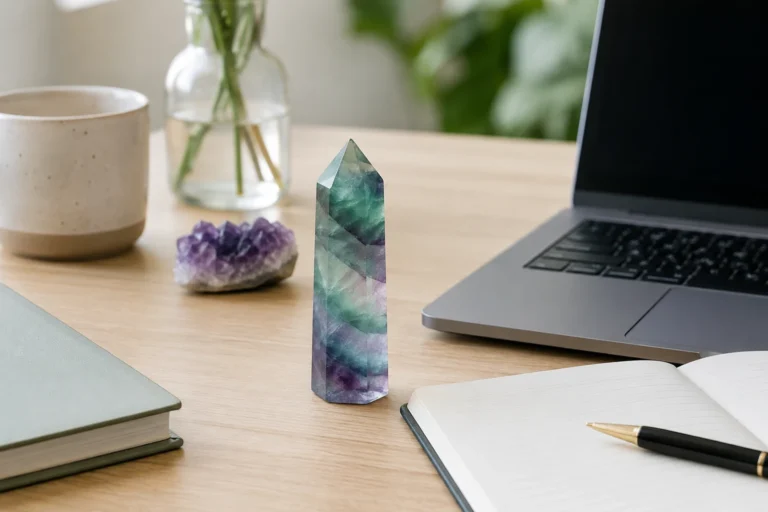
- By Color: Place all your purple stones together, like Amethyst and Fluorite carvings. Or create a gradient from light Rose Quartz to deep Red Jasper.
- By Theme: Group all your animal carvings, celestial shapes (moons and stars), or crystal points and towers together. This tells a clear visual story.
Creating a Focal Point and Balance
A display without a focus can feel chaotic.
- Focal Piece: Choose one larger or more dramatic carving, like a big Amethyst geode or a tall Clear Quartz tower, and place it in the center or slightly off-center. Arrange smaller pieces around it.
- The Rule of Odds2: The human eye finds groupings of 3, 5, or 7 more appealing than even-numbered groups. Try arranging three small crystal mushrooms or five palm stones together.
Using Space and Height
| Don't cram everything together. | Technique | Why It Works | Example |
|---|---|---|---|
| Negative Space | Gives each piece room to "breathe" and be appreciated individually. | Leave an inch or two of empty space around each carving. | |
| Risers | Creates different levels, drawing the eye up and around the display. | Use small wooden blocks, acrylic stands, or even a stack of books. |
How Do I Prevent Crystal Carvings from Damaging Each Other?
You want to display your beautiful crystals together, but you’re afraid they'll scratch or chip. The thought of a delicate carving getting damaged is stressful. A few simple precautions can keep everything safe.
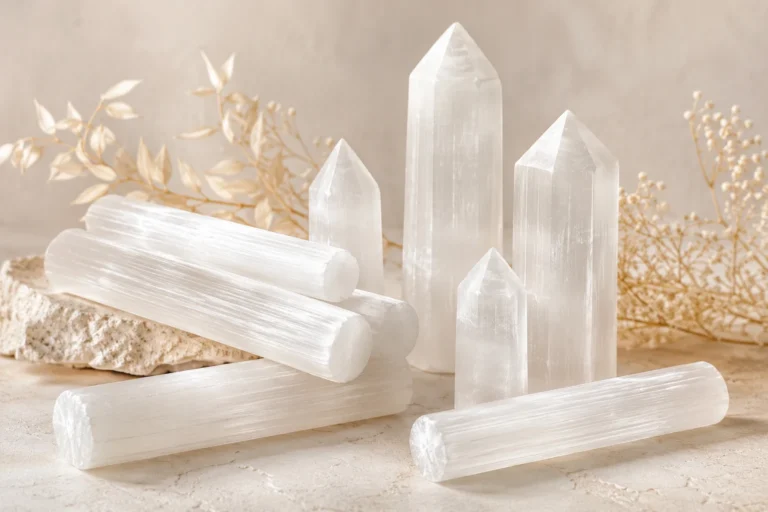
Prevent damage by keeping very hard stones, like quartz, from pressing against very soft stones, like selenite. Give carvings with fragile details, such as wings or points, their own space. Also, be mindful of sunlight and moisture for sensitive stones3.
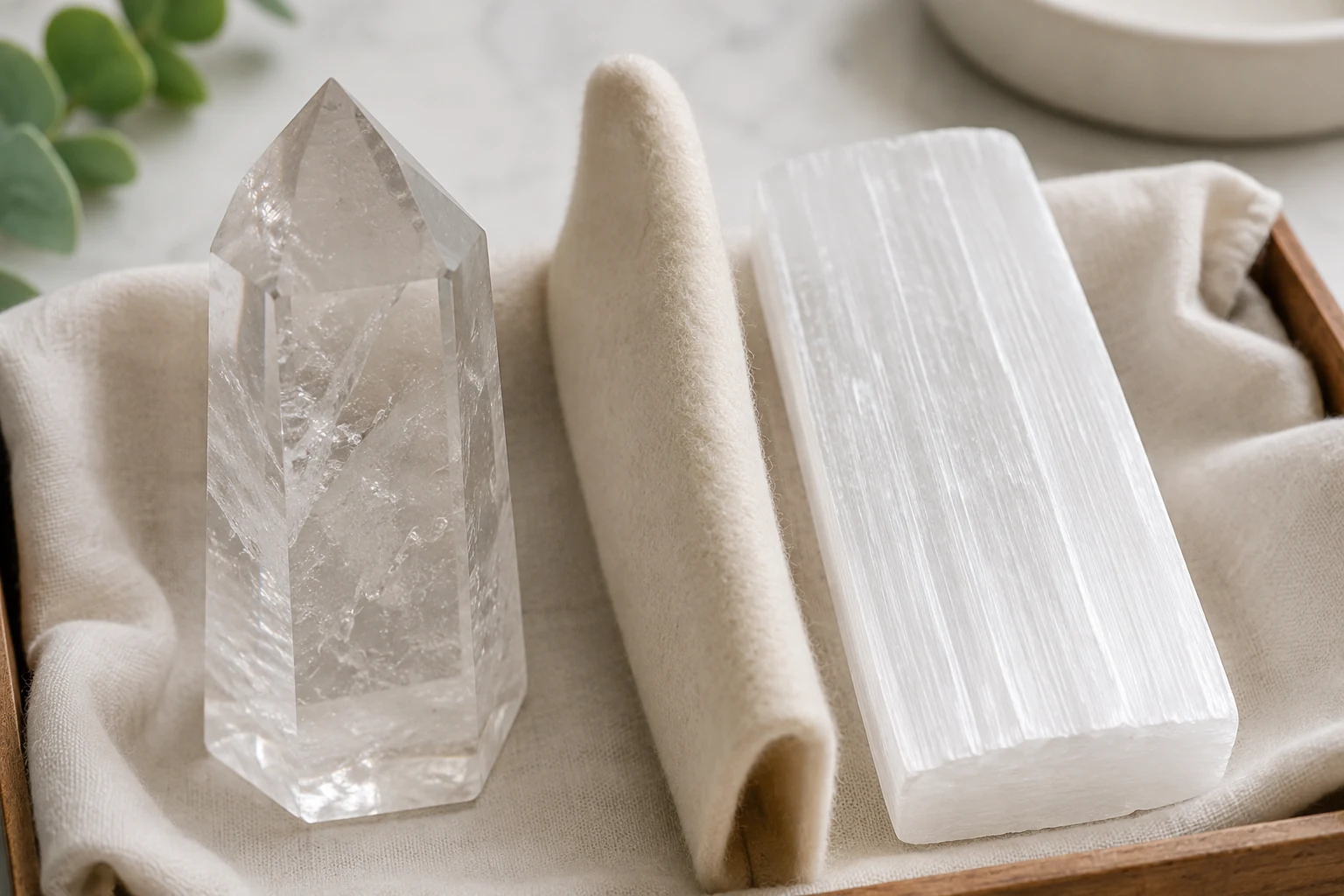
In my business, packing mixed orders safely is a top priority. A chipped carving is a sad sight. We learned quickly that physical compatibility matters more than any energetic theory. The main risks are hardness differences and environmental exposure, but both are easy to manage.
Understanding Stone Hardness
Not all crystals are equally tough. Gemologists use the Mohs scale of hardness4, from 1 (softest) to 10 (hardest). A harder stone will scratch a softer one if they rub together with pressure.
- Hard Stones (Mohs 7+): Quartz (Amethyst, Rose Quartz, Clear Quartz), Agate, Jasper, Tiger Eye.
- Soft Stones (Mohs <5): Selenite (2), Calcite (3), Fluorite (4), Malachite (3.5-4).
When we pack a mixed carton for a client, we always put soft foam or cloth dividers between a hard agate carving and a soft calcite piece. At home, you can do the same. Don't pile them in a bowl where they can grind against each other. Give them distinct spots on a shelf.
Protecting Fragile Shapes
Some carvings are more delicate by design. Think of the thin wings on a crystal fairy, the sharp tip of a crystal point, or the intricate details of a 3D dragon carving. These parts can easily snap under pressure. It's best to give these pieces enough space so they won't get bumped or have other items leaning on them.
Environmental Sensitivities
| Sensitivity | Problem | Common Crystals Affected | Solution |
|---|---|---|---|
| Sunlight | Can cause colors to fade over time. | Amethyst, Rose Quartz, Fluorite, Celestite | Keep them out of direct, prolonged sunlight. |
| Moisture | Can cause the stone to degrade or dissolve. | Selenite, Halite (Salt) | Keep them out of bathrooms or very humid areas. |
Do the Energies of Different Crystals Conflict with Each Other?
You've read online that mixing certain crystals can cancel each other out or cause energetic conflict. Now you're worried that your beautiful display is creating "bad vibes" in your home.
While some spiritual practitioners have personal beliefs about combining crystal energies, there are no universal rules. Many collectors mix crystals based on intuition and what feels good to them. The most important guide is your own preference.
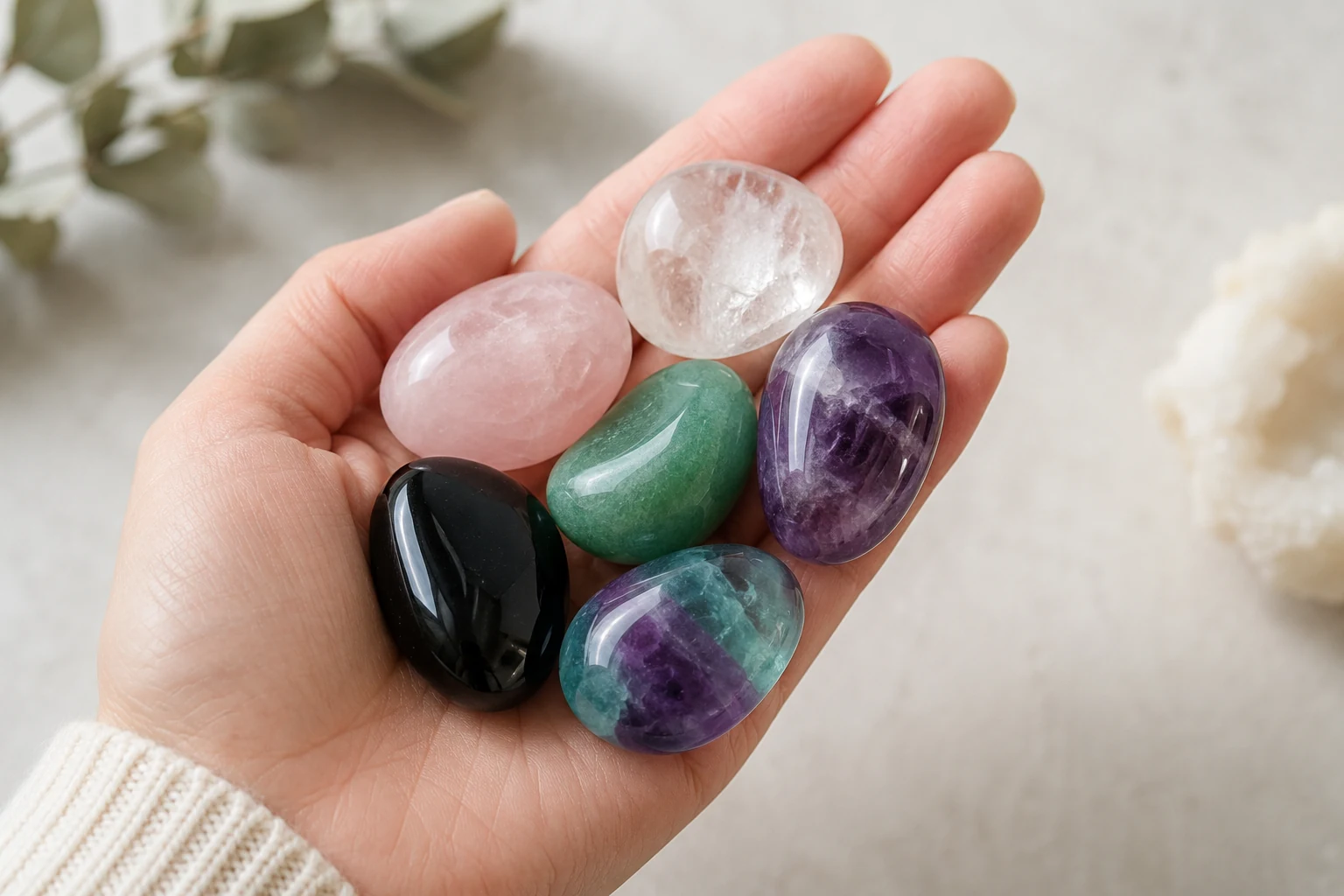
This is a very common question we receive from new crystal shop owners who want to guide their customers. My perspective as a supplier is a practical one. There is no scientific evidence that crystal energies conflict. However, personal beliefs and intentions are very powerful.
Acknowledging Personal Beliefs
It's true that some people are very intentional about their crystal pairings. For example:
- Some believe in pairing an "activating" stone like Carnelian with a "calming" stone like Howlite to create balance.
- Others might choose to keep crystals intended for focus, like Fluorite, separate from crystals they use for sleep, like Amethyst.
These are valid personal practices. But they are not rigid laws. There are no "crystal police" who will tell you you're doing it wrong. The beauty of crystals is how personal they are.
Trust Your Intuition
The best approach is to trust yourself5. How does the combination look and feel to you? Do you love seeing your bright Citrine next to your deep blue Lapis Lazuli? Then that is a perfect combination for you. If a certain mix feels "off" or chaotic, simply rearrange it until it feels right. You are the curator of your own collection and your own space. My job is to supply the beautiful materials; your job is to make them your own. We trust our buyers to know what resonates with them and their customers.
How Can I Source a Mixed Collection for My Shop?
As a retailer, you want to offer a rich variety of crystals, but you’re held back by high minimums. Ordering a huge batch of a single item feels risky and ties up your cash.
To source a mixed collection, find a wholesale supplier who supports mixed-material and mixed-style orders. Be sure to clarify their Minimum Order Quantity (MOQ)6—whether it applies per item or to the total order. This allows you to test many products.
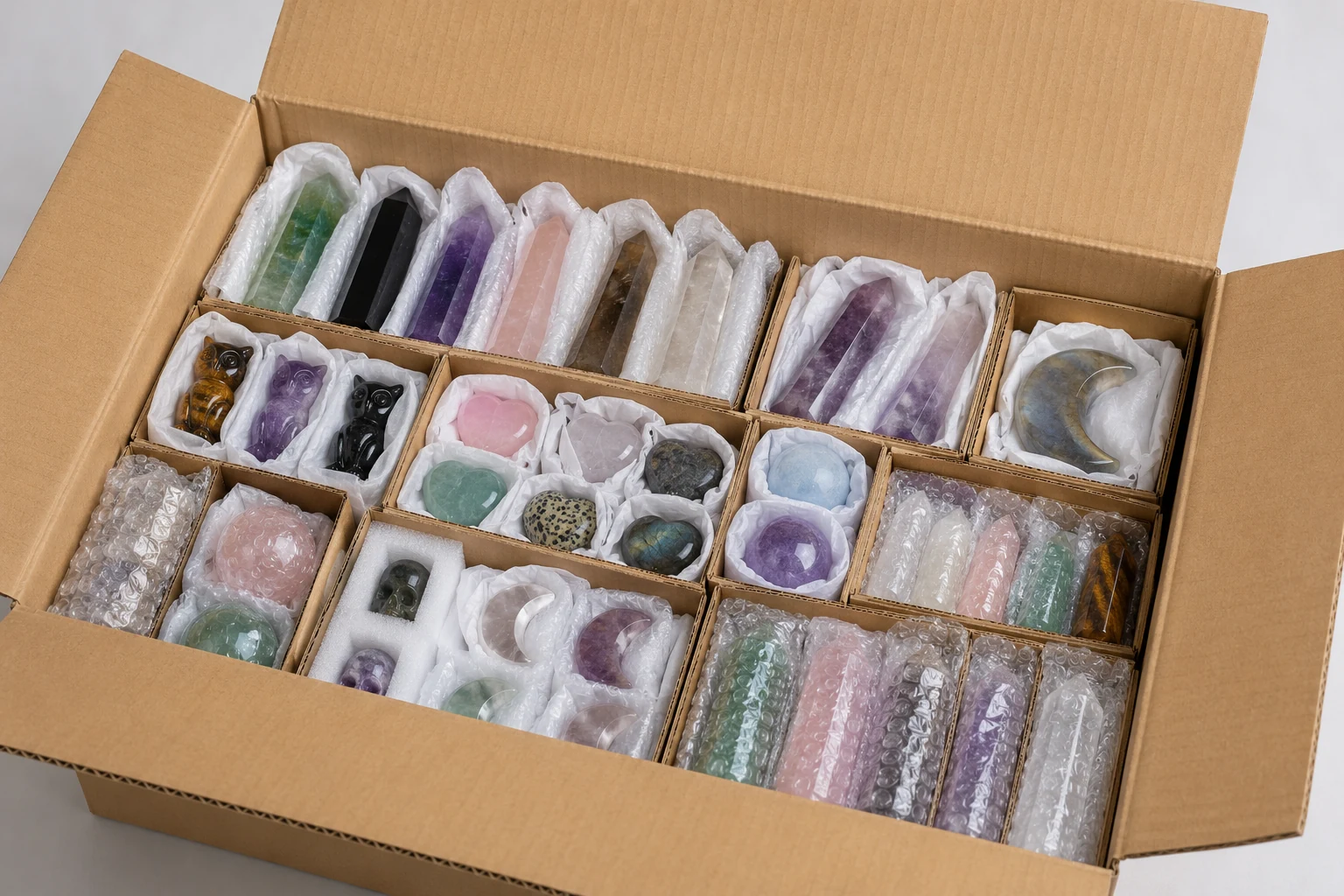
This is the core of our business. We specialize in helping shop owners, especially those just starting out, build diverse collections without breaking the bank. The key is flexibility. Rigid wholesale models don't work for today's market.
Understanding Mixed Orders
When you see a supplier offer mixed orders, it means you can build a cart with a little bit of everything.
- Mixed Materials: You can order carvings of the same shape (e.g., hearts) in various stones (Rose Quartz, Obsidian, Labradorite).
- Mixed Styles: You can order different products (e.g., 10 towers, 20 palm stones, 5 spheres) in one shipment.
This allows you to test what sells best in your specific market before committing to a large quantity of any single item.
Navigating Minimum Order Quantities (MOQs)
This is the most important question to ask a new supplier. A common confusion for new buyers is the difference between a total order MOQ and a per-item MOQ.
- Total Order MOQ: This is a minimum for your entire purchase. For example, our MOQ is $500. This means you can mix and match any items on our site until your cart total reaches $500.
- Per-Item MOQ: Some suppliers require you to buy a minimum quantity of each product (e.g., 50 units per style). This is far less flexible.
Always clarify this before placing an order. A flexible MOQ is your best tool for building variety.
Packaging and Branding
Sourcing a mixed collection also means thinking about how it will look in your shop. A good supplier will pack items securely with dividers7, tying back to the physical safety we discussed earlier. Furthermore, consider private labeling. Even if your carvings are made of 20 different stones, custom packaging or tags can unite them under your brand8, creating a cohesive and professional look for your customers.
Conclusion
Yes, you can and should mix your crystal carvings. Focus on creating a display you love, handle pieces with care, and trust your intuition. Sourcing a varied collection is easy with the right supplier.
"How to organize Bakelite collections by color or size? - Facebook", https://www.facebook.com/groups/545326840648673/posts/1535657938282220/. Design principles suggest that grouping items by shared characteristics, such as color or size, creates visual harmony and organization. Evidence role: general_support; source type: education. Supports: The idea that grouping items by color, theme, or size enhances visual appeal.. Scope note: The principle may not apply universally to all types of collections or personal preferences. ↩
"A Mental Odd-Even Continuum Account: Some Numbers May Be ...", https://pmc.ncbi.nlm.nih.gov/articles/PMC6032609/. Research in design psychology often highlights the 'rule of odds,' which suggests that odd-numbered groupings are more visually engaging. Evidence role: expert_consensus; source type: research. Supports: The preference for odd-numbered groupings in visual arrangements.. Scope note: The preference for odd-numbered groupings may vary based on cultural or individual differences. ↩
"How quickly does the sun bleach amethyst? : r/Crystals", https://www.reddit.com/r/Crystals/comments/lfmodc/how_quickly_does_the_sun_bleach_amethyst/. Research shows that prolonged exposure to sunlight can fade Amethyst, while moisture can degrade Selenite due to its solubility. Evidence role: mechanism; source type: research. Supports: The effects of sunlight and moisture on sensitive stones like Amethyst and Selenite.. Scope note: The extent of damage may depend on the duration and intensity of exposure. ↩
"Mohs scale - Wikipedia", https://en.wikipedia.org/wiki/Mohs_scale. The Mohs scale is a standard method for assessing mineral hardness, ranging from 1 (talc) to 10 (diamond). Evidence role: definition; source type: education. Supports: The use of the Mohs scale to measure the hardness of stones.. ↩
"Intuitive decision making. How does it work? - IESE Business School", https://www.iese.edu/standout/decision-making-intuition/. Studies in psychology suggest that intuition and personal preferences play a significant role in creative decision-making. Evidence role: expert_consensus; source type: research. Supports: The role of intuition and personal preference in arranging items.. Scope note: The effectiveness of intuition may vary based on individual experience and context. ↩
"Minimum wholesale order : r/smallbusiness - Reddit", https://www.reddit.com/r/smallbusiness/comments/1bhx53g/minimum_wholesale_order/. Educational resources on wholesale practices emphasize the need to clarify MOQs to ensure cost-effective sourcing. Evidence role: general_support; source type: education. Supports: The importance of understanding and clarifying MOQs when sourcing products.. ↩
"tips on shipping fragile items? is it worth the risk?", https://www.reddit.com/r/poshmark/comments/gftcyf/tips_on_shipping_fragile_items_is_it_worth_the/. Logistics guidelines recommend using dividers and padding to protect fragile items during transit. Evidence role: mechanism; source type: institution. Supports: The importance of secure packing with dividers to prevent damage during shipping.. ↩
"8 Benefits of Custom Packaging Solutions for Your Brand", https://www.paramountglobal.com/knowledge/benefits-custom-packaging-solutions/. Marketing studies show that custom packaging can enhance brand identity and create a cohesive customer experience. Evidence role: general_support; source type: research. Supports: The role of custom packaging in unifying diverse products under a brand.. Scope note: The effectiveness of custom packaging may depend on the target market and product type. ↩
Keep Reading