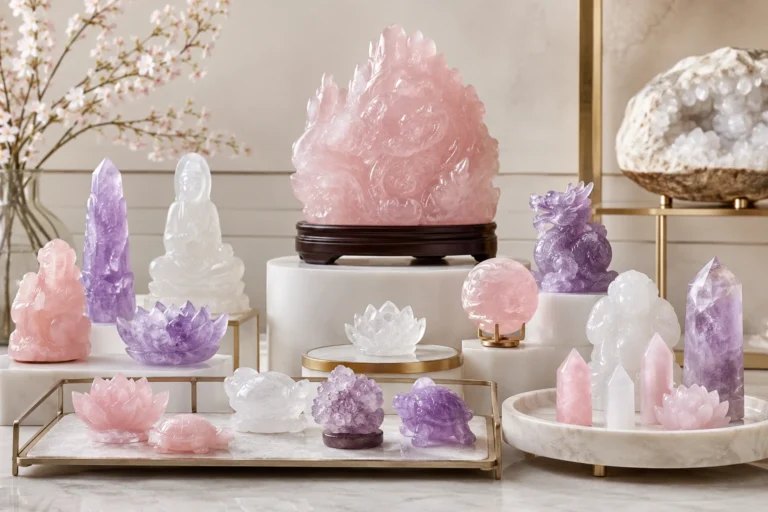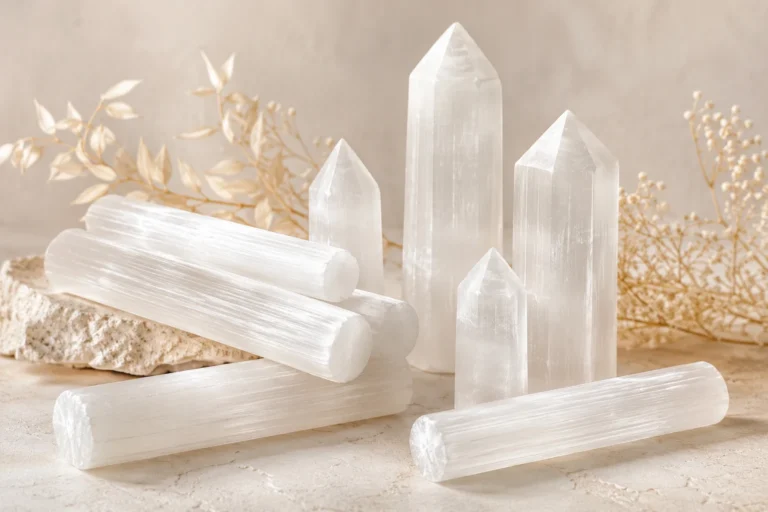

Struggling to advise your customers on how to cleanse their new crystals without causing accidental damage? Many people worry about choosing the "wrong" spiritual tool, but the real risk is physical—cracks, stains, and permanent discoloration. Proper guidance on smudging crystal carvings is less about metaphysics and more about material science to protect their beauty and value.
The safest method for smudging crystal carvings depends entirely on the crystal's physical properties. Palo Santo produces an oily smoke that can stain porous stones like howlite.1 White sage creates a drier smoke, making it a safer option for most crystals, though its hot embers pose a risk to heat-sensitive stones like fluorite. Incense varies widely and can leave an oily or colored residue, requiring careful testing before use.2
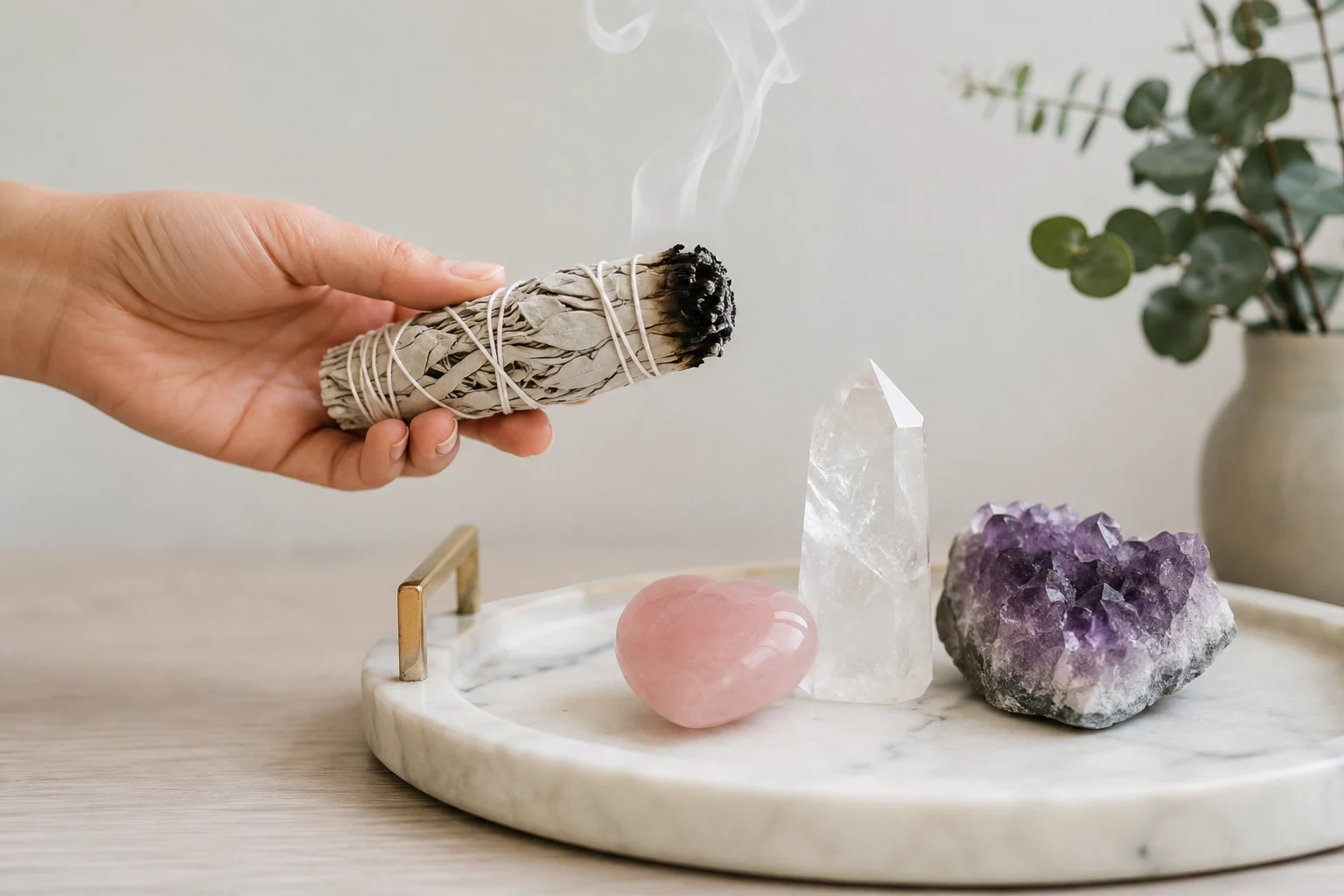
This isn't about which tool is spiritually "stronger," but which is materially safer for a specific stone. Let's move beyond the spiritual debate and dive into a practical, risk-based approach that will help you protect your crystal inventory and empower your customers with knowledge.
What Are the Risks of Using Palo Santo on Crystals?
Palo Santo is cherished for its sweet, woody aroma, making it a popular choice for space and crystal cleansing. But when its smoke interacts with certain crystal types, the results can be permanent and undesirable. The solution is knowing which crystals are at risk before you begin.
The primary risk of using Palo Santo is the fine, oily residue its resinous smoke leaves behind. This oil can be absorbed by porous or unpolished stones, leading to permanent yellow or brown stains that cannot be washed away.
Dive Deeper: Oil, Porosity, and Permanent Stains
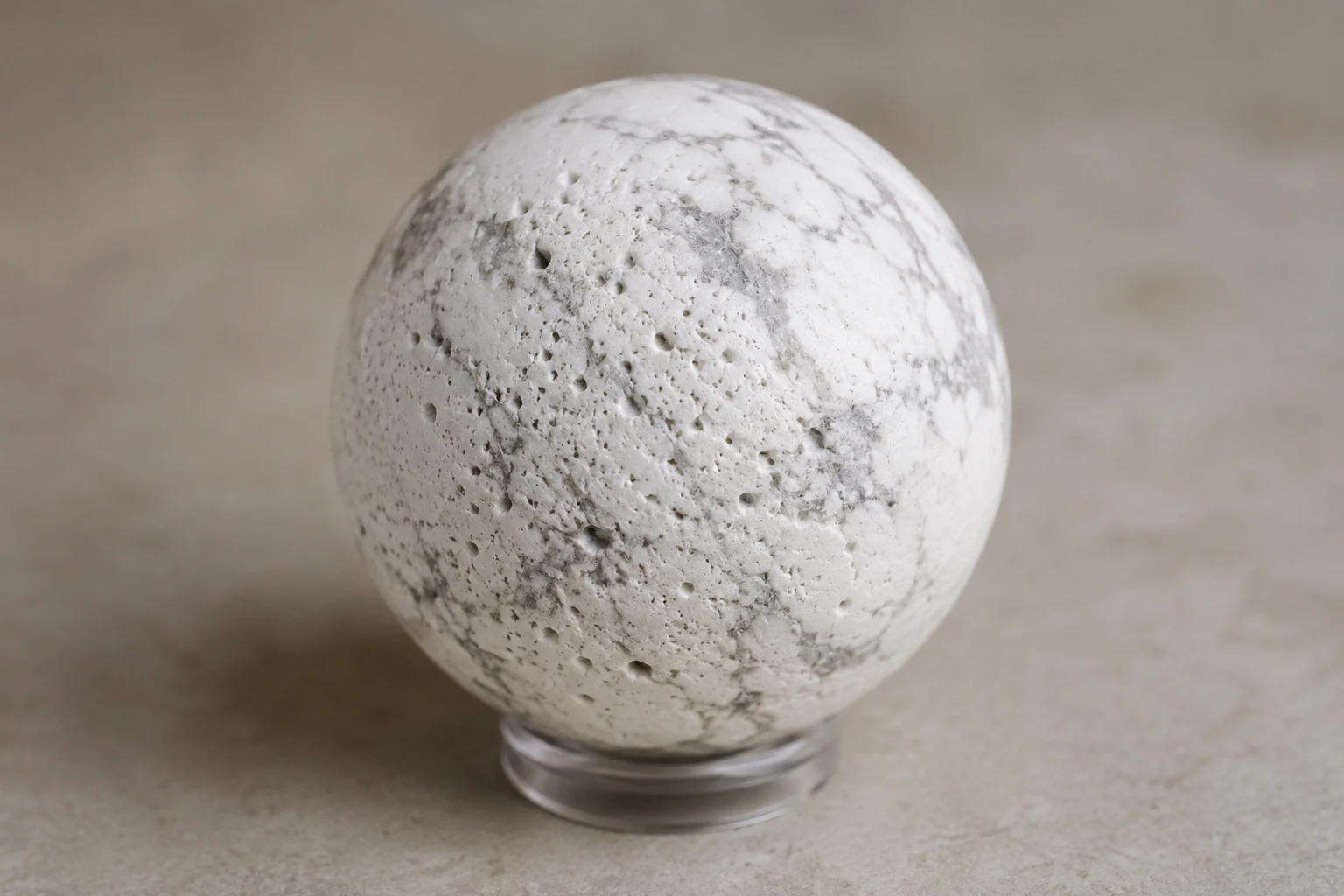
Think of a porous crystal like a very dense sponge. Stones like howlite, selenite, angelite, and turquoise have microscopic openings in their structure that can absorb liquids and oils. When the resin-rich smoke from Palo Santo wood envelops these crystals, the oil condenses on the surface and seeps in, causing discoloration. This is especially problematic for white or light-colored stones, where a yellow-brown stain becomes very noticeable.
In my experience as a supplier, this is one of the most common forms of accidental customer damage we hear about. We've had retailers contact us after their customers reported their new, pristine white howlite towers turning yellow after just one cleansing session with Palo Santo. The same risk applies to dyed stones, like many vibrant blue or pink agates. The oil can interact with the dye, causing it to run or fade unevenly.
While Palo Santo is part of rich spiritual traditions in South America, from a purely material standpoint, its use requires careful consideration.
A Quick Guide to Using Palo Santo Safely:
- Best For: Hard, non-porous, and polished crystals. Think of stones that have a glassy or very smooth finish. Examples include clear quartz, amethyst, rose quartz, obsidian, and most types of jasper. These stones have a tightly packed crystalline structure that prevents the oil from penetrating the surface.
- Avoid Using On:
- Porous Stones: Howlite, Selenite, Angelite, Chrysocolla, Malachite.
- Treated or Dyed Stones: Any dyed Agate or Quartz.
- Soft Stones: Turquoise, Lepidolite.
- Proper Technique: If you use Palo Santo, never let the ember touch the crystal. Keep the stick moving and maintain a distance of at least 6-8 inches, allowing the smoke to waft over the stone without becoming concentrated and oily.
Is Sage a Safer Choice for Smudging Crystal Carvings?
Many retailers and collectors view white sage as the go-to standard for cleansing. But is it a universally safe choice for smudging crystal carvings? While generally less risky than Palo Santo, sage comes with its own hazard that can cause irreversible damage if you're not careful.
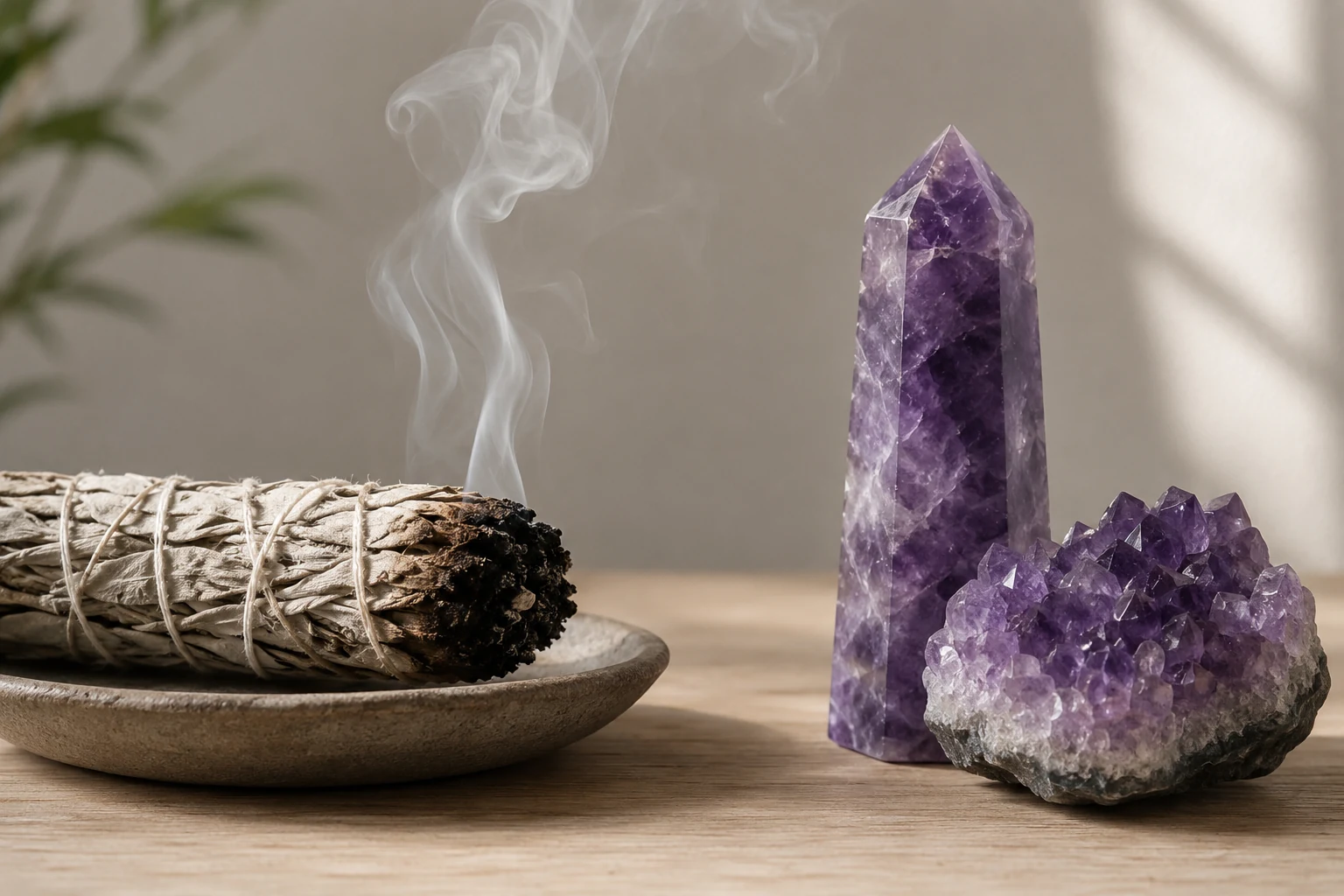
Sage is broadly considered a safer choice because its smoke is much drier and less resinous. However, the primary risk comes from hot embers falling from the smudge stick, which can cause "thermal shock" and crack or fracture heat-sensitive crystals.
Dive Deeper: Thermal Shock and Hidden Fractures
Thermal shock happens when a material experiences a rapid and extreme change in temperature.3 Crystals form under immense heat and pressure over millions of years, but a sudden, localized hot spot—like a tiny glowing ember landing on their surface—can cause the structure to expand too quickly in one area. This stress results in a crack or fracture.
Crystals particularly vulnerable to thermal shock include fluorite, amethyst, celestite, apatite, and opal. Fluorite is a classic example; it's known for its beautiful internal layers and cleavage planes, but those same planes make it susceptible to splitting when heated unevenly.4 As a supplier, we inspect our fluorite towers and carvings carefully, as even slight temperature stress during shipping can sometimes cause internal fractures to appear. An ember from a sage bundle is far more intense.
While white sage burning is a sacred practice for many Indigenous Peoples of the Americas, understanding its physical properties is key to using it safely in a modern context.
A Quick Guide to Using Sage Safely:
- Hold a Fireproof Bowl Underneath: Always use a ceramic bowl, abalone shell, or other heat-proof container to catch any falling ash or embers. This is the single most important safety step.
- Focus on the Smoke, Not the Heat: The cleansing is attributed to the smoke, not the heat source. Pass your crystals through the plume of smoke rather than holding them directly over the burning end of the stick.
- Maintain Distance: Keep the smudge stick at least 6-8 inches away from the crystal to prevent any direct heat transfer.
- Safe for Most Crystals: When used with these precautions, sage is a safe cleansing method for the vast majority of crystals, including porous ones like howlite that are at risk from Palo Santo's oils. You just need to be mindful of the heat-sensitive varieties.
What About Using Incense to Cleanse Crystals?
Incense is accessible, affordable, and available in countless scents, making it a tempting option for cleansing. However, this variety is also its biggest risk. The unpredictable composition of incense smoke can leave a sticky, colored film on your crystals.
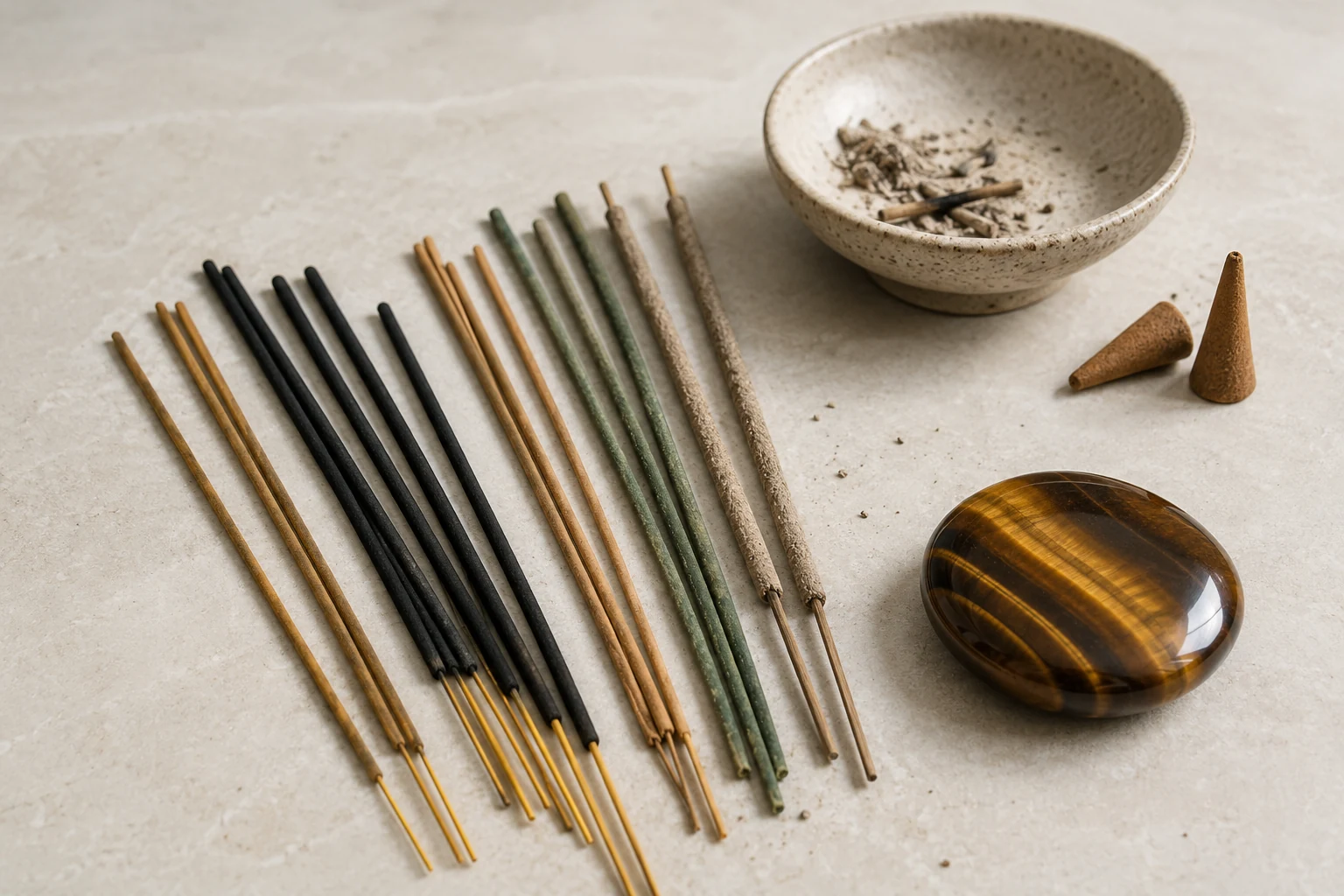
Using incense for smudging crystal carvings is risky because quality and ingredients are inconsistent. Many common incense sticks and cones are made with synthetic oils, chemical binders, and artificial dyes that can create a sticky, hard-to-remove residue that stains crystals.
Dive Deeper: Residue, Dyes, and the Unknown
Unlike sage (dried plant matter) or Palo Santo (natural wood), most mass-market incense is a composite product. It often consists of a "blank" punk stick or cone that has been dipped into a mixture of fragrances, oils, and combustible powders.
- Synthetic Fragrance Oils: These are often petroleum-based and can leave a greasy film, similar to the risk from Palo Santo but often with artificial colorants mixed in.
- Binders and Dyes: The binders that hold the stick or cone together can create a tacky residue when burned. If the incense is brightly colored (e.g., red for rose scent, purple for lavender), there's a high chance that dye is present in the smoke and can stain light-colored or porous stones.
From a B2B perspective, we advise our clients who stock both crystals and incense to be extremely cautious. Recommending a specific incense for cleansing without first testing it is a gamble. A simple test we suggest is to burn the incense near a piece of white paper or an inexpensive, unpolished stone to see what kind of residue it leaves behind after the smoke settles.
For a safer alternative, you can guide customers toward natural resin incense like frankincense, copal, or myrrh, which is burned on a charcoal disc. While this still produces smoke, it's generally free of synthetic dyes. However, the same rules about thermal shock apply—the charcoal is extremely hot and must be kept far from any crystals.
Quick Comparison Table for Smudging Tools
| Smudging Tool | Smoke Type | Primary Risk | Best For... | Use with Caution on... |
|---|---|---|---|---|
| Palo Santo | Oily, Resinous | Staining porous stones | Hard, non-porous stones (Quartz, Obsidian, Jasper) | Howlite, Turquoise, Selenite, dyed stones, Angelite |
| White Sage | Dry, Ashy | Thermal shock (embers) | Most crystals, when used correctly | Heat-sensitive stones (Fluorite, Amethyst, Opal) |
| Incense | Varies | Residue, staining | Hard, non-porous stones (after residue test) | All porous and delicate stones until tested |
Frequently Asked Questions
How far away should the smudging tool be from the crystal?
A safe distance is 6 to 8 inches (15 to 20 cm). This allows the smoke to envelop the crystal without concentrating heat or oily residue on its surface. The goal is to bathe the crystal in smoke, not heat it with the ember.
Can smudging damage polished crystals?
Yes, though they are more resilient. Polished crystals are non-porous and less likely to stain from oily smoke. However, they are still vulnerable to thermal shock. A hot ember from a sage stick can easily cause a polished fluorite or amethyst sphere to crack.
Is it better to use smoke or sound to cleanse delicate crystals?
For very delicate, soft, or water-soluble crystals like selenite, sound cleansing is the safest non-contact method. Using a singing bowl, tingsha bells, or a tuning fork creates vibrations that can cleanse the crystal's energy without any risk of physical damage from heat, oil, or water.
How do I know if my crystal is porous?
A simple (but potentially risky) test is to place a tiny drop of water on an unpolished or hidden area. If the water absorbs quickly and darkens the spot, the stone is porous. Generally, stones with a chalky, matte, or earthy texture like howlite, chrysocolla, and turquoise are porous.
Can I use the same smudging tool for all my crystals?
You can, but only if you use the safest method for the most vulnerable crystal in your collection. Using white sage with a fireproof bowl and keeping a safe distance is the most versatile approach that minimizes risk across the widest range of crystal types.5
Conclusion
Ultimately, the debate between Palo Santo, sage, and incense is not a spiritual one but a practical one. Protecting the physical integrity of your crystals is paramount. By understanding the material risks—oily smoke from Palo Santo, thermal shock from sage embers, and residue from incense—you can make an informed choice. Prioritizing a crystal's properties, such as porosity and heat sensitivity, is the most responsible approach to smudging crystal carvings.
As a wholesale buyer, providing this expert care advice helps your customers build trust in your brand and protects their investment in the beautiful products you sell. This knowledge reduces returns and positions you as a true expert in the field. For a reliable supply of high-quality crystal carvings and professional guidance on product care, contact us at Crystal Carvings Wholesale to discuss your sourcing needs and build your next best-selling collection.
<!--[googlesitekit-end-of-content]-->
"Impact of smoking on resin bonded restorations: A narrative review - PMC", https://pmc.ncbi.nlm.nih.gov/articles/PMC11135022/. Studies on the chemical composition of Palo Santo smoke indicate the presence of resinous compounds that may interact with porous surfaces, potentially causing staining. However, specific tests on howlite are limited. Evidence role: mechanism; source type: research. Supports: Palo Santo smoke contains resinous oils that can interact with porous materials like howlite.. Scope note: Limited direct testing on howlite; general findings on resinous smoke interactions. ↩
"Health and Environmental Risks of Incense Smoke - PMC - NIH", https://pmc.ncbi.nlm.nih.gov/articles/PMC9058426/. Studies on incense combustion reveal that synthetic oils and dyes can produce residue that may adhere to surfaces, including crystals. Evidence role: mechanism; source type: research. Supports: Incense smoke can leave residue due to synthetic oils and dyes in its composition.. Scope note: Findings are based on general combustion studies, not specific tests on crystals. ↩
"The Effect of Crystal Orientation on Thermal Shock-Induced Fracture ...", https://www.osti.gov/etdeweb/servlets/purl/20194850. Educational resources on mineralogy explain that sudden temperature changes can lead to thermal stress, causing fractures in crystals with cleavage planes. Evidence role: mechanism; source type: education. Supports: Thermal shock can cause fractures in crystals due to rapid temperature changes.. Scope note: General mineralogy principles; specific examples of smudging-related damage are not included. ↩
"Fluorite | Common Minerals - University of Minnesota Twin Cities", https://commonminerals.esci.umn.edu/minerals-f/fluorite. Mineralogy studies explain that fluorite's internal cleavage planes make it prone to fractures under uneven heat exposure. Evidence role: mechanism; source type: education. Supports: Fluorite's cleavage planes contribute to its susceptibility to splitting under thermal stress.. Scope note: General mineralogy principles; specific smudging-related examples are not provided. ↩
"Smudging", https://en.wikipedia.org/wiki/Smudging. Guidelines on smudging practices recommend using fireproof bowls and maintaining distance to minimize risks such as thermal shock and residue. Evidence role: general_support; source type: education. Supports: Using white sage with a fireproof bowl and maintaining distance reduces risks for most crystals.. Scope note: General safety practices; specific crystal types are not individually tested. ↩
Keep Reading