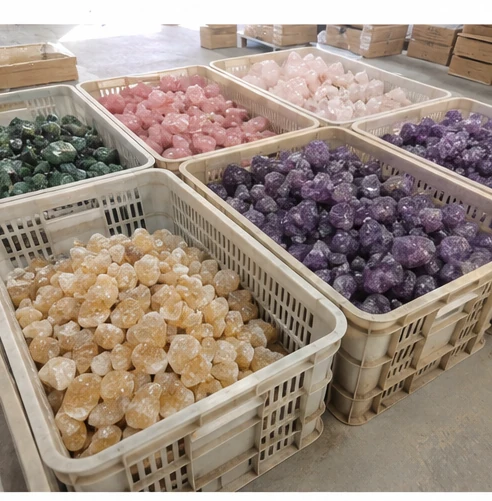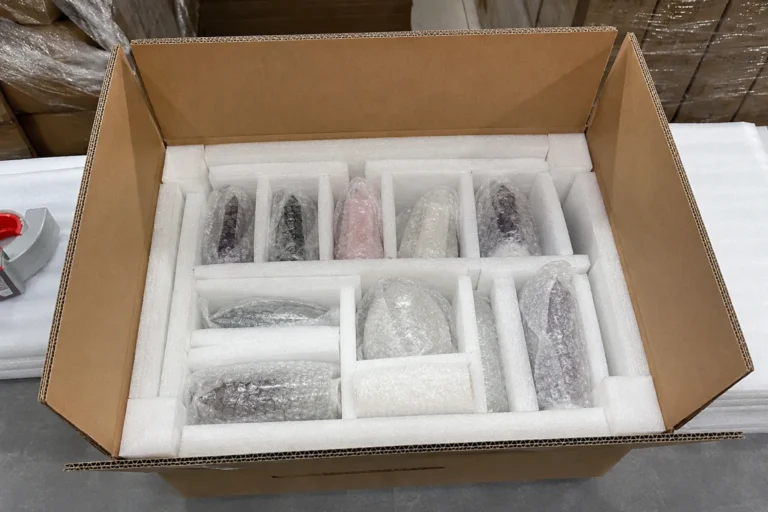
Sourcing from a crystal carving manufacturer in China seems like a smart way to grow your business, but choosing the wrong one can be a disaster1. You risk receiving low-quality products, facing unexpected delays, and wasting your investment on inventory you can't sell. The key is to find a true manufacturing partner who acts as a consultant, guiding you from a vague idea to a profitable product line.
To choose the right crystal carving manufacturer, you must shift your focus from finding the lowest price to finding a strategic partner. A reliable manufacturer acts as a consultant, asking detailed questions about your business goals, target customers2, and sales channels to help you build a marketable and profitable collection. They prioritize clear communication and manage your expectations about natural material variations3.
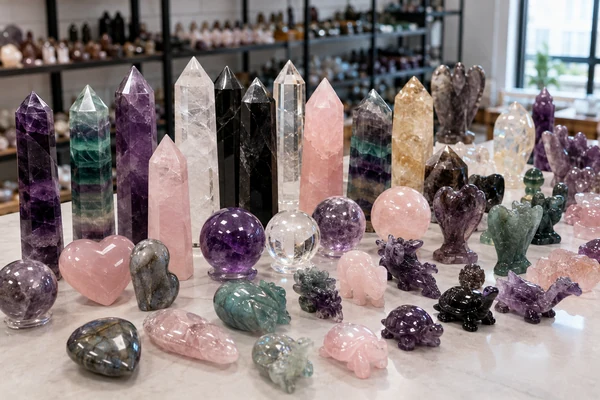
This shift in mindset is the single most important factor for success. Instead of asking "How much does it cost?" you should be looking for a supplier who asks "Who are you selling to?" Let's explore the common pitfalls to avoid and the key qualities that define a great manufacturing partner.
What are the biggest mistakes when choosing a crystal carving manufacturer?
You're excited to start sourcing your first collection, but you're probably worried about making a costly mistake. It's a valid concern. Over the years, I've seen many new buyers fall into the same predictable traps, often because they don't know what they don't know.
The most common mistakes are fixating only on the lowest price4, not understanding the difference between manufacturers and trading companies, having unrealistic expectations about natural stones, and underestimating the importance of clear communication.

These errors can lead to receiving unsellable goods, which can stall a new business before it even starts. Let's break down each of these pitfalls so you can confidently avoid them.
H3: The Price-Only Trap
One of the first lessons in sourcing is that the cheapest quote is often the most expensive in the long run. When you choose a supplier based only on a low price, you are implicitly agreeing to compromises, whether you know it or not. These compromises usually come in the form of material quality, craftsmanship, or size accuracy.
A while ago, a new Etsy seller contacted us in a panic. He had ordered 500 rose quartz5 hearts from another supplier because their price was 20% lower than anyone else's. The shipment arrived, and the hearts were disastrous. They were made from pale, almost white, low-grade quartz, many were poorly polished with rough spots, and the sizes were wildly inconsistent. He couldn't sell them and had lost his entire initial investment.
This is a classic example. A low price can mean:
- Inferior Materials: Using low-grade stone with poor color, more cracks, or unwanted inclusions.
- Sloppy Craftsmanship: Rushed polishing, imprecise shapes, and lack of detail.
- Inaccurate Sizing: A "5cm tower" might range from 4cm to 6cm, making your product listings unreliable.
- No Service: If something goes wrong, a low-cost vendor has no margin or incentive to help you fix it.
A good manufacturer prices their work to include proper material selection, skilled labor, quality control, and responsive customer service.
H3: Manufacturer vs. Trading Company6
Understanding who you are talking to is critical. In China, you will encounter two main types of suppliers:
- Manufacturers: These are the factories that physically cut, shape, and polish the stones. They have direct control over production, materials, and quality.
- Trading Companies: These are intermediaries who don't produce anything themselves. They source products from various factories and handle the sales and logistics.
Neither is inherently "better," but a true crystal carving manufacturer has deep knowledge that a trading company often lacks. You can ask a manufacturer detailed questions about production—"If we make this design 1cm thicker, how does that impact the weight and cost?"—and get a precise answer. A trading company would have to go ask the factory.
How can you tell the difference?
- Ask for a video call: Ask them to walk you through their workshop or showroom. A real manufacturer will be proud to show you their space.
- Inquire about custom work: Ask detailed questions about their OEM/ODM process7. A manufacturer will have a clear, step-by-step process involving mock-ups and samples.
- Check their product range: If a supplier sells crystal carvings alongside electronics and clothing, they are almost certainly a trading company. A specialized manufacturer will have a focused catalog.
H3: The "Perfect" Natural Stone Myth
Many first-time buyers expect every single piece in their 100-unit order to look exactly like the single, perfect photo on a website. This is one of the biggest sources of disappointment. Crystals are natural products from the earth8, and variation is a feature, not a bug.
I often explain to clients that the subtle stripes in a batch of fluorite towers or the range of deep purple hues in an amethyst order are signs of authenticity. No two are exactly alike.
A good supplier helps you manage this reality by:
- Providing realistic photos: They will show you photos of a batch of products, not just one "hero" shot.
- Defining quality grades: They can explain the difference between A-grade and B-grade material9 and help you choose what's right for your market and price point.
- Setting clear standards: For example, you can agree that all pieces must be within a certain size range (e.g., 50-60mm) and free of major surface cracks.
A supplier who promises every piece will be "perfect" and identical is either inexperienced or being dishonest.
How can a good crystal carving manufacturer help build your collection?
You have a vision for your crystal shop, but you're not sure how to translate that into a concrete product order. The sheer number of materials, shapes, and sizes can feel overwhelming. This is where a great partner moves beyond being a simple vendor and becomes a sourcing consultant.
A good crystal carving manufacturer acts as a guide. They ask strategic questions about your target market, your primary sales channels, and your desired retail price points to help you select the right materials, shapes, and sizes for a successful and profitable collection.

Their goal isn't just to sell you what you ask for; it's to help you buy what you can actually sell. This consultative approach is the hallmark of a supplier you can build a long-term business with.
H3: They Diagnose Before They Prescribe
The best suppliers don't lead with a price list. They lead with questions. When a new buyer contacts me, my first goal is to understand their business.
A new Shopify seller recently sent me a message that just said, "I need some popular crystal carvings, what is your price?"
Instead of sending a generic catalog, I replied: "That's great! To give you the best recommendations, could you tell me a little more about your store? Who are your target customers? Are they new to crystals or experienced collectors? What's your primary sales channel?"
Her answers revealed she was targeting a young, spiritual-but-not-expert audience on Instagram and wanted to keep her retail prices under $30. This information was far more valuable than a product list. We were able to build an initial order around trendy, affordable, and visually appealing items like rose quartz palm stones, small amethyst clusters, and selenite wands—items perfect for her specific audience and price point. This is the difference between simply taking an order and building a partnership.
H3: Translating Market Needs into Manufacturable Products
A skilled manufacturer acts as a bridge between your market goals and the physical realities of production. They help you make smart trade-offs to create a product that fits your vision, budget, and customer expectations.
Here’s how that conversation often works:
| Your Business Need | The Right Supplier's Question | The Recommended Solution |
|---|---|---|
| "I'm starting a subscription box and need affordable items10." | "What is your target cost-per-unit and what's the theme?" | "Let's focus on high-quality but common materials. For a $5 cost, we can do mini spheres in clear quartz or black obsidian worry stones." |
| "I want a unique, signature product for my Etsy shop." | "Can you share inspiration images? Are you thinking of a custom shape or a specific material?" | "We can develop an OEM carving based on your design. We'll start with a 3D model and a resin sample for your approval before using stone." |
| "I need high-margin decor pieces11 for my physical gift shop." | "What are your current best-selling retail price points? $50? $100?" | "For that retail price, you should consider large, polished freeforms in labradorite or fluorite towers. They have a high perceived value." |
This dialogue transforms a vague request into a concrete, manufacturable order that is tailored to your business.
H3: Navigating Material Choices and Quality Tiers
Saying you want "rose quartz" is like saying you want "red wine"—there's a massive range of quality and price. A good manufacturer will educate you on these differences.
When a client asks for "A-grade amethyst," I don't just give them a price. I'll often send side-by-side photos or a short video showing our standard grade next to our A-grade. I'll explain that the A-grade has deeper color and better clarity, but also costs 40% more due to its rarity. Then I ask, "Which one do you think your customers will value more for the price you want to charge?"
This empowers you to make an informed decision. You might decide the standard grade is perfect for your entry-level customers, or you might opt for the premium grade for a high-end collection. A great partner doesn't just sell you the most expensive option; they help you choose the right option.
What should you ask a potential crystal carving manufacturer?
You've found a few potential suppliers, but their websites and Alibaba pages all seem to promise the same things: "high quality," "low price," and "good service." How do you separate the true experts from the rest?
Instead of just asking for a price list, you need to ask questions that reveal their process12, expertise, and attitude. Inquire about their experience with your specific market, their approach to quality control, and their flexibility with mixed orders and customization.
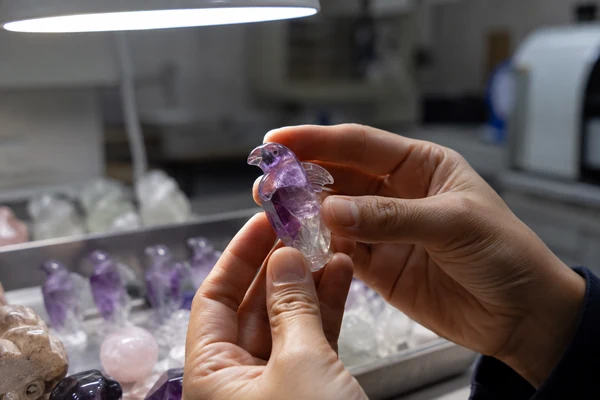
The answers to these questions will tell you everything you need to know about whether they are the right long-term partner for your business.
H3: Questions About Their Process & Capabilities
Your goal is to get past the generic sales pitch. Try asking these specific, operational questions:
- "What is your process for handling a custom OEM design from idea to final product?"
- Why it works: This tests their technical and communication skills. A good answer will involve steps like design confirmation, digital modeling, resin or wax sampling, and a final stone sample approval stage. A vague "send us your design" is a red flag.
- "Can you support mixed material and mixed style orders? What is your typical MOQ for a trial order?"
"Risk factors in the assessment of suppliers - PMC - NIH", https://pmc.ncbi.nlm.nih.gov/articles/PMC9342744/. A study on manufacturing supply chain risks highlights that poor supplier selection can result in product defects, delays, and financial losses for businesses. Evidence role: case_reference; source type: research. Supports: Poor supplier choices can lead to business risks such as low-quality products and financial losses.. Scope note: The study may focus on general manufacturing rather than crystal carving specifically. ↩
"Tailor to the Tastes of Your Target Market", https://asbtdc.org/tailor-to-the-tastes-of-your-target-market/. Research on market-driven manufacturing shows that suppliers tailor product recommendations based on customer demographics and sales channels. Evidence role: mechanism; source type: research. Supports: Manufacturers often inquire about target customers to align product recommendations with market needs.. Scope note: The research may focus on general manufacturing rather than crystal carving. ↩
"Wholesale Crystal Specimens & Natural Minerals", https://crystalcarvingswholesale.com/product_type/crystal-specimens-minerals/. Educational resources on geology explain that natural crystals often exhibit variations in color, texture, and inclusions, which manufacturers address through grading and quality control. Evidence role: mechanism; source type: education. Supports: Natural material variations are inherent in crystal products, and manufacturers often implement quality control measures to manage customer expectations.. Scope note: The source may not specifically address crystal carving manufacturers. ↩
"Risk factors in the assessment of suppliers - PMC - NIH", https://pmc.ncbi.nlm.nih.gov/articles/PMC9342744/. Research on supply chain management indicates that prioritizing low-cost suppliers can lead to reduced product quality and unreliable service. Evidence role: general_support; source type: research. Supports: Focusing solely on low-cost suppliers often results in compromises in product quality and service.. Scope note: The research may not specifically address crystal carving manufacturers. ↩
"Rose Quartz Quality Factors", https://www.gia.edu/rose-quartz-quality-factors. Encyclopedia entries on quartz minerals explain the factors that affect the quality and pricing of rose quartz, such as color intensity and clarity. Evidence role: expert_consensus; source type: encyclopedia. Supports: Rose quartz varies widely in quality and price, with factors like color and clarity influencing its value.. Scope note: The source may not address supplier education practices directly. ↩
"Strategic Spot Trading Benefits Supply Chains", https://www.gsb.stanford.edu/insights/strategic-spot-trading-benefits-supply-chains. Educational resources on supply chain management define manufacturers as entities with direct production control, contrasting them with trading companies that facilitate transactions. Evidence role: definition; source type: education. Supports: Manufacturers directly control production processes, while trading companies act as intermediaries sourcing products from various factories.. Scope note: The source may not focus on the crystal carving industry. ↩
"Private Label Gift Brands - Crystal Carvings Wholesale Supplier", https://crystalcarvingswholesale.com/application/private-label-gift-brands/. Educational resources on manufacturing processes outline the typical steps involved in OEM/ODM product development, including prototyping and sample approval. Evidence role: mechanism; source type: education. Supports: OEM/ODM processes typically involve design confirmation, prototyping, and sample approval before production.. Scope note: The source may not focus specifically on crystal carving manufacturers. ↩
"Smoky Quartz Carvings: Color Grades, Quality ... - Crystal Carvings", https://crystalcarvingswholesale.com/smoky-quartz-carvings-color-grades-quality-and-wholesale-guide/. Encyclopedia entries on mineralogy explain that variations in crystals, such as color and inclusions, are natural and valued for their uniqueness. Evidence role: expert_consensus; source type: encyclopedia. Supports: Natural variations in crystals are a result of geological processes and are often considered signs of authenticity.. Scope note: The source may not address consumer preferences directly. ↩
"Smoky Quartz Carvings: Color Grades, Quality ... - Crystal Carvings", https://crystalcarvingswholesale.com/smoky-quartz-carvings-color-grades-quality-and-wholesale-guide/. Institutional guidelines on gemstone grading describe how materials are categorized based on clarity, color, and inclusions. Evidence role: mechanism; source type: institution. Supports: Suppliers often use grading systems to differentiate crystal quality, helping buyers make informed decisions.. Scope note: The guidelines may focus on gemstones rather than carved crystals. ↩
"Cutting Edge: Production", https://courses.cit.cornell.edu/cuttingedge/production/04_production.htm. Case studies in product customization show how manufacturers tailor designs and materials to meet the needs of subscription box businesses. Evidence role: case_reference; source type: research. Supports: Manufacturers often adapt product recommendations to align with specific business models, such as subscription boxes.. Scope note: The case studies may focus on general manufacturing rather than crystal carving. ↩
"2 Ways to Increase Profit Margin Using Value-Based Pricing", https://online.hbs.edu/blog/post/how-to-increase-profit-margin. Research on retail product strategies indicates that manufacturers recommend items with high perceived value to optimize profit margins. Evidence role: general_support; source type: research. Supports: Manufacturers often suggest decor items that align with retail price points to maximize profit margins.. Scope note: The research may not specifically address crystal decor pieces. ↩
"8 Ways to Improve Your Supplier Selection Process", https://www.nist.gov/blogs/manufacturing-innovation-blog/8-ways-improve-your-supplier-selection-process. Educational resources on supplier evaluation recommend asking detailed questions about processes to assess expertise and reliability. Evidence role: general_support; source type: education. Supports: Operational questions about processes can help buyers identify expert suppliers.. Scope note: The resources may not focus specifically on crystal carving suppliers. ↩
Keep Reading