Struggling to source crystal ornaments that actually sell and don't become a post-holiday liability? Many retailers get captivated by festive shapes, only to face high damage rates, slow sales, and a warehouse full of dead stock in January1. The real challenge is engineering a collection that delights customers while protecting your profit margins.
The most effective way to build a profitable collection of crystal ornaments is to move beyond aesthetics and focus on a commercial strategy. This involves verifying the physical suitability for hanging, creating a tiered assortment with clear price points, planning for post-holiday sales by choosing versatile shapes and materials, and calculating the total landed cost, not just the unit price.
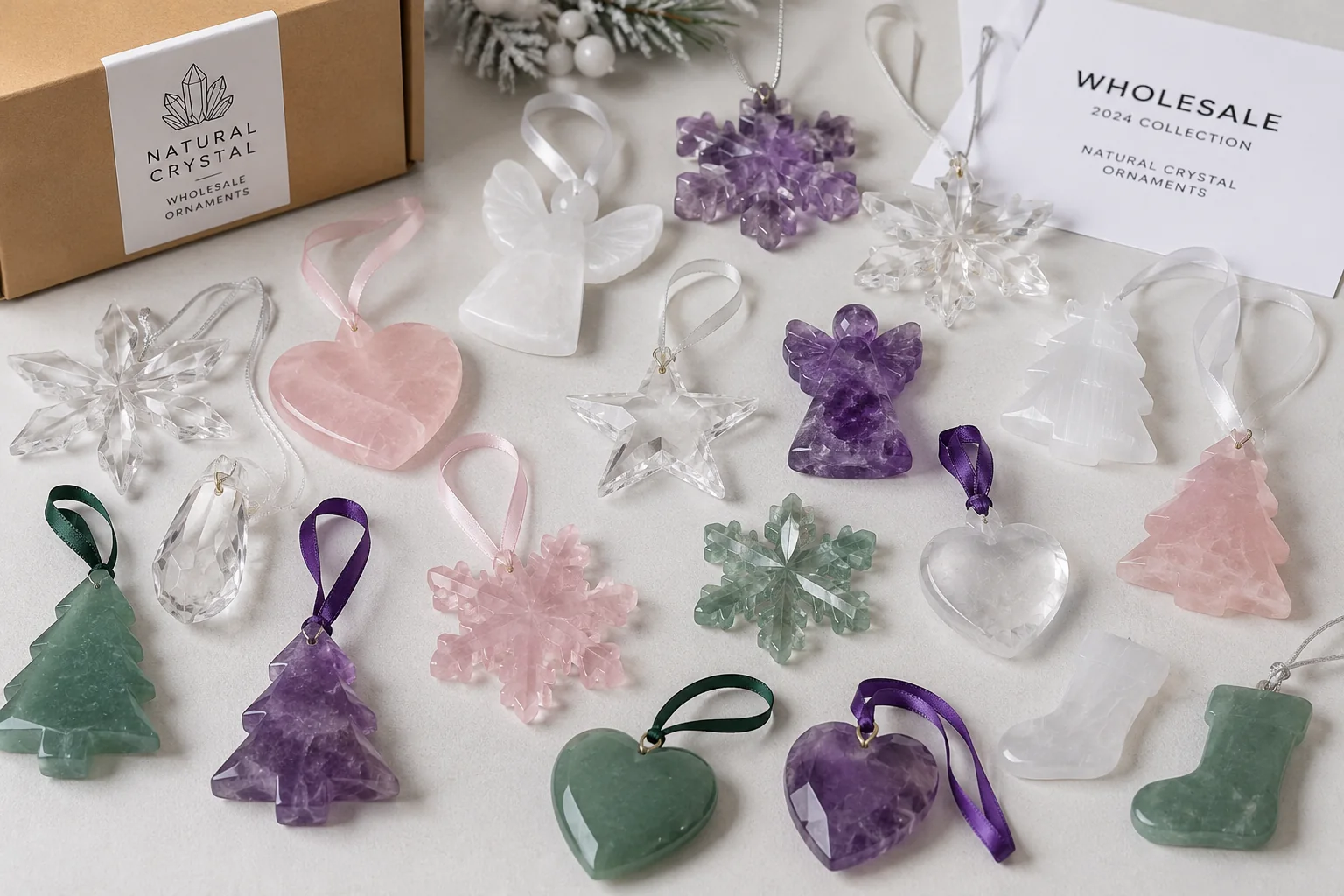
This may sound complex, but it’s a systematic approach we use to help our clients every year. It turns sourcing from a gamble into a calculated business decision. In this guide, I'll walk you through the exact frameworks we use to help retailers build successful and profitable Christmas collections.
Are Your Crystal Ornaments Physically Suited for Hanging?
You’ve found a beautiful crystal carving, but is it actually an ornament? It’s a common mistake to assume any small carving can be hung on a tree, leading to products that break branches, hang crookedly, or crack before they even sell.
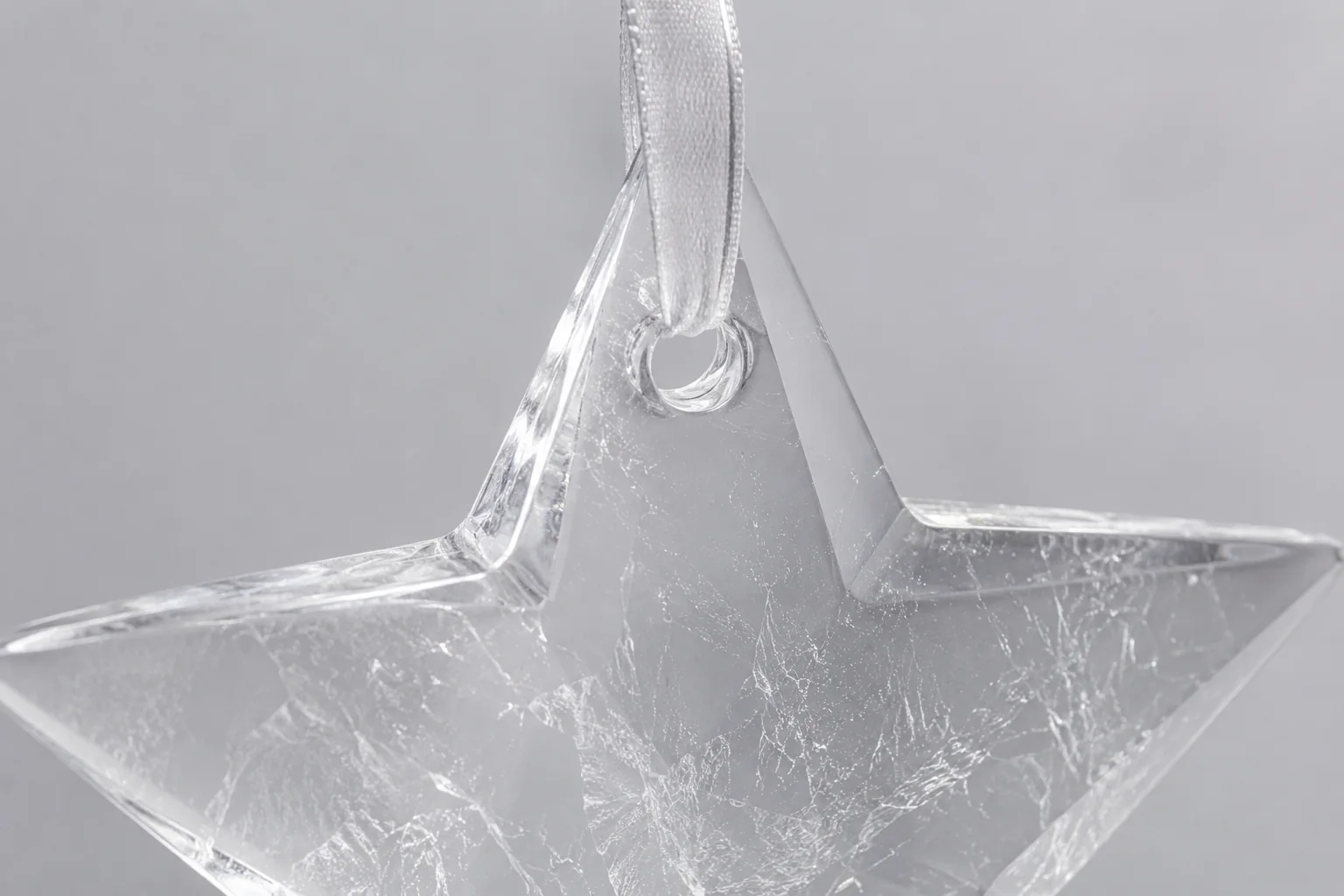
The first quality gate for any ornament is a physical one. A truly viable ornament must be lightweight enough for a standard Christmas tree branch2, balanced to hang correctly3, and structurally sound enough to withstand handling and shipping.
Dive Deeper: The Physics of a Viable Ornament
From our experience managing bulk seasonal orders, we know that the "ornament" designation is earned, not given. It’s determined by engineering and physics, not just a festive shape. Ignoring these factors is one of the quickest ways to lose money on a holiday collection. Here's what we check during pre-shipment inspections.
H3: Weight vs. Branch Strength
A classic issue we see is with heavy materials like dense agate or large spheres. A 50mm solid crystal sphere might look great in a photo, but it can weigh over 200 grams (nearly half a pound). That's far too heavy for the delicate tip of a pine branch.
- The Problem: The ornament will slide down the branch, bend it dramatically, or even fall and break.
- The Solution: We advise clients to target a finished weight under 50-70 grams for standard ornaments. For heavier statement pieces, they must be marketed clearly as suitable for thick, sturdy branches near the trunk or for use on ornament stands. Always ask your supplier for the average unit weight before ordering.
H3: Center of Gravity and Balance
The hanging orientation is dictated entirely by the drill-hole placement relative to the carving's center of gravity. A common quality control failure is a drill hole that's even slightly off-center.
- The Problem: An improperly drilled angel will hang upside down or sideways. A star will tilt awkwardly. This makes the product unsellable.
- The Solution: When reviewing samples or placing an order, specify that the drill hole must be placed for a balanced, vertical hang. For asymmetrical designs like a reindeer, this requires careful testing. A good supplier will have already solved this in their production process.
H3: Drill-Hole Integrity
The drill hole itself is a major point of failure. If it's too close to the edge, the thin wall of crystal can easily crack under the stress of the ribbon and the ornament's own weight.
- The Problem: We often reject batches where drill holes have micro-fractures, which turn into full breaks during shipping or customer handling. This leads to returns and stock loss.
- The Solution: The wall between the hole and the edge should be sufficiently thick—ideally at least 2-3mm. The hole should also be smooth, not jagged, to prevent fraying of the ribbon or string4.
How Should You Structure Your Retail Assortment of Crystal Ornaments?
Are you buying a random mix of crystal snowflakes, Santas, and angels hoping something will stick? This "spray and pray" approach often results in a confusing collection with no clear pricing structure, leaving customers unsure what to buy and leaving you with unpredictable sales.
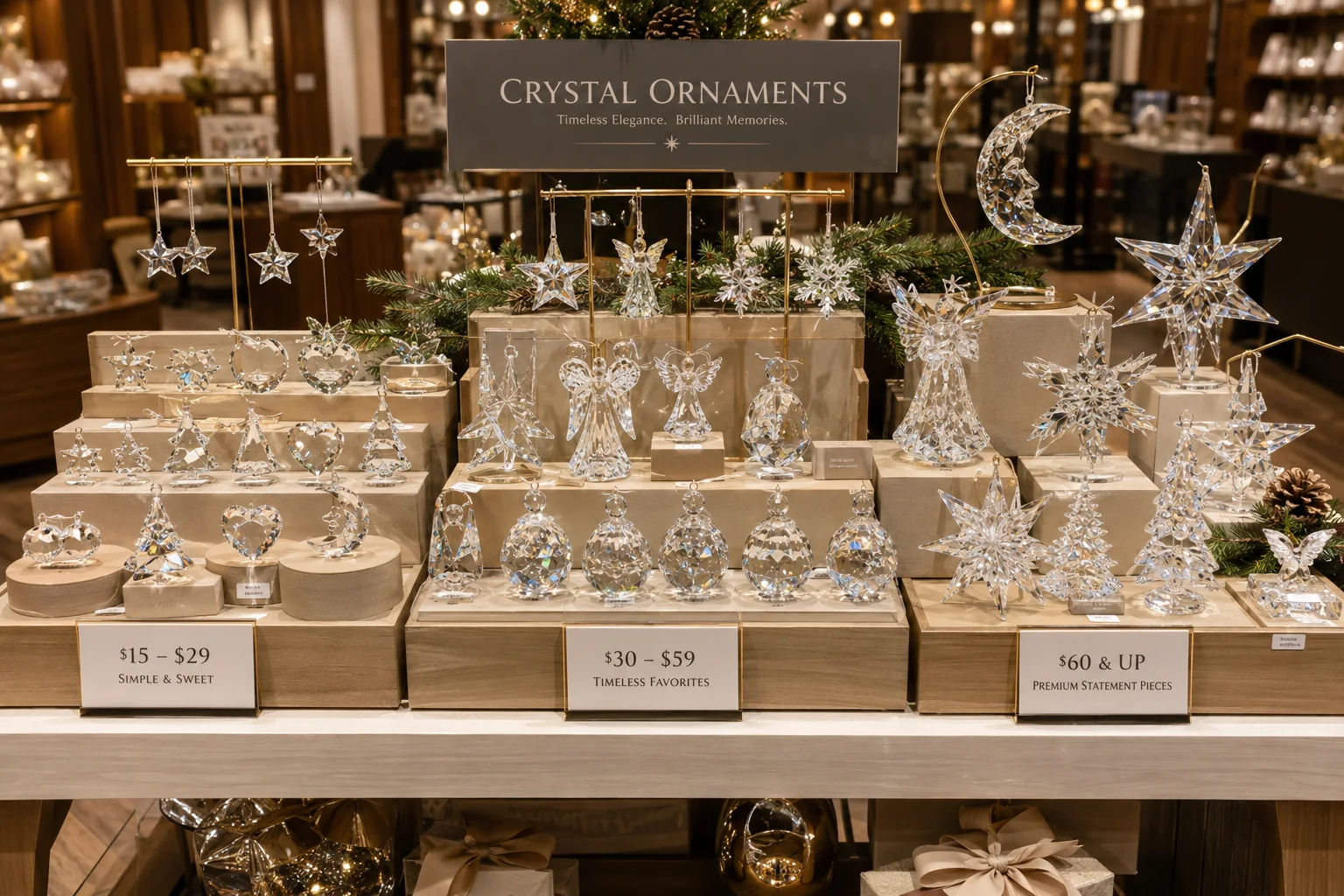
To build a commercially successful collection, you must think like a merchandiser. A structured assortment of crystal ornaments uses tiered pricing and clear product categories5 to appeal to different customer motivations, from low-cost impulse buys to premium, high-margin gifts.
Dive Deeper: Engineering Your Holiday Collection
A profitable assortment isn't an accident; it's a balanced portfolio designed to maximize sell-through and margin. We guide our clients to use two key frameworks: the "Good-Better-Best" pricing model and a commercial classification system. Together, they create a logical and shoppable collection.
H3: The "Good-Better-Best" Pricing Tiers
This classic retail strategy helps you cater to different budgets and purchase intentions. It provides clear entry points for new customers and upsell opportunities for established fans.
| Tier | Role in Assortment | Typical Price Point | Example Product | Sourcing Notes |
|---|---|---|---|---|
| Good | Impulse Buy / Stocking Stuffer | Low ($) | Small (25-30mm) clear quartz star or tumbled stone with a bail | High volume, low margin. Focus on common materials and simple shapes to keep costs down. |
| Better | Core Gift Item | Medium ($$) | 40-50mm amethyst angel or rose quartz snowflake with gift-ready packaging | The bulk of your inventory. Focus on popular materials and reliable designs. Quality and packaging matter most here. |
| Best | Statement Piece / Premium Gift | High ($$$) | Large (70mm+) labradorite freeform with custom hardware or a limited-edition carving | Low volume, high margin. High risk but builds brand prestige. Inspect each piece individually. |
H3: The Commercial Classification Framework
Beyond price, you need to think about the product's role in a display or as a gift. This helps you balance your inventory between different use cases.
- Type A: Lightweight Hangers: These are your classic ornaments (under 70g). They are designed specifically for tree branches. Examples: Small crystal stars, hearts, mini-wands.
- Type B: Statement Hangers: Heavier pieces (70g+) that require a sturdy branch or an ornament stand. You must manage customer expectations for these. Examples: Large geodes, crystal points, spheres.
- Type C: Freestanding Decor: Not technically ornaments, but they are a crucial part of a holiday crystal display. They add visual weight and create vignettes. Examples: Crystal Christmas trees, large towers, spheres on stands.
- Type D: Winter-Themed (Non-Holiday): These items have a longer selling season than explicitly Christmas-themed products. Examples: Selenite wands ("icicles"), snowflake carvings, blue calcite pieces.
- Type E: Collectible/Dated Items: High-risk, high-reward products, often marked with the year. These are for your most loyal customers. Order in very small quantities.
By combining these frameworks, a small crystal shop might build a collection that is 60% "Better" (core gifts), 30% "Good" (impulse buys), and 10% "Best" (statement pieces), with a mix of hangers and freestanding decor.
How Can You Minimize Post-Holiday Overstock of Crystal Ornaments?
The biggest financial risk of any seasonal collection is the January markdown sale. Are you prepared for what happens to your unsold crystal ornaments on December 26th? Many retailers don't plan an exit strategy, leading to deep discounts that erase profits.
The most critical commercial decision is made before you place your bulk order. By strategically selecting shapes and materials, you can create a collection where the majority of your stock has a life well beyond the Christmas season, dramatically reducing inventory risk.
Dive Deeper: Planning for January in July
When we consult with buyers on their Q4 orders, our first question is about their post-holiday plan. The answer dictates the entire product mix. A successful strategy categorizes inventory by its seasonal lifespan, shifting the focus toward versatile, evergreen products.
H3: Christmas-Only Stock (High Risk)
These are items that are explicitly tied to the holiday and have almost no value after December 25th.
- Examples: Crystal Santas, reindeer, anything with "Merry Christmas" or a specific year engraved on it.
- Strategy: Treat these as loss leaders or excitement drivers. Order in very small quantities. They are meant to create a festive atmosphere, not to be the core of your revenue. A common mistake we see is buyers over-ordering these because they are festive, leading to the biggest post-holiday losses.
H3: Winter-Themed Stock (Medium Risk)6
These products have a broader seasonal appeal that can extend from November through February. They evoke a "winter" feeling rather than a specific "Christmas" one.
- Examples: Crystal snowflakes (especially in clear quartz, selenite, or howlite), selenite wands that look like icicles, carvings of polar bears or penguins.
- Strategy: This category can make up a healthy portion of your seasonal buy. You have a 3-4 month window to sell them. They can be part of "Winter Sale" promotions rather than a "Christmas Clearance."
H3: Year-Round Stock (Low Risk)7
This is where you should invest the most. These are shapes and materials that are popular all year but can be marketed for a holiday. This is your safety net.
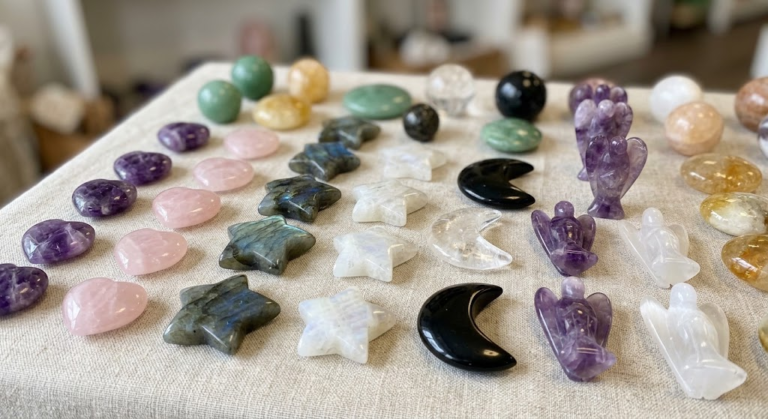
- Examples: Stars (Christmas, New Year's, celestial themes), Angels (Christmas, spiritual protection, memorials), Hearts (Christmas, Valentine's Day, love), and Spheres (all-season decor).
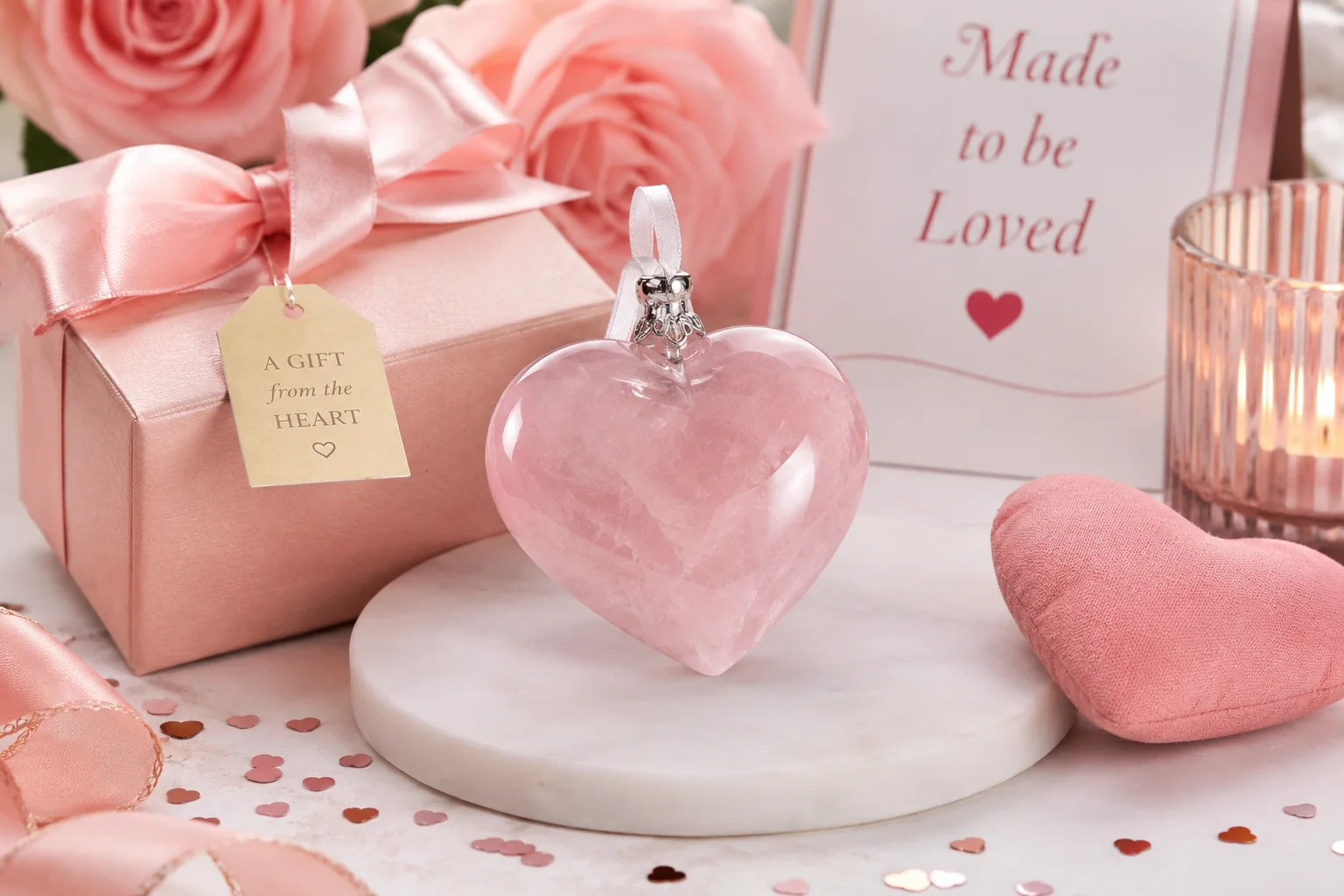
- Strategy: By choosing a Rose Quartz heart ornament, you have a product for Christmas and another for Valentine's Day. A Clear Quartz star works for Christmas and for anyone interested in astrology year-round8. We advise clients to make these shapes the foundation of their crystal ornaments collection.
The material choice is just as important. Here’s a quick guide:
| Material | Visual Role for Christmas | Risks & Considerations | Post-Holiday Potential |
|---|---|---|---|
| Red Jasper/Carnelian | Festive "Red" Accent | Can be opaque; needs good light. | Good for Root Chakra or Autumn collections. |
| Green Aventurine | Festive "Green" Accent | Color can be inconsistent. | Good for Heart Chakra or St. Patrick's Day. |
| Clear Quartz | "Icy" or "Snow" Look | Can show internal fractures. | High. Universal appeal, sells year-round. |
| Selenite/Satin Spar | "Snow" or "Icicle" Look | Very soft and fragile, scratches easily. | Medium. Popular in winter and for cleansing. |
| Labradorite | "Northern Lights" Magic | Flash is directional; can look dull. | High. Extremely popular with metaphysical buyers. |
| Amethyst | Royal Purple/Spiritual | Color varies from pale to deep. | High. A top-selling crystal year-round. |
Frequently Asked Questions
What's the best MOQ for a first-time Christmas order of crystal ornaments?
For a first-time order, we strongly recommend starting with a low-MOQ trial that includes a mix of styles and materials. This allows you to test the market with minimal risk. Focus on a higher percentage of "Year-Round" stock (like stars and angels) and a smaller quantity of "Christmas-Only" items to see what your customers respond to.
When is the latest I can place an order for crystal ornaments to arrive for Christmas?
To be safe, you should place your bulk order by late July or early August9. This accounts for production time (4-6 weeks), sea freight (4-5 weeks to North America/Europe), customs clearance, and local delivery. Air freight is faster but significantly more expensive and should be reserved for small, high-margin restocks.
How do you ensure the color consistency of gemstone ornaments in a bulk order?
Natural gemstones will always have variations. As a supplier, we manage this by grading raw materials and sorting finished products into batches of similar color and quality. When placing an order, you should specify your tolerance for variation and review photos of the current batch of material if possible.
What kind of packaging is best for fragile crystal ornaments?
For fragile items, individual packaging is non-negotiable10. We recommend custom-fitted foam inserts inside a sturdy gift box. This prevents the item from moving during transit and also provides a premium unboxing experience for the end customer. For less fragile items, a bubble wrap pouch inside a small box can suffice.
Conclusion
Building a successful holiday retail collection is less about festive magic and more about strategic planning. By focusing on the core principles of sourcing profitable crystal ornaments, you can transform your approach. Remember to verify the physical suitability of each piece, build a tiered assortment with a clear "Good-Better-Best" structure, plan your post-holiday exit strategy by prioritizing year-round shapes, and always calculate your total landed cost. This disciplined method reduces risk, protects your margins, and ensures that your holiday inventory works for you, not against you.
Ready to build a profitable Christmas collection with a reliable partner? Contact us at Crystal Carvings Wholesale for a custom quote and expert sourcing advice based on your business needs.
WhatsApp: +86 150 7540 9178 Email: sales@crystalcarvingswholesale.com
<!--[googlesitekit-end-of-content]-->
"ICSC's 2025 Post-Holiday Consumer Survey Results Show Shoppers ...", https://www.icsc.com/news-and-views/icsc-exchange/icscs-2025-post-holiday-consumer-survey-results-show-shoppers-increased-spending-but-price-sensitivity-influenced-behavior. A study by the National Retail Federation highlights that post-holiday overstock and markdowns are common challenges for retailers, with seasonal inventory often leading to profit losses. However, specific data on damage rates for crystal ornaments is not provided. Evidence role: statistic; source type: research. Supports: Retailers often face challenges such as high damage rates, slow sales, and excess inventory after the holiday season.. Scope note: The study focuses on general retail trends and may not directly address crystal ornaments. ↩
"AAW Christmas Ornament Weight", https://www.aawforum.org/community/threads/aaw-christmas-ornament-weight.9887/. Research from horticultural studies suggests that the weight of ornaments should not exceed the tensile strength of typical pine or fir branches, which varies by tree species and branch thickness. Evidence role: mechanism; source type: education. Supports: Ornaments need to be lightweight to avoid damaging tree branches.. Scope note: The findings are based on general tree species and may not account for artificial trees or specific ornament designs. ↩
"Center-of-gravity", http://physics.bu.edu/~duffy/sc527_notes04/cofg.html. Physics textbooks explain that the center of gravity determines the orientation of hanging objects, and improper placement can lead to tilting or instability. Evidence role: mechanism; source type: education. Supports: The placement of the drill hole relative to the center of gravity affects the balance of hanging ornaments.. Scope note: The explanation is theoretical and may not include specific examples of crystal ornaments. ↩
"How to Keep Satin Ribbon From Fraying", https://www.bbcrafts.com/blogs/news/how-to-keep-satin-ribbon-from-fraying?srsltid=AfmBOooYBS4GlS0yqLolD2s2p2kQuVlj7DA9pmEb9hB_mNZyZ1sI3IH6. Material science studies indicate that jagged edges increase wear and tear on textiles, supporting the need for smooth drill holes in ornaments. Evidence role: mechanism; source type: research. Supports: Smooth drill holes reduce the risk of fraying ribbons or strings used for hanging ornaments.. Scope note: The studies focus on general material interactions and may not specifically address crystal ornaments. ↩
"The Power of Tiers: Upgrading Your Pricing Strategy – Wharton", https://executiveeducation.wharton.upenn.edu/thought-leadership/wharton-at-work/2025/04/the-power-of-tiers/. Retail management textbooks emphasize that tiered pricing helps segment customers by budget, while clear categorization improves shopping experience and decision-making. Evidence role: general_support; source type: education. Supports: Tiered pricing and product categorization are effective retail strategies for appealing to diverse customer motivations.. Scope note: The support is general and may not specifically address crystal ornaments. ↩
"Buying and Selling Seasonal Goods - Kellogg Insight", https://insight.kellogg.northwestern.edu/article/buying_and_selling_seasonal_goods. Market research reports indicate that winter-themed decor maintains sales momentum through February, particularly in colder climates. Evidence role: statistic; source type: research. Supports: Winter-themed products often have a broader seasonal appeal, extending beyond the Christmas season.. Scope note: The data may vary by region and product type. ↩
"Crystal Ornaments | Holiday Keepsakes & Gifts", https://www.waterford.com/en-us/christmas/christmas-products/crystal-christmas-ornaments?srsltid=AfmBOopiMYVdBu5AHMftgyo7N6bk75-JIvizKl7DH2fSs59ATXNvjV-P. Retail studies show that versatile decor items maintain consistent sales throughout the year, reducing seasonal overstock risks. Evidence role: general_support; source type: research. Supports: Year-round ornaments like stars and hearts reduce inventory risk by appealing to broader consumer interests.. Scope note: The studies focus on general decor items and may not specifically address crystal ornaments. ↩
"Four marketing lessons from the sad fate of Crystal Pepsi", https://mitsloan.mit.edu/ideas-made-to-matter/four-marketing-lessons-sad-fate-crystal-pepsi. Consumer trend reports suggest that astrology-themed decor has a growing market, complementing seasonal holiday sales. Evidence role: general_support; source type: research. Supports: Clear Quartz stars can appeal to both holiday shoppers and astrology enthusiasts year-round.. Scope note: The reports focus on astrology-themed items broadly and may not specifically address Clear Quartz stars. ↩
"When Retailers Should order Holiday Inventory |", https://goebt.com/strategic-inventory-planning-when-retailers-should-order-holiday-inventory/. Logistics guidelines from industry associations recommend ordering seasonal inventory 4-6 months in advance to account for production and shipping delays. Evidence role: expert_consensus; source type: institution. Supports: Late July or early August is a recommended timeline for placing bulk orders to ensure holiday arrival.. Scope note: The recommendation may vary based on supplier location and shipping method. ↩
"5 Best Packaging Methods for Fragile Items", https://www.apg-go.com/feeds/blog/packaging-fragile-items. Packaging studies confirm that custom-fitted inserts significantly reduce breakage rates for fragile items during shipping. Evidence role: mechanism; source type: research. Supports: Individual packaging reduces the risk of damage to fragile crystal ornaments during transit.. Scope note: The studies focus on general fragile items and may not specifically address crystal ornaments. ↩
Keep Reading