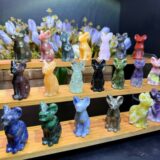
Choosing the right wholesale crystal products is one of the most important decisions for crystal shops, gift stores, metaphysical retailers, online sellers, and private label brands. A well-planned crystal collection can attract more customers, increase average order value, and help a business build a recognizable product style.
However, wholesale crystal sourcing is not only about choosing products that look beautiful. Retailers also need to consider material quality, product size, carving style, packaging, minimum order quantity, customer preferences, and supplier reliability.
This guide explains how to choose wholesale crystal products for your retail business and how to build a balanced collection that is attractive, practical, and easier to sell.
1. Understand Your Target Customers
Before selecting crystal products, it is important to understand who your customers are and why they buy crystals.
Different customer groups usually look for different products.
Crystal collectors may prefer natural patterns, rare materials, mineral specimens, and unique pieces. Gift buyers often choose polished hearts, small animals, mushrooms, angels, spheres, and decorative carvings. Metaphysical customers may be interested in crystal towers, palm stones, moons, stars, spiritual figures, and symbolic designs. Home decor customers may prefer larger crystal products, statement pieces, freeform decorations, and polished display items.
Online sellers also need products that photograph well and are easy to pack and ship.
Consider the following questions before placing a wholesale order:
- Are your customers mainly collectors, gift buyers, or spiritual product buyers?
- Do they prefer small and affordable products or larger premium pieces?
- Which colors sell best in your market?
- Are customers looking for natural stone patterns or polished decorative products?
- Do you need products for retail shelves, online sales, gift boxes, or livestream selling?
Understanding your customers helps you avoid buying products that do not match your market.
2. Build a Balanced Product Collection
A successful crystal collection should include different product types, price levels, colors, and sizes.
Instead of purchasing only one product category, many retailers build a mixed collection. This gives customers more choices and makes the store look more complete.
A balanced wholesale crystal collection may include:
- Crystal spheres
- Crystal towers and points
- Crystal hearts
- Palm stones
- Crystal animal carvings
- Mushrooms
- Moons and stars
- Angels and spiritual carvings
- Crystal bracelets
- Freeform crystal decor
- Mineral specimens
- Small gift items
It is usually helpful to combine entry-level products with medium-priced and premium products.
Small carvings and mini crystal products can attract first-time buyers and impulse purchases. Medium-sized spheres, towers, and decorative carvings are suitable for regular retail customers. Larger crystal pieces can be used as premium products or display items.
A mixed product structure also makes it easier to serve different customer budgets.
3. Choose Materials That Match Your Market
Crystal material is one of the most important factors in wholesale purchasing.
Some materials are widely recognized and easy to sell, while others are more suitable for collectors or niche markets.
Popular materials often include:
- Rose Quartz
- Clear Quartz
- Amethyst
- Obsidian
- Agate
- Jasper
- Fluorite
- Labradorite
- Citrine
- Pyrite
- Aventurine
- Sodalite
- Amazonite
- Carnelian
- Lapis Lazuli
- Moonstone
- Aquamarine
- Jade
- Calcite
- Selenite
For a new crystal retail business, it is usually safer to begin with familiar materials and gradually add more unusual varieties.
Rose Quartz, Amethyst, Clear Quartz, Obsidian, and Agate are often easy for customers to recognize. They also work well across many product types, including spheres, towers, hearts, animals, and palm stones.
Niche materials can make a collection more interesting, but retailers should avoid ordering too much of an unfamiliar material before testing customer demand.
Mixed material lots are often useful for new stores because they provide more colors and patterns without requiring a large quantity of every material.
4. Pay Attention to Natural Variations
Natural crystals are not identical manufactured products.
Color, pattern, transparency, inclusions, texture, weight, and shape may vary from piece to piece. These variations are part of the natural appearance of crystal products.
When buying wholesale crystals, retailers should understand what level of variation is acceptable.
For example, natural Jasper may have different color bands and patterns. Fluorite may vary from light green to purple. Labradorite may show different levels of flash. Rose Quartz can range from pale pink to deeper pink, depending on the raw material.
A reliable supplier should explain these natural differences clearly and provide representative photos.
Retailers should also communicate this information to customers. Product descriptions can explain that each piece is unique because it is made from natural stone.
This helps reduce misunderstandings and makes customers more comfortable with natural variation.
5. Check Product Quality Carefully
Wholesale crystal quality should be evaluated based on the material, polishing, carving, structure, and overall presentation.
Important quality points include:
Surface Polishing
Polished products should have a smooth and even finish. Small natural pits or inclusions may be acceptable depending on the material, but obvious scratches, rough areas, or polishing marks can reduce the product’s appearance.
Carving Details
Animal carvings, skulls, angels, mushrooms, and spiritual figures should have recognizable shapes and balanced proportions.
Small carvings naturally have less detail than larger products, but the design should still be clean and visually clear.
Stability
Towers, freeform products, and display pieces should have a stable base. Products that cannot stand properly may be difficult to display in retail stores.
Cracks and Damage
Natural internal lines are common in many crystals, but major cracks, broken corners, and shipping damage should be controlled.
Size Consistency
If you order products in a specific size range, the supplier should explain the expected tolerance. Handmade and natural stone products may have small differences in height, diameter, and weight.
Before placing a large order, ask for clear photos, videos, or samples.
6. Choose Suitable Sizes
Product size affects price, shipping cost, display method, and customer interest.
Small crystal products are usually easier to sell in higher quantities. They are suitable for gift sets, mixed lots, counter displays, and online orders.
Medium-sized products often provide a good balance between visual impact and affordability.
Large crystal products may have a higher retail value, but they also require more careful packaging and higher shipping costs.
Common wholesale size groups may include:
- Mini crystal products
- Small retail-ready products
- Medium-sized display pieces
- Large crystal decor
- Measured sizes such as 30 mm, 60 mm, 80 mm, 100 mm, or 200 mm
Retailers should avoid choosing size only based on photos. Always confirm actual measurements and approximate weight.
A crystal sphere may look large in a close-up photo but may actually be only 30 mm in diameter.
Request size references, ruler photos, hand-held photos, or weight information when necessary.
7. Consider Your Sales Channel
The best crystal products for a physical store may not always be the best products for an online store.
Physical crystal shops can use larger decorative pieces, open displays, and mixed shelves. Customers can touch and compare products before buying.
Online sellers should focus more on products that photograph clearly and can be packed safely. Consistent size information and detailed descriptions are especially important.
Livestream sellers may prefer colorful mixed products, visually distinctive carvings, and items that are easy to show on camera.
Private label brands may need custom packaging, labels, product cards, gift boxes, or branded inserts.
Wholesale distributors may prioritize larger quantities, stable supply, repeatable specifications, and efficient packaging.
Your sales channel should influence the products, sizes, quantities, and packaging you choose.
8. Compare MOQ and Mixed Lot Options
Minimum order quantity, or MOQ, is an important part of wholesale crystal sourcing.
Some suppliers require a minimum quantity for each product, material, or size. Others allow mixed lots across different products.
Mixed lot purchasing is useful for small retailers because it allows them to test multiple products without buying a large quantity of one design.
Before ordering, ask the supplier:
- What is the MOQ for each product?
- Can different materials be mixed?
- Can different sizes be combined?
- Is there a minimum total order value?
- Can I order samples before a bulk order?
- Are custom packaging services available?
- Can products be reordered consistently?
Low MOQ does not always mean the best value. Shipping, packaging, product quality, and supplier reliability should also be considered.
9. Review Packaging Requirements
Crystals are heavy, fragile, and sometimes irregularly shaped. Good packaging is essential for international shipping.
Common packaging methods may include:
- Individual protective wrapping
- Bubble wrap
- Foam protection
- Inner boxes
- Gift boxes
- Divided cartons
- Export cartons
- Pallet packing for large orders
Retail-ready products may also require labels, barcodes, product cards, or branded packaging.
If you sell products online, individual packaging can save time during order fulfillment.
For private label products, ask whether the supplier can provide custom labels, boxes, logo stickers, insert cards, or packaging design support.
Good packaging helps reduce damage and improves the customer experience.
10. Test Products Before Ordering Large Quantities
A trial order is one of the safest ways to evaluate a crystal supplier.
A sample or small mixed order allows you to check:
- Material appearance
- Product size
- Polishing quality
- Carving details
- Packaging quality
- Shipping protection
- Communication speed
- Delivery time
- Customer response
After receiving the products, test them in your store or online shop.
Track which products receive the most attention, which colors sell quickly, and which price points perform best.
This information can guide your next wholesale order.
Instead of guessing what customers want, use real sales data to build a stronger product collection.
11. Choose a Reliable Wholesale Crystal Supplier
A reliable supplier should provide more than low prices.
Good communication, clear product information, stable quality, careful packaging, and consistent delivery are all important.
When evaluating a supplier, consider:
- How quickly they respond
- Whether they understand your requirements
- Whether they provide accurate photos and videos
- Whether they explain natural variations
- Whether they can support mixed orders
- Whether they offer custom packaging
- Whether they can maintain stable quality
- Whether they have export experience
For long-term business, consistency is often more valuable than the lowest price.
A supplier who understands your product needs, target market, and packaging requirements can help reduce sourcing problems and improve your retail operation.
12. Plan for Seasonal and Trend-Based Products
Crystal sales can be influenced by holidays, gift seasons, social media trends, color trends, and popular carving themes.
Heart carvings may sell well around Valentine’s Day. Moon, star, angel, and spiritual carvings may suit metaphysical and gift markets. Small animal carvings can work well as gifts and collectibles. Crystal bracelets and mini carvings may perform well during holiday seasons.
However, trends can change quickly.
Retailers should avoid investing too heavily in one temporary trend. A better strategy is to combine stable products with a smaller selection of trend-based items.
Core products such as spheres, towers, hearts, palm stones, and popular materials can provide stable sales, while seasonal designs add variety.
Final Thoughts
Choosing wholesale crystal products requires more than selecting attractive photos.
Retailers need to consider customer preferences, material types, natural variations, carving quality, size, packaging, MOQ, sales channels, and supplier reliability.
A strong product collection usually includes a mix of popular materials, different sizes, recognizable shapes, affordable items, and premium display pieces.
Start with a manageable trial order, study customer response, and gradually expand your collection based on real sales data.
Working with a reliable crystal wholesale supplier can also make product sourcing easier. Clear communication, representative product photos, mixed lot options, careful quality control, and export-ready packaging all contribute to a smoother purchasing experience.
Need help selecting crystal products for your store? Send us your target materials, shapes, sizes, quantities, and packaging requirements. We can help organize suitable wholesale options for your market.